LXI
For let Philosopher and Doctor preach
Of what they will, and what they will not - each
Is but one Link in an eternal Chain
That none can slip, nor break, nor over-reach.

LXII
And that inverted Bowl we call The Sky,
Whereunder crawling coop't we live and die,
Lift not thy hands to it for help - for it
Rolls impotently on as Thou or I.

LXIII
With Earth's first Clay They did the Last Man knead,
And then of the Last Harvest sow'd the Seed:
Yea, the first Morning of Creation wrote
What the Last Dawn of Reckoning shall read.

LXIV
Yesterday This Day's Madness did prepare;
To-morrow's Silence, Triumph, or Despair:
Drink! for you know not whence you came, nor why:
Drink! for you know not why you go, nor where.

LXV
I tell You this - When, starting from the Goal,
Over the shoulders of the flaming Foal
Of Heaven'd Parwin and Mushtari they flung,
In my predestin'd Plot of Dust and Soul.

LXVI
The Vine has struck a fiber: which about
If clings my Being - let the Dervish flout;
Of my Base metal may be filed a Key,
That shall unlock the Door he howls without.

LXVII
And this I know: whether the one True Light,
Kindle to Love, or Wrath - consume me quite,
One Glimpse of It within the Tavern caught
Better than in the Temple lost outright.

LXVIII
What! out of senseless Nothing to provoke
A conscious Something to resent the yoke
Of unpermitted Pleasure, under pain
Of Everlasting Penalties, if broke!

LXIX
What! from this helpless Creature be repaid
Pure Gold for what he lent us dross-allay'd -
Sue for a Debt we never did contract;
And cannot answer - Oh the sorry trade!

LXX
Nay, but for terror of his wrathful Face,
I swear I will not call Injustice Grace;
Not one Good Fellow of the Tavern but
Would kick so poor a Coward from the place.
LXXI
Oh, Thou, who didst with pitfall and with gin
Beset the Road I was to wander in,
Thou wilt not with Predestin'd Evil round
Enmesh me, and impute my Fall to Sin?

LXXII
Oh, Thou, who Man of baser Earth didst make,
And who with Eden didst devise the Snake;
For all the Sin wherever the Face of Man
Is blacken'd, Man's Forgiveness give - and take!

LXXIII
Listen again. One Evening at the Close
Of Ramazan, ere the better Moon arose,
In that old Potter's Shop I stood alone
With the clay Population round in Rows.

LXXIV
And, strange to tell, among that Earthen Lot
Some could articulate, while others not:
And suddenly one more impatient cried -
'Who is the Potter, pray, and who the Pot?'

LXXV
Then said another - 'Surely not in vain
My Substance from the common Earth was ta'en,
That He who subtly wrought me into Shape
Should stamp me back to common Earth again.'

LXXVI
Another said - 'Why, ne'er a peevish Boy,
Would break the Bowl from which he drank in Joy;
Shall He that made the vessel in pure Love
And Fancy, in an after Rage destroy?'

LXXVII
None answer'd this; but after Silence spake
A Vessel of a more ungainly Make:
'They sneer at me for leaning all awry;
What! did the Hand then of the Potter shake?'

LXXVIII
'Why,' said another. 'Some there are who tell
Of one who threatens he will toss to Hell
The luckless Pots he marred in making - Pish!
He's a Good Fellow, and 'twill all be well.'

LXXIX
Then said another with a long-drawn Sigh,
'My Clay with long oblivion is gone dry:
But, fill me with the old familiar Juice,
Methinks I might recover by-and-by!'

LXXX
So while the Vessels one by one were speaking,
The Little Moon look'd in that all were seeking:
And then they jogg'd each other, 'Brother! Brother!
Now for the Porter's shoulder-knot a-creaking!'

LXXXI
Ah, with the Grape my fading Life provide,
And wash my Body whence the Life has died,
And in a Windingsheet of Vine-leaf wrapt,
So bury me by some sweet Garden-side.

LXXXII
That ev'n my buried Ashes such a Snare
Of Perfume shall fling up into the Air.
As not a True Believer passing by
But shall be overtaken unaware.

LXXXIII
Indeed the Idols I have loved so long
Have done my Credit in Men's Eye much wrong
Have drown'd my Honour in a shallow Cup,
And sold my Reputation for a Song.

LXXXIV
Indeed, indeed, Repentance oft before
I swore - but was I sober when I swore?
And then, and then came Spring and Rose-in-Hand
My thread-bare Penitence apieces tore.

LXXXV
And much as Wine has play'd the Infidel,
And robb'd me of my Robe of Honor - well,
I often wonder what the Vintners buy
One half so precious as the Goods they sell.

LXXXVI
Alas that Spring should vanish with the Rose!
That Youth's sweet-scented Manuscript should close!
The Nightingale that in the Branches sang,
Ah, whence, and whither flown again, who knows!

LXXXVII
Would but the Desert of the Fountain yield
One glimpse - If dimly, yet indeed reveal'd
To which the fainting Traveller might spring,
As springs the trampled herbage of the field!

LXXXVIII
Ah Love! could thou and I with Fate conspire
To grasp the sorry Scheme of Things entire,
Would not we shatter it to bits - and then
Re-mould it nearer to the Heart's Desire!

LXXXIX
Ah, Moon of my Delight who know'st no wane,
The Moon of Heav'n is rising once again:
How oft hereafter rising shall she look
Through this same Garden after me - in vain!

XC
And when like her, oh Saki, you shall pass
Among the Guests star-scatter'd on the Grass,
And in your Joyous errand reach the spot
Where I made one - turn down an empty Glass!
When it comes to daily regional newspapers and the nationals everyone seems to be a specialist. Court reporters; entertainment reporters; finance journalists; political journalists; science journalists; sports reporters – and even then there can be subdivisions with reporters only dealing with football, or golf, or cricket, hockey, rugby etc. etc.
Life is not so neatly partitioned for those working on weekly newspapers.
A cub reporter or junior journalist is a real jack of all trades and rarely gets to become a master (is there a non-gender specific term for that?) of one.
At least nowadays the juniors are no longer considered better for nothing than getting a mug of tea or coffee for their betters.
Depending on the size of the editorial staff seniors had some leniency on which jobs they covered. School sports day would be passed to a junior while a senior would attend the local football team matches.
On the general news front anybody could be called on to cover a story ranging from council meetings to court reporting and other stories considered as diary jobs. These were things that would be written in the news editor’s diary as they would happen on a specific day and time.
Other diary items might involve feature work ranging from writing pieces about local business or industry in general (sometimes just a “puff” piece to go with advertising), or specific stories about the past glory of an area where attempts are being made to spruce it up after a period of neglect.
There would also be the traditional vox pop when a reporter and photographer would go out on the streets and interview passersby about certain issues: is the council doing a good job; which of the proposed bypasses would be best for the town; or, at election time, which candidate would make the best MP.
On the last one you would naturally have to make sure that comments were fairly shared – not the easiest thing if one of the candidates, especially a sitting MP, is really unpopular in the run up to an election.
Off-diary stories were different. These were the ones involving an incident such as a major road or rail accident; a fire affecting a wide area (similar to the bush fires raging in Greece and America at present); or a missing child.
The bigger the story the more reporters it might need. Someone would take responsibility to liaise with the police and other emergency services, another might be on the scene with a photographer and a third could be digging out background on any people involved – the inhabitants of a burning house; workers at a blazing factory; possible regular travellers on a train involved in a crash.
When I started properly in journalism, as a district officer reporter, I was thrown in at the deep end and often had to cover everything, from court and council to sports, sometimes having to get around three or four football matches, getting a flavour of each one without freezing at the side of the pitch for 90 minutes.
Major incidents would bring in reporters from the head office.
When I moved to the Rhyl Journal I was still very much the junior but, even though I might still have to attend a regional athletics event, I no longer had to do the general sports reporting. Mainly because I think it was soon realised I did not have much interest in football, cricket etc. and there were others who enjoyed these events.
Once I moved to Basildon I was still a general reporter but I had the chance to specialise in such areas as local politics, entertainment and court reporting, which I did find fascinating – possibly a hangover from my schoolboy interest in crime and forensics.
As I moved up to sub-editor, chief sub and finally editor I noticed over the years how weekly news staff were being cut back to the bone and rather than specialising many reporters found themselves expected to cover more and more stories and eventually even being expected by some unscrupulous regional newspaper owners to become a reporter and photographer.
It was always accepted that if a journalist was out and about and something happened they could take pictures of the incident if they had a camera. In the same way a photographer out on a simple assignment might end up writing more than just a caption.
It had, however, always been part of the ethical code that journalists did not normally take photographers and photographers did not write stories.
There was a joke going round for many years that one day they would expect papers to be turned out by one man and his dog. In recent years the dog didn’t get the job.
It is highly likely my first poem was actually a nursery rhyme.
Maybe “Hickory Dickory Dock” or “Ring a’ring of Roses”.
By the time I reached primary school I was already reading poetry from books on the sheleves at home. Books with beautiful leather covers and gilded edges to the pages and names stamped in gold on the spines: Walter de la Mare, John Masefield, Longfellow, Worsdworth, Keats and Browning.
The only problem was that at school in those days nearly everything was learned by rote. Time after time we repeated our times tables so that we knew them off by heart. The same applied to important history dates and, of course, poetry.
The idea was that we would be able to recite a poem from memory, like a party trick. The problem was all we were taught were the words, not the real meaning behind them and why they were put together in the way that they were.
"Is there anybody there," said the Traveller,
Knocking on the moonlit door;
Andhis horse in the silence champed the grasses
Of the forest's ferny floor:
And a bird flew up out of the turret,
Above the Traveller's head:And he smote on the door again a second time:
"Is there anybody there?" he said.
Those among us of a certain age, and those who study English poetry, know these as the opening lines of The Listeners, by Walter de la Mare.
I remember more than 60 years ago reciting the whole poem in synchronisation with my fellows.
We knew the poem but poems don’t stop at the end.
Poems ask questions and seek answers.
Who was that Traveller?
What building could be entered if that moonlit door was unlocked?
But no one descended to the Traveller;
No head from the leaf-fringed sill
Leaned over and looked into his grey eyes,
Where he stood perplexed and still.
But only a host of phantom listeners
That dwelt in the lone house then
Stood listening in the quiet of the moonlight
To that voice from the world of men:Stood thronging the faint moonbeams on the dark stair,
That goes down to the empty hall,
Hearkening in an air stirred and shakenBy the lonely Traveller's call.
We learn a little bit more about the Traveller, his eyes are grey, but is he an old man returning from years abroad, or a young man gone off on a quest having promised to return to his love.
Or had he gone to make his fortune to save the family home, only to return too late as the family and servants are now dead and only their phantoms remain.
And he felt in his heart their strangeness,
Their stillness answering his cry,
While his horse moved, cropping the dark turf,
'Neath the starred and leafy sky;
For he suddenly smote on the door, even
Louder, and lifted his head:--
"Tell them I came, and no one answered,
That I kept my word," he said.
Who did he expect to find? A lover? a father – a mother? Certainly someone to whom he had given his word and had kept faith.
Was the house empty because all were dead or had his love been given to another?
Never the least stir made the listeners,
Though every word he spake
Fell echoing through the shadowiness of the still house
From the one man left awake:
Ay, they heard his foot upon the stirrup,
And the sound of iron on stone,
And how the silence surged softly backward,
When the plunging hoofs were gone.
I realised that the only way I would ever find out about the Traveller and the phantom listeners was to learn more about poetry.
Certainly in my brief sojourn at the grammar school I learned more about literature, including Shakespeare and poetry, than I had learning to repeat the lines by rote.
As well as the books in the household as I grew up I also added my own choices and one of the first poetry books I bought was The Mersey Poets, Penguin collection of works by Roger McGough, Brian Patten and Adrian Henri.
Oddly enough a few years later I met them when I reviewed their evening of poetry at the Basildon Arts Centre.
That was a night to remember.
In fact it was one of many nights to remember because the Arts Centre did not only provide a stage for local amateur groups but also for musicians, poets and actors of renown.
LSD or acid was the foundation of many a psychedelic image used by pop groups in the 60s and 70s
It has been said: “If you remember the 60s then you weren’t there.”
Those of us who grew up in that swinging decade are looked on as survivors of a period when speed and weed and even acid flooded the clubs and the streets not just in London but out in the sticks as well.
Apparently that scene never really reached Rhyl in North Wales.
A bit of waccy baccy was more than enough for most people in the 60s
There may have been a few who got hold of a bit of Waccy Baccy, Mary Jane, weed or whatever term you cared to use for cannabis, but pills would not hit the North Wales coast for a few years yet.
London was the real centre of the drug scene and, except for the few members of the 60s music scene who knew how to get hold of LSD, heroin or other serious drugs which had been around in America for a lot longer, very few people got involved and even then it was mainly amphetamines, which at that time were quite commonly prescribed for “tired housewives” who felt they didn’t have the energy to keep their houses neat and tidy for when “hubby” came home.
Through over-prescription or theft amphetamines were becoming available on the streets of major cities, especially London, during the 60s and there would be talk of: Bennies, Bombers, Blue Mollies, Purple Hearts and a myriad other names. It was a time when cash-rich youngsters in London wanted to make the best use of the 60 hours that made up their weekends from Friday night to Monday morning. They felt a pill would perk them up.
Pretty pills to perk you up – only if you knew where to get them
Personally I found the thrill of being alive at that time, with the help of a little alcohol, was more than enough to keep you going as you left the dance hall to head off for an all-night party.
In the mid-60s thieves intending to make an extra buck or two would switch from late night raids on offices, for the petty cash, to breaking into chemist shops in the hope of getting their hands on amphetamines. After all you could get 6d a tablet on the streets – that’s less than 3p in modern money.
The price went up in 1964 after new laws came in regarding possession – a purple heart would now cost you 9d, less than 8p.
My father’s shop in Rhyl was broken into one night.
The thief, who was known to the local police although they couldn’t pinch him for this escapade, had gained entry through the fanlight over the front door of the shop – even though we had always believed that the ratchet on this fanlight was rusted and immoveable.
The screech that it made in being forced would have echoed down the street but the family, who were all asleep, did not hear a sound. I felt the most guilty about not hearing it because my bedroom was right over the shop and my bed was positioned right abovethe door and the fanlight.
The cheeky thief (actually my view of him went well beyond cheeky) was out of luck in the shop as, like most chemists, my father kept all the dangerous drugs in a locked, steel-lined cabinet that even Houdini couldn’t have got into without the keys. He did find his way into our kitchen, however, and found a 35mm camera, (my pride and joy) and my mother’s fur coat which had just come back from the cleaners and she had forgotten to take it upstairs.
At least he did not get access to the main part of the house. The kitchen and back passage were separated from the hallway, lounge and stairs by a heavy oak door which was always locked and bolted, as was the door from the shop into the main hall.
As a chemist’s son I was approached more than once by people asking me if I could get my hands on anything. Apparently there was an over-the-counter cough mixture which was supposed to give you a high. I didn’t oblige, however.
I did once play a trick on someone who had kept asking me if I could get hold of purple hearts. The tablet itself was triangular not heart-shaped and were more blue than purple.
I did get a pack of Devon Violet Cachous and cut a few into a triangular shape and smoothed them down. Next time I saw the would-be druggie I asked him if he had ever tried purple hearts. It turned out he hadn’t, so I suggested he try one to see if he could cope and I gave him a cachou and told him I was giving it not selling it.
Next time I saw him he said he wouldn’t be trying them again as he had felt “very odd” after taking the tablet and thought it had an “odd taste”. It appears he had convinced himself he was taking a drug and therefore he felt what he believed were the effects. You’d have to eat a lot of cachous to get a high.
After that I made it clear to anyone who asked that I was a chemist’s son and not a drug dealer. I didn’t campaign against drugs but I didn’t promote them either.
Nowadays the scene has changed in North Wales and the courts quite often have a plethora of drug cases which go far beyond a bit of weed. The reputation of Rhyl is certainly not of the best when it comes to drugs but that doesn’t mean other North Wales towns can sit back playing innocent.
Check out the North Wales news feeds and you’ll see what I mean.
Innocent as Rhyl may have been in the 60s and 70s I didn’t suddenly find myself in a den of iniquity when I moved south to Basildon.
Nowadays the somewhat older new town has a similar reputation to most large conurbations. In May this year the Basildon, Canvey and Southend Echo was reporting the fact that Basildon was at the centre of a major drugs problem with police reporting a 40% increase in drugs possession and drug-selling in the town centre.
Yet when I was there in the early 70s the biggest drugs story I reported on was of four young people found in a flat with one joint and only two of them actually ended up in court. Apparently they had been trying it for the first time and one of the young people said she had one puff and and decided to smoke her own ordinary cigarette instead.
When you look at the current drug scene the idea that the whole of Britain was a druggies’ paradise in the 60s and 70s seems laughable.
Personally I’m quite happy with the drugs my doctor prescribes to help with my diabetes and thyroid problems.
I loved growing up in the 50s and 60s – life was so much more innocent.
XLI
Oh, plagued no more with Human or Divine,
To-morrow's tangle to itself resign,
And lose your fingers in the tresses of
The Cypress-slender Minister of Wine.

XLII
Waste not your Hour nor in the vain pursuit
Of This and That endeavour and dispute;
Better be merry with the fruitful Grape
Than sadden after none, or bitter, fruit.

XLIII
You know, my Friends, with what a brave Carouse
I made a Second Marriage in my house;
Divorced old barren Reason from my Bed,
And took the Daughter of the Vine to Spouse.

XLIV
And lately, by the Tavern Door agape,
Came stealing through the Dusk an Angel Shape
Bearing a Vessel on his shoulder; and
He bid me taste of it; and 'twas - the Grape!

XLV
The Grape that can with Logic absolute
The Two-and-Seventy jarring Sects confute;
The subtle Alchemist that in a Trice
Life's leaden Metal into Gold transmute.

XLVI
Why, be this Juice the growth of God, who dare
Blaspheme the twisted tendril as Snare?
A Blessing, we should use it, should we not?
And if a Curse - why, then, Who set it there?

XLVII
But leave the Wise to wrangle, and with me
The Quarrel of the Universe let be:
And, in some corner of the Hubbub couch'd,
Make Game of that which makes as much of Thee.

XLVIII
For in and out, above, about, below,
'Tis nothing but a Magic Shadow-show,
Play'd in a Box whose Candle is the Sun,
Round which we Phantom Figures come and go.

XLIX
Strange, is it not? that of the myriads who
Before us pass'd the door of Darkness through
Not one returns to tell us of the Road,
Which to discover we must travel too.

L
The Revelations of Devout and Learn'd
Who rose before us, and as Prophets burn'd,
Are all but Stories, which, awoke from Sleep,
They told their fellows, and to Sleep return'd.

LI
Why, if the Soul can fling the Dust aside,
And naked on the Air of Heaven ride,
Is't not a shame - is't not a shame for him
So long in this Clay suburb to abide?

LII
But that is but a Tent wherein may rest
A Sultan to the realm of Death addrest;
The Sultan rises, and the dark Ferrash
Strikes, and prepares it for another guest.

LIII
I sent my Soul through the Invisible,
Some letter of that After-life to spell:
And after many days my Soul return'd
And said, 'Behold, Myself am Heav'n and Shell.'

LIV
Heav'n but the Vision of fulfill'd Desire,
And Hell the Shadow of a Soul on fire,
Cast on the Darkness into which Ourselves,
So late emerg'd from, shall soon expire.

LV
While the Rose blows along the River Brink,
With old Khayyam and ruby vintage drink:
And when the Angel with his darker Draught
Draws up to Thee - take that, and do not shrink.

LVI
And fear not lest Existence closing your
Account, should lose, or know the type no more;
The Eternal Saki from the Bowl has pour'd
Millions of Bubbles like us, and will pour.

LVII
When You and I behind the Veil are past,
Oh but the long long while the World shall last,
Which of our Coming and Departure heeds
As much as Ocean of a pebble-cast.

LVIII
'Tis all a Chequer-board of Nights and Days
Where Destiny with Men for Pieces plays:
Hither and thither moves, and mates, and slays,
And one by one back in the Closet lays.

LIX
The Ball no Question makes of Ayes and Noes,
But Right or Left, as strikes the Player goes;
And he that toss'd Thee down into the Field,
He knows about it all - He knows - HE knows!

LX
The Moving Finger writes; and having writ,
Moves on: nor all thy Piety nor Wit
Shall lure it back to cancel half a Line,
Nor all they Tears wash out a Word of it.
The more things change the more they stay the same.
Almost 50 years on from my time as a reporter in Basildon, Essex, I have been looking at my scrap books of stories I had written then and think how often the same things happen now and the bad ones are often worse than in my youth.
For example, take road rage.
Almost every day there is a case of this modern phenomenon reported in the news, whether it is on TV or radio or in the national or regional newspapers.
Yet when did it first occur?
The term road rage is first recorded in the 1980s in America where rage of any sort can soon reach a lethal level – possibly due to the high rate of gun ownership. One of the earliest known references comes from a Florida newspaper The St Petersburg Times, in April 1988: “A fit of ‘road rage’ has landed a man in jail, accused of shooting a woman passenger who’s [sic] car had ‘cut him off’ on the highway.”
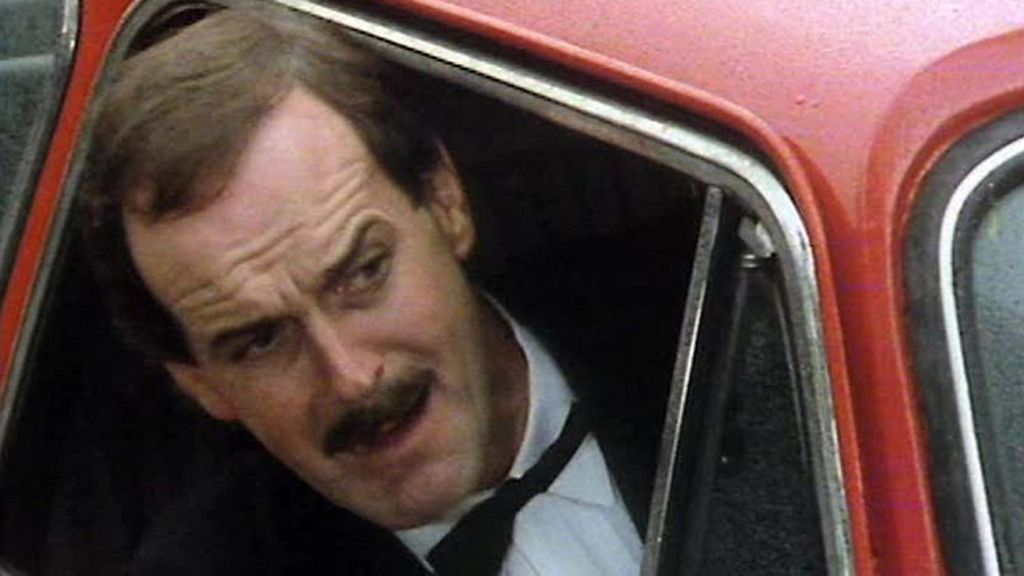
John Cleese as Basil Fawlty about to get mad with his motor in the 1975 TV series Fawlty Towers
In the UK we did not see angry altercations between motorists being described as road rage until the 1990s, not that this means it had not happened before. Consider the brilliant 1970s TV series Fawlty Towers when the inimitable John Cleese was angered by his car and ended up lashing out at it with a leafy tree branch.
In January 1973 I wrote up a court case for the Basildon Standard Recorder about a 30-something motorist who dragged a 60-something delivery driver out of his van and left him lying in a pool of blood on the tarmac. All this because the traffic ahead of both vehicles had come to a halt.
The sub wrote the headline:
Angry motorist dragged
van driver from cab
Nowadays it would have been:
Road rage thug drags
driver, 63, from van
I do not, however, think that road rage itself came to be in the 20th century.
I’m sure there must have been an 18th or 19th century young buck hurtling along the roads of rural England in his two-wheeled chaise, pulled by a thoroughbred horse, who lost his temper with a yokel driving a fully-laden haywain at a plodding pace.
Going even further back the mediaeval barons probably ordered their drivers to force any peasant pushing a hand cart into the ditch.
In these cases the victims of road rage had very little redress against their lords and masters. Nowadays an angry driver intending to berate another denizen of the highway is just as likely to be faced by an even angrier driver, possibly with a hefty wheel nut wrench in his hand.
If you do find yourself involved in a case of road rage I suggest you lock your doors and keep your windows closed and have your mobile ready to dial 999 – making sure the road rager can see what you’re doing.
The President’s Daughter is Missing by James Patterson and Bill Clinton
Thriller readers know James Patterson as a prolific writer.
Young adults know James Patterson for his works in Manga and Graphic Novel works.
Children know James Patterson as a writer who puts youngsters like themselves at the centre of exciting adventures.
Many of us know James Patterson as a writer who works across the genres and is not afraid to share that with co-authors.
It is with one of those co-authors, an ex-President, that Patterson has produced not one thriller but two. Yet the two are unrelated as the President in the earlier book, who apparently went missing, is not the same as either of the Presidents in this book — yes I did say “either”.
Although this is another book among the hundreds Patterson has given us it is only the second for former US President Bill Clinton but it is clear Clinton is not only on the bill to give the inside track on the Presidency.
In the first collabaration the President was the central character, a former state governor (just like Clinton) and former member of the Army Rangers having served in the Gulf War (unlike Clinton who did not have any military training and did not serve in Vietnam because his draft number was so high).
In the new book we have a different serving President, female, and the central figure is the previous President (but not the one in the last book).
Following it so far?
This former President is an ex-Navy SEAL (once again the military background Clinton never had), but is also a devoted family man (questionable when it comes to our knowledge of Clinton).
The plot is basically the standard thriller.
Good guy upsets bad guys.
Bad guys kidnap good guy’s daughter.
Professionals don’t do enough to find her (according to good guy).
Good guy goes off the grid to get his daughter back with the help of former military mates.
Although my summary sounds a bit scathing it is, in fact, a reasonably good, well-written thriller which changes pace throughout the sections making up this somewhat lengthy novel.
Whenever the President (retd.) is involved the writing is in first person, the remainder of the book is third person, not the easiest job for a writer two switch from one to the other.
Patterson has the literary skill to keep us going (I quite like the amount of detail he puts in to the background of people and places, although it is not to everyone’s taste) and Clinton provides that insight into the politics of America’s presidency.
If you read the previous book by this duo then you will almost certainly want to read this one. If you didn’t read it then it doesn’t matter because this is a standalone novel.
The hardback edition from Century was published in June. Not much point in giving a price because you’re sure to find it at all sorts of prices on the internet. It is well worth it no matter what the price.
Not just any old reviews but reviews of books I have read (whether recently as with new books or my favourites from a lifetime of reading); films or television productions; and music.
I have reviewed newly published books over many years, beginning in the 70s as part of an editorial pool of reviewers, and over the years have also reviewed new records (it was all vinyl in those days) and even cars.
The best time for doing test drives in cars was when I worked in Oman and used to do test drives in everything from compact family cars right through to a Lamborghni adapted to carry a heavy duty mounted machine gun – but that’s another story.
Keep a look out for new postings in this review section.
My time as a journalist in Basildon was not all politics and crime, although I did spend a lot of time in the council chamber and the magistrates’ courts.
The Arts Centre, just off the town square, was a cultural centre for the district and, as well as hosting concerts and professional entertainment, it provided a base for local amateur dramatic and music societies.
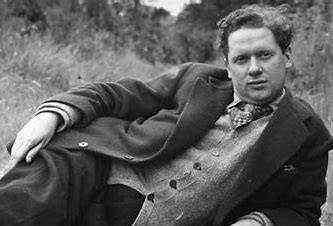
Tony Blandford had already recognised my passion for the theatre, as well as for all things Welsh, and that November he offered me my first opportunity to do a review – Under Milk Wood by that great Welsh poet and playwright Dylan Thomas.
Dylan Thomas, Welsh dramatist and poet at home in his beloved Wales
I have loved this wonderful play for voices ever since I heard a BBC recording, made in 1954 with Richard Burton as First Voice, and later released on record. There was also a BBC TV version made in the 1960s, once again with Richard Burton.
To me the original 50s recording, relying only on voices, has always been the definitive version of this masterpiece. This is what Thomas himself had envisioned when he wrote the play about life in a Welsh village by the sea.
On this particular November night I was to be treated to a stage presentation by a local am dram group called the Basildon Players.
Looking back on it I might have been a tad harsh on them but I still believe they brought it on themselves. Many a Welsh group has tended to shy away from this piece which relies on the listener being carried away by the lilting Welsh voices to Llareggub.
I think those reading the review would have guessed by the second paragraph that I was not overly impressed:
“Basildon Players attempted to capture the beauty of this bawdy play”
Just that one word “attempted” must have warned them.
It got worse:
“… I, a Welshman in exile, wept for the ghost of Dylan Thomas.”
I had once told my editor in Rhyl, Brian Barratt, that if I could find a redeeming point in any production I would use it and I did so, picking on the performance of a man called Eddie Griffiths and, as I said:
“His morning prayer outside his door, as he stood barefoot, had the poetic flow of the genuine article. Thank you Eddie Griffiths.”
I was surprised that the piece was used precisely as written. I don’t think the Players were exactly overjoyed when they read that review on the Friday morning, but, as my theatrical mentor Angela Day always told me: “If you pay money to see a performance you expect professionalism.”
That was the first of many reviews on productions at the Arts Centre, both professional and amateur. I also found a friend there, the manager, Malcolm Jones, who was born and raised in Rhyl and remembered my father.
When I returned to my desk on that mid-November Monday, following the funeral of my last grandparent, I was determined to throw myself into my work and become part of the Basildon community (although to do that fully I would need to wait until I was allocated a flat).
Basildon was born out of the Attlee Labour government’s desire to rebuiild Britain after the ravages of the 1939-1945 war and to create new towns as well as to offer a better standard of living.
By the time I arrived in 1972 the Basildon Development Corporation was well into its stride of house building, having been formed over two decades earlier, and had also been responsible for new shopping developments as well as industrial sites and leisure areas. The corporation was not the only major player in the housing game as the Basildon Urban District Council was also a major provider of homes.
The bright new future for Basildon as offered by Attlee was, however, mainly created during the 13 years of Tory control from 1951 to 1964.
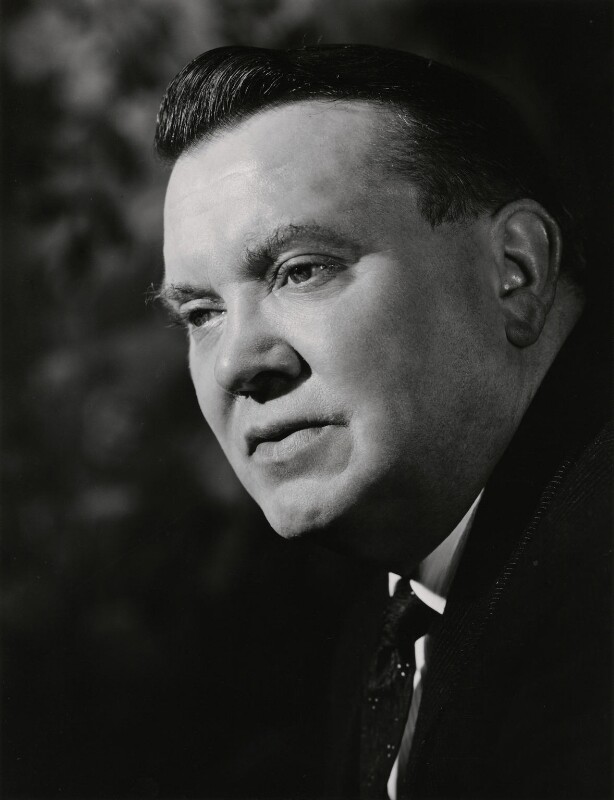
When the plans for a new town were set up Basildon was part of the South-East Essex constituency and was represented by Ray Gunter, an army officer in the recent war who won the seat for Labour in 1945. Since the 1920s (before which the seat had been a shuttlecock batted back and forth from Conservative to Liberal) the seat had been held at different times by the Tories and Labour and since the election before the war had been held by the Tories.
Ray Gunter
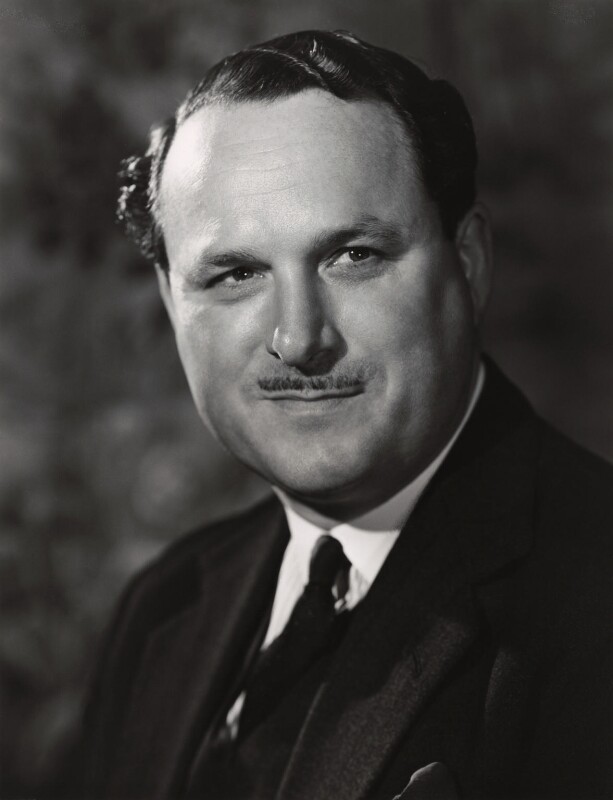
The Parliamentary political situation changed before the new town plans had really got under way, however, and Basildon was incorporated into a constituency centred on Billericay and except for the 1966 election was then held by the Tories, starting with Bernard Braine. It was taken back by Labour’s Eric Moonman in 1966.
Bernard BraineEric Moonman
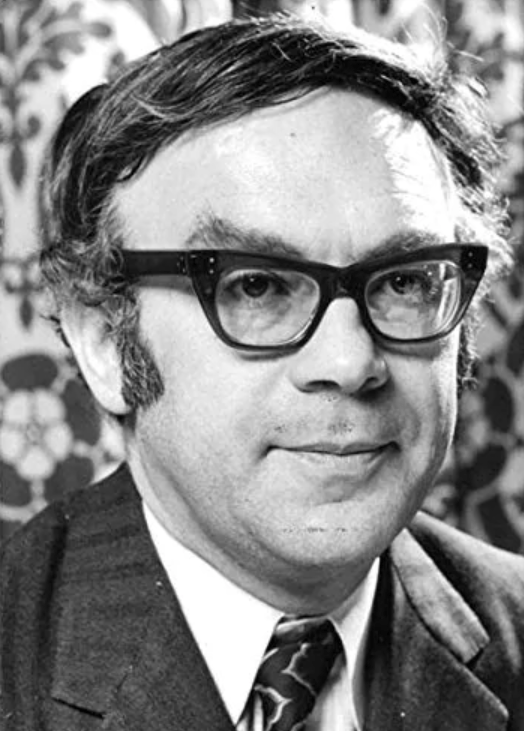
By the time I arrived, in 1972, the seat had swung back to the Tories and the MP during most of my time there was Robert McCrindle but by 1974, under a reorganised constituency, Eric Moonman returned in triumph as MP.
Robert McCrindle
This political shilly shallying had little to do with the politics of the people of the new town of Basildon, which tended to be Labour, as indicated by the continuing Labour control of Basildon District Council.
In North Wales I had talked to MPs from Tory and Labour but in the main I had more contact with the members of the various rural and urban authorities around Rhyl. These were a mix of Tories, Labour, Independents and groups such as the Rhyl Residents Association.
I was still not a diehard for any particular party at that time although I felt more at home in the Rhyl Labour Club than the Conservative Association Club. In Basildon, however, I found that politics in the town itself was more important to those closely involved, than any matter of life and death.
I began spending more time dealing with politicians when reporting on council meetings and other matters than I had at home in North Wales. Before long I found myself meeting up with some of the councillors at the bar of the local Arts Centre (which had begun to be an important area of my life) including a rising Labour star, John Potter, who became leader of the Basildon Urban District Council soon after I arrived and continued as leader when it became Basildon District Council.
Although he was about 10 years my senior I felt more at ease talking to him than I did the older council members, especially the Tory ones who seemed to be stuck in a century-old rut.
Gradually that flicker of socialism that continued to stay alight in my heart and mind began to burst into the fuller flame of the workers’ torch which at that time still formed part of the image of the Labour Party.
John was powered by that same flame which made some of those chats over a pint get quite heated at times, but not in the sense of argument, just of heated debate. At the end of the night we tended to be in agreement on most things political.
This awakening of my political sensibilities did not affect my work, however, and I always made sure that any story I did regarding local or Parliamentary politics was always covered from all angles with no preference given to one side or the other.
I did learn a lot about politics from John and before long I began looking into the Labour Party as opposed to just general socialist movements over the years. I found, at that time, it was more acceptable to me than the somewhat dated policies of the Tories and certainly more so than the Liberals who still appeared as a rather pallid political grouping that didn’t really know where it was going.
I had been a member of the National Union of Journalists since my early days in North Wales but I hadn’t had much involvement as even in Basildon it seemed a rather toothless tiger that mainly operated at national level.
My views on that were due for a surprising awakening within my first year but that is a story for later. For now I increased my awareness of socialism and its links to reform and revolution by spending time on Saturday morning at the second-hand book stall at the local market.
Here I found old editions from the Left Book Club; a two-volume edition of Das Kapital by Karl Marx; slim paperback volumes of the Little Lenin Library; even a book on Sidney and Beatrice Webb.
Sidney and Beatyrice Webb
My library of socialism, communism, revolution and reform has grown into the hundreds since then but this nucleus still forms my favourite part.
Since dipping my toes in the political waters half a century ago my views have not remained unchanged. After all if on your journey through life you do not listen to new ideas and give them careful thought then you will never learn. Instead of toning down the red from those early days of enlightenment I have tended to see the flame fly brighter and redder.




 Robin's Nest