Look Ma – top of the world, well actually it’s a West End theatre

In the middle of the tour we had what was almost an easy date when we played a London theatre for a two-week “season” either side of Christmas. In fact we did get two days off together, which was more than we had ever had.

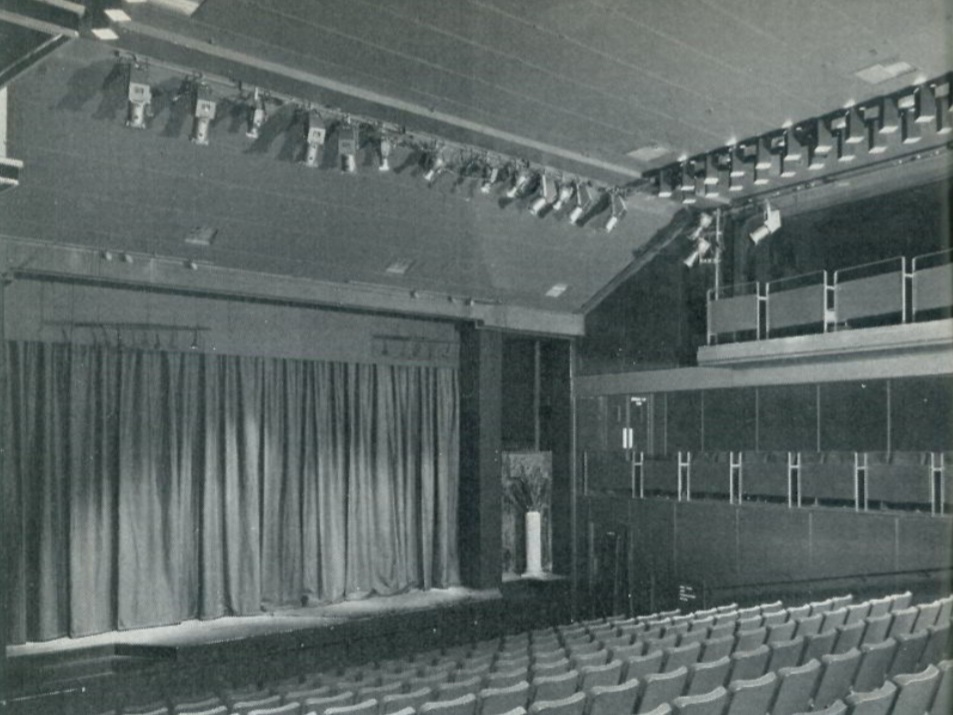
We were actually in the West End at the May Fair Theatre, which had been built using a former ballroom area and taking in rooms on the next floor to create a tower for flying drapes etc.

The theatre (pictured) was only built in 1963 and The Sooty Show was one of the early shows booked in after a long run of Luigi Pirandello’s Six Characters in Search of an Author.

This year was the tenth season Harry had played The May Fair and it was also the last but that’s another story;

It was owned at the time by the Grand Metropolitan Hotel Group and as it happened I had actually dined at the May Fair Hotel. It was one of the places we visited when I was on a press trip hosted by the the Grand Met group and British Rail. We may have dined there but they didn’t put us up there for the weekend.

Once we were in we knew we would not have to strip the sets out and load the Sooty van for another two weeks and that would be in a New Year.

It was a lovely little theatre, in fact it was not much bigger than the Little Theatre in Rhyl. It had 310 seats (I think the Rhyl Little Theatre has 250 seats), the seats could be moved as could parts of the stage to create different styles such as apron, in the round etc.

As it was Christmas time we did two shows a day and three on Saturdays and played to full houses for the whole fortnight. The Christmas Eve second show ended about six and we had just enough time to clear the set ready for Boxing Day afternoon before I dashed off to catch a train to Basildon.

That’s right, Basildon.

My Muse had invited me to have Christmas Day with her and their girls.

I could never have got to North Wales and back before noon on Boxing Day so would probably have spent that time in the caravan behind the May Fair Hotel.

We had been having what really amounted to an old fashioned courtship by letter and it had been going well, but it still had a way to go.

It was a calming interlude.

We were now in the New Year and headed back West for a few dates and I managed to get a lift back to Harry’s place so that I could pick up my car. I needed to get it then because the last few dates would be up North and once I finished with Harry I would need to have my own transport.

As it happened things did not work out that easily.

That is another story, however.

The long and the short of it means baby gets the first certificate

One of the first certificates you are likely to use in the early days of your family history research is likely to be a birth certificate.

You do, however, have to make sure you get the right one because there are two types, the long and the short.

The short version is only used as a basic information form giving the name and date of birth and little else.

The long birth certificate, as shown above, has loads of useful information.

BOX 1

The very first box gives you the date of birth – day, month and year – as well as the place of birth.

Sometimes the address is very basic, but in the main it will be street, including number or house name, town or village and county.

BOX 2

Next is the given name

BOX 3

This shows the sex of the child.

BOX 4

This is for the full name of the father. If this is left blank it means the father’s identity is not known, or cannot be proved.

BOX 5

This provides extra information as it not only gives the married name of the mother but also her name before marriage. This can lead to the maternal grandparents.

BOX 6

Gives the father’s occupation, which can be a great help if there are two men of the same name who have different occupations.

BOX 7

This gives details of the person who provides the information to the registrar. Sometimes this is the mother but a father can also provide the information or even a relative if they were present at the birth.

BOX 8

This is for the date the birth is registered.

BOX 9

This is where the registrar signs to verify the information is correct.

BOX 10

This box is not used very often. It is there to allow for any change of name after the date of registration.

Your birth certificate might not give much information that you did not already have, but when you get to certificates for your grandparents it is useful for finding out details you did not already know.

Your grandfather’s or grandmother’s certificates will not only identify your maternal great grandparents but also their paternal grandparent’s family name.

NEXT: the marriage certificate.

On home ground for a fleeting visit before we’re on the road again

After eight weeks on tour we arrived at Basildon – home again, for that was the way I had seen it while working on the Standard Recorder, except that now I would not be in my flat at Brooke House, I would be kipping in the caravan behind the Arts Centre.

I would, however, be seeing my Muse.

We were busy on the Sunday because we had driven from our previous venue on Saturday night, parked at the back of the theatre and then settled down for the night, we would have to link up to the theatre’s electricity system in the morning.

Once we had had our breakfast and moved in all the equipment we would need (no necessity for black drapes, front-of-house curtains or lighting bar here because the Basildon AC was fully equipped) we had some free time.

Sunday was still a working day because we had to test all the equipment and make sure the lighting cues were spot on with the stage crew, and do the set changes, not the whole show, to make sure there were no hiccups as each venue had different depths in the wings.

Before lunch I headed off to see the lady I had been been writing to for the past few weeks and was made welcome. I had an hour before I would have to head back to the theatre and over lunch, with the girls, we chatted and caught up with news on both sides.

Her sister and brother-in-law were over from Australia and she said they would look after the baby while she and Sarah came to see the show during the week.

That hour perked me up and just being in the same town kept my spirits up all week.

The week actually flew by.

Because my Muse was working I did not get to see her each and every day but mid-week she and Sarah came to see the show and I saw them both afterwards.

I did get to meet her sister and brother-in-law towards the end of the week when they all came down to town with the children.

At the weekend we had a long drive to the next venue and with the extra morning show and two matinees there was not much time to spare, but we did get half an hour to say our goodbyes and promised each other we would continue to write every week.

I was not going to see her for at least two months as we were heading back west for a few weeks before we headed to London where we were to spend two weeks at the Mayfair Theatre.

Although my spirits were now fully raised I also knew it would be a long wait to Christmas. Luckily I would be very busy.

Six small steps to take you on the journey of a lifetime – or further

WHO AM I?

A question many of us will have asked in our lifetime and we will have given ourselves many answers: son, father, socialist; mother, aunt, republican; daughter, teacher, royalist; grandfather, preacher, poet.

There may be other roles we do not recognise ourselves playing.

On the other hand we may know more about our ancestors than we do about ourselves, or we can find out more by talking to the right people and looking in the right places.

Climbing your family tree can be an extremely enjoyable way of using your spare time or can be the most frustrating hobby you have ever taken up.

On the way you will find all sorts of fascinating information about your ancestors, whether they were preachers or pirates; dancers or dockers; shopkeepers or shop assistants.

Yet there might be that person you just can’t pin down. She might be your great grandmother but can you find out her maiden name and was she really a wire dancer?

Most of the time it is a journey of delights.

In the beginning there are just six simple steps.

STEP ONE

Begin at the end – that means you, because family history research works backwards and you are the end result.

Write down everything you know about yourself – your full name, your age, your birthday, where you were born, where you live now and any previous addresses you know about. Then do the same with any information you know about your parents, grandparents and any other family members. Finally check whether you have any old family photographs or any documents, letters or certificates.

STEP TWO

Ask the family. Talk to your relatives, especially the older ones. They might have all sorts of details or even know if another family member has already done some family research.

Make a list of questions before you talk to them and don’t forget to ask if they have any documents or photographs.

If the person you are interviewing seems reluctant to give information about a particular relative don’t push them. There may be a family secret that older relatives are not willing to talk about. Another member of the family might be more willing to talk.

Write down everything they tell you and check it out later. Sometimes a story might have become garbled over the generations and great-great grandfather and great-grandmother might have run a bed and breakfast house in Hove rather than a 30-bedroom hotel on the seafront at Brighton.

STEP THREE

Check out registers of births, marriages and deaths – if you are handy with a computer you can find them online, you can also often find them at your local library or at county record offices.

Birth, marriage and death certificates are legal documents and can give a range of information including: date and place of birth; names of parents (including mother’s surname before marriage); occupation of father and, on marriage certificate, grandfather; address, a marriage certificate gives that of the bride and groom.

Census returns, the 1841 census is the first with real information, can give details of age, marital status and occupation. They took place every 10 years (except during World War II) but are not released to the public for 100 years.

STEP FOUR

Civil registration only began in 1837, and even then it was a few years before it settled into place. This means that before the mid 1840s information will need to be found in parish registers. These began in 1538 but not many exist before the 1600s.

These can be found at county record offices but many are now online.

STEP FIVE

Cemeteries can provide extra information, and other family members may also be buried nearby. Not all graves have markers or headstones but the cemetery office may have records.

Many churchyards and cemeteries have had names on graves indexed and these can often be found at local family history groups and more and more are being put online.

STEP SIX

Wills can provide information on addresses, relationships and their whereabouts, family heirlooms, and sometimes even more information to pad out the bare bones of what you have discovered from official sources.

Wills can be found at county and national archives and many are also found online nowadays.

Once you have taken these first steps you could be on a journey which could take you back 500 years, or even 1,000 years or more.

The path will not always be easy and you might stumble occasionally or follow a wrong turn to a dead end or even bring you up against a brick wall, but the finds you will make on the way will make up for the problems.

Remember to keep notes of all information you obtain and where it came from. Do not throw away the original notes as you might make errors when transcribing or inputting details to a computer record.

You can keep your information, documents, photographs etc in files and document boxes. If so ensure they are of archival quality so that they will not deteriorate.

You might also consider using computer software programs to store your information.

Enjoy your journey and I will be here to guide you if you need help.

Longed-for letter boosts my spirits as we catch up with some old friends

As the tour went on it seemed as though every day there was something new, though none of it quite as bad as those few horrific minutes in the cinema when a Polish actress made use of her natural assets to kill a man.

As Dickens said: “They were the the best of times; they were the worst of times.” Although there were more good times than bad.

Certainly the very best of all times came in the third or fourth week of the tour when the venue stage manager told me there was a letter for me being held at the box office, front of house.

I knew that only three people had the addresses for the tour, my mother and father, who had written to me a few days previously, and that very special person in Basildon – the one I knew had needed breathing space.

The letter had been forwarded from our last venue and I recognised the hand immediately. It wasn’t that of my mother or my father.

It was a newsy letter, a very chatty letter, but most of all it was friendly.

It certainly gave me the boost I had needed.

That evening, after the show, I settled down and wrote a long, carefully-worded reply. I responded to the news in the same spirit in which it had been provided. I talked about the places we had already been, and those that lay ahead; I told her of the characters at each venue, because they were all different; I sent my best wishes and next day I posted it.

Then it was back to work, but back with a jubilant heart.

From then on she wrote each week and I replied each week.

Meanwhile it was on with the show and we were playing to packed houses all week at every venue. It appeared that children throughout England just couldn’t get enough of the puppet trio.

Harry, of course, would be up on stage and able to see everyone in the auditorium, as could Howard during his escapology act; Lawrence and Toabs had to keep their heads down behind the scenery.

I got to meet the audience up front and personal because before each show, during the interval, and for half an hour after the show I manned our Sooty merchandise stall in the foyer as the children queued up with their parents to buy badges, story and puzzle books, puzzles and, of course, puppets of our three stars.

Although I shouldn’t have had a favourite I did and I soon found out my favourite seemed to be the children’s favourite as well.

My measure for success between Sooty, Sweep and Soo was based on which of the three badges sold the most. Some children would persuade their parents to buy all three while others might have to chose one over the others as they would already have laid claim to a book or a puppet.

Week by the week the badge sales varied, sometimes Sooty leading, sometimes Sweep, only rarely did Soo feature at the top of the league.

After five weeks, however, there was a clear leader in the badge sweepstake – you’ve probably guessed by the choice of descriptions for the competition, yes, of course, it was that lovable rascal Sweep.

Then again there were times when our venue hosted another form of entertainment in the evening, sometimes it would be a play or musical, at other times a single concert from a music group.

I was clearing our equipment into the wings one evening when the band playing that night turned up – it was Magna Carta, who I had met earlier that year after watching their performance at Basildon.

Considering how many people they must meet they recognised me immediately and asked me what I was doing there instead of reviewing entertainment for the Basildon Standard Recorder.

I explained about taking a break from journalism.

They then asked if I had any badges as all of them were fans of the Sooty Show. Harry allowed us a few badges to give away to friends and family so I swapped a set for a few of Magna Carta’s own badges.

That night I had a prime spot to watch their gig, on a chair in the wings. The lads also slipped a couple of extra numbers into the show as I had mentioned that they were among my main favourites.

It was more fun on the Sooty Sow tour than it was Hard Times.

Who needs Doctor Who’s Tardis when we can all travel in time?

I was watching a Brian Cox programme last night (the professor not the actor), he was talking about time travel and Doctor Who.

It was fascinating, not that he was speaking about it becoming feasible any time in the near future, and he talked about travel and time; the bending of time and how time can pass differently for people under different circumstances.

The programme was 10 years old but had lost none of its relevance.

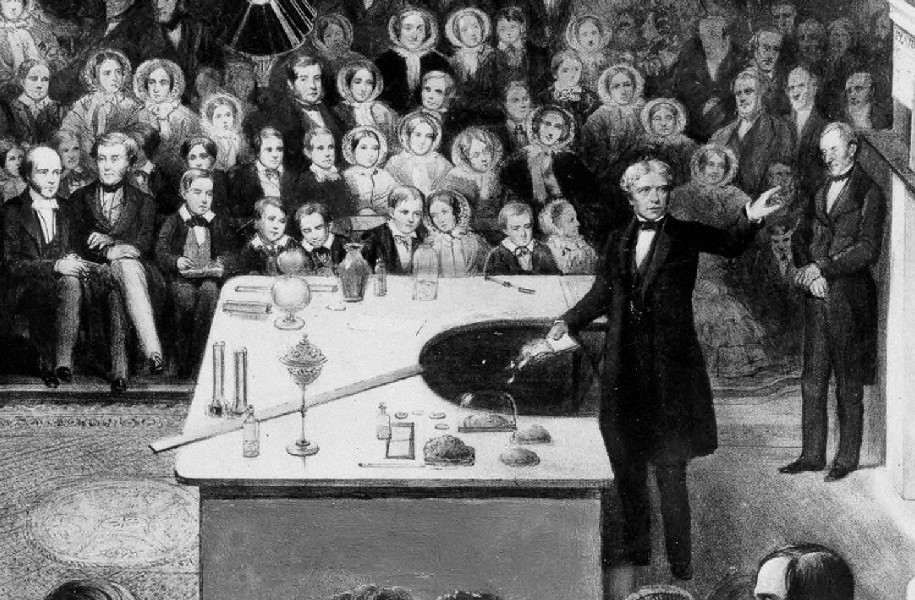
It was filmed in Manchester in the same building where Michael Faraday had given one of his Christmas scientific lectures in 1860 and Brian Cox was explaining to a celebrity audience how he would have liked to have gone back in time to actually see Faraday giving his lecture.

Michael Faraday giving a scientific lecture in Manchester, 1860.

In a way he had come close to achieving this because he was in the same spot and he had a transcription of what Faraday actually said. At the same time you could almost say that I had travelled back to the time when Brian Cox had given his talk and was able to see him 10 years on.

I know, I know, time travel isn’t possible – YET!

There is a way, however, that we can travel in time by looking into our family trees and unearthing objects they may have touched or letters or writings that might have been passed down through the family.

Family History, or genealogy, in a loose sense involves a search for details about your ancestry. In the narrower sense a genealogy or family tree really apply to seeking the descendants of a particular person.

Over the last 50 years, however, it has become an acceptable term for looking for the ancestors (and their families) of an individual in modern times where the generations would expand backwards.

My wife and I first took an interest in our family histories back in the 70s when the whole process was much more difficult. No worldwide web to garner information from all over the world.

In the 1970s you could access certain records at your local library but more often than not it would involve writing to a main record office with whatever basic information you had and hope they could help.

It became even more difficult when we moved to Australia but during our four and a half years out there I did strike up a friendly correspondence with an archivist at the National Library of Wales.

In almost 50 years we have managed to do a lot of work on both our family trees, going back to the late 1500s, early 1600s. During that time I also became the launch editor of a regional family history magazine and carried out research for other people.

Over this year I will be writing a number of articles to help others get stuck into their own family history and hopefully, if you haven’t already climbed your own family tree, it may give you a good start.

The road not taken

by Robert Frost

Two roads diverged in a yellow wood,
And sorry I could not travel both
And be one traveler, long I stood
And looked down one as far as I could
To where it bent in the undergrowth;

Then took the other, just as fair,
And having perhaps the better claim
Because it was grassy and wanted wear,
Though as for that the passing there
Had worn them really about the same,

And both that morning equally lay
In leaves no steps had trodden black.
Oh I kept the first for another day!
Yet knowing how way leads onto way
I doubted I should ever come back.

I shall be telling this with a sigh
Somewhere ages and ages hence:
Two roads diverged in a wood, and I,
I took the one less traveled by,
And that has made all the difference.

Christmas past and Christmas present, what now lies ahead?

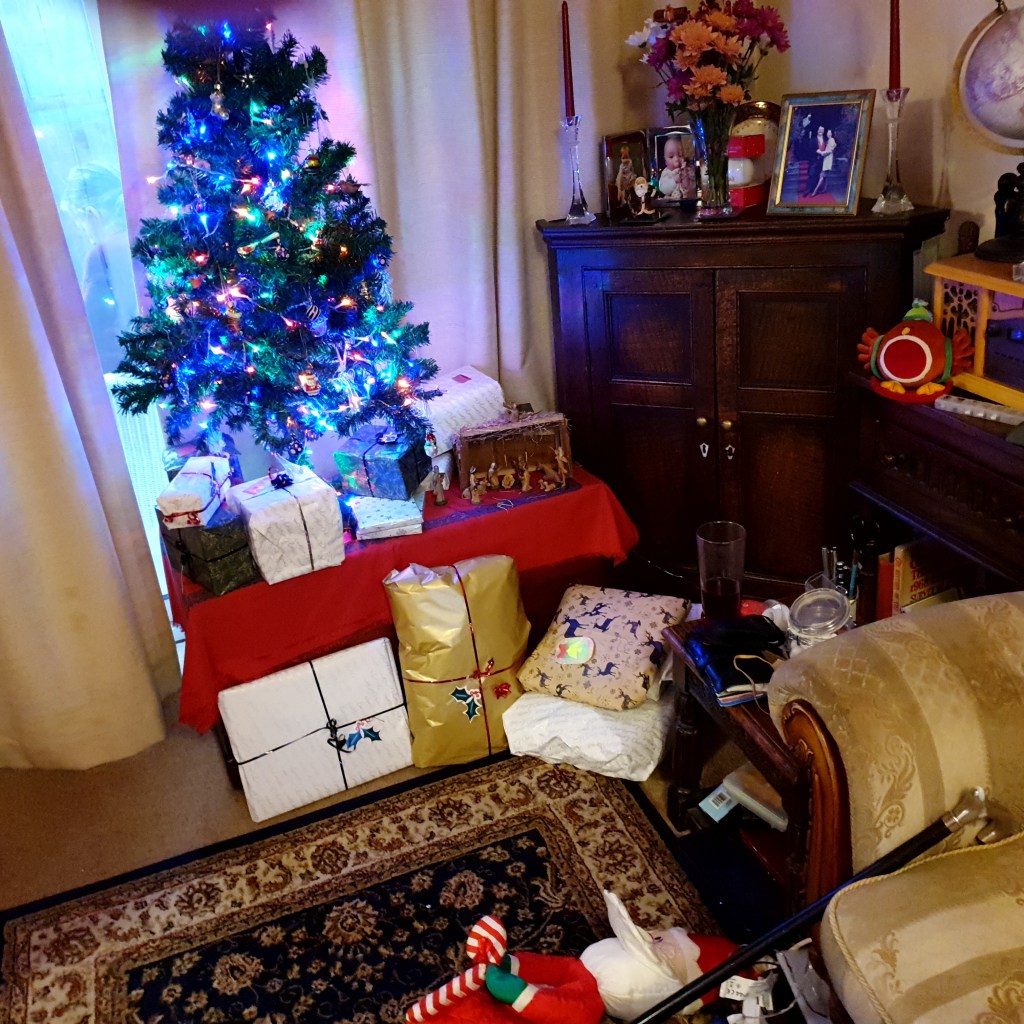
Christmas came and now its gone. All packed away for another year.

In many ways Christmas remains the same except gradual changes creep in year on year and my Christmas of 2022 is very different from the early ones I can remember in the 50s.

Nowadays we start preparing for Christmas in the New Year, at first just considering who will be at the dinner table, even who’s table it will be at.

It was simpler when we were young.

I can remember in Chesham, before we moved to Rhyl, Christmas was very traditional, Mum and Dad (Mummy and Daddy in those days) made sure we left our stockings at the end of the bed and in the morning they would be full of little surprises, a tangerine, nuts, sugar mice and chocolate coins.

When we were all dressed and after breakfast we would get around the Christmas tree and each present was handed to the named recipient.

There were presents “from Santa” and from Mummy and Daddy, Granddad, by that time only one was still alive and there were no grandmothers, then there were presents from aunties and uncles, including the honorary ones.

Obviously as children our presents included toys, but there were also more practical presents such as gloves, or scarves, socks and woolly hats.

Christmas dinner was turkey and all the trimmings, followed by Christmas pudding and we three children raising our glasses of cordial as Mummy and Daddy raised their wine glasses to toast us all a Merry Christmas.

After dinner we would play with new toys, or play ludo or tiddly winks before we sat down to watch television. Then later we had our afternoon tea with turkey sandwiches of course.

By the 1960s we were living in Rhyl and the morning routine remained the same but by then we went to the Drs Anderson (yes they were both doctors) along with other members of the group our parents mixed with for Christmas morning drinks.

In later years the young “set” would retreat to the kitchen area away from the adults in the front room, where we would drink cider and beer and any other forms of refreshment left around.

On Boxing Day the roles reversed and we hosted a drinks party, mainly for the same group but sometimes including visiting relatives and Granddad, of course, who now lived with us.

By the 70s my big brother was married and he and Jo, his wife, would alternate Christmas at our house and at Jo’s family home, soon to be followed by my sister getting married.

By 1972 it was changed again, I had moved down South and returned for Christmas but it was not quite as festive as previous ones as my grandfather had died at the beginning of the previous year.

The following year was my last proper family Christmas with my parents as by 1974 I was with the Sooty Show at the Mayfair Theatre with just a couple of days off for Christmas which gave me time to spend with a good friend in Basildon.

By 1977 my darling wife and I, with our girls, were living in Holyhead in a charming cottage on the mounntain, and gradually setting our own Christmas traditions. The girls were still young so we opened our presents around the tree before we got dressed for a late breakfast. There is great joy in seeing young children opening their presents with squeals of delight.

By 1980 (well 1979 in fact) things changed again as we were in Australia and to be honest in that heat sleep attire was not really suitable when you are taking pictures.

We still had our traditional Christmas Day but on Boxing Day we had our friends round for a proper Aussie barbie in the back yard.

We returned from Oz early in the 80s but the next few Christmases were mixed, especially one I spent alone in the Middle East, the second year out there it was just Marion, myself and our son David as the girls were staying with my brother and sister-in-law because they had reached an age at which local guys were showing too much interest in them

By 1988 we were settled in Prestatyn and Christmases returned to normal, even after we moved to Norfolk.

Sometimes our children were with us, sometimes not and as they grew older they had their own lives. Whenever they were with us for Christmas the traditions remained the same.

Even now Christmas at our house in the mornings involves presents after everyone has had breakfast and is dressed.

This Christmas, however, things were slightly different.

My daughter Sarah, and her husband Oliver, are making new traditions for our grandchildren and this year, while on holiday from the Middle East, they rented a house near the Thames and after opening our presents at home, my wife and I, along with our daughter Jacqueline and son David, went to their house to exchange presents and have the pleasure of seeing our grandchildren open their presents from us and us opening their gifts.

It was a wonderful Christmas morning and then the four of us returned home and had our Christmas dinner, with poussin instead of turkey but otherwise it was a traditional dinner with all the trimmings.

I wonder what Christmas will be like this year.

Horror that followed us from town to town

When I left Basildon at the end of summer 1974 I did not know if I would ever be back. My move from there, initially, to the other side of the country was to create a breathing space, not just for me but also for someone who had become close.

Initially my only contact would be at Harry Corbett’s home in Child Okeford where Lawrence, the stage manager, and I shared a caravan for the two weeks prior to the tour.

I gave that address to my parents, who were up in North Wales, and to the one other person who really mattered. There was no email or mobile phones in those days. You wrote down what you wanted to say, put it in an envelope, put a stamp on it and consign it to the Royal Mail.

During the fortnight at Harry’s place I received two letters from my parents, basically family news, and that was it.

In the second week Harry gave us a list of venues and dates for the next seven months which included theatre addresses and telephone numbers which were provided for emergency use only.

I copied the list out, twice, and sent one to North Wales and one to Basildon.

As it happened, about eight weeks into the tour we would be at the Basildon Arts Centre. I should have realised this would happen as it had been a regular visit by Harry for some years.

Once we began the tour we soon fell into a routine.

Sunday was arrival at the theatre and unloading whatever gear we needed, as I mentioned previously we carried enough equipment to dress a bare stage if necessary; getting the caravan as close as possible to the stage door and linking up the power; doing a technical runthrough so the local stage crew knew what was needed and when; then the evening was free to relax, read, go to the pub or whatever floated our boats.

A normal week would be a matinee performance Monday to Friday and then two or three shows on a Saturday, 10am, 2pm and 4 pm slots and then from 6.30pm we would strip out our gear and pack the van ready for the drive to the next venue.

One or two shows a day would appear to leave us free most mornings and evenings but life wasn’t that easy. After breakfast we had to check the sets and equipment and patch up any damage, take delivery of new puppets (which were checked out by Harry and if not up to his standard would be returned); set up the front of house merchandise stall, which I manned for an hour before the show, during the interval and for half an hour after the show ended.

There were all sorts of little jobs which needed doing, from making swazzles to preparing the mix for Sooty’s “cooking” during the kitchen scene and making sure the special effects were in order for the Haunted House and Water Garden sequences.

The tasks varied from day to day which meant we had no time to be bored.

In the evenings a lot depended on what was happening in the town.

If we were lucky the town might have a multi screen cinema couple of decent pubs and even another venue for entertainment than the own we were at. Sometimes there was even an evening production at the same theatre, a play or even a concert.

The worst case scenario would be a single screen cinema and two pubs.

It was surprising how often that happened and we did have a run of five or six weeks when the same film appeared to be following us around from one town to the next and it was not a film that appealed to either of us – it was called Deadly Weapons and starred the oddly-named Chesty Morgan.

Week after week we checked the cinema and found the above poster on display. We turned away each time and went to the pub or back to the caravan.

After six weeks we finally gave in and decided to watch it.

It proved to be the most expensive cinema ticket based on cost per minute because we were out of there within five minutes.

The plot – if you can call it that – involved the star (a Polish actress) seeking revenge on the mobsters responsible for the death of her boyfriend. She tracks them down, seduces them and smothers them with deadly weapons of the title (need I say more).

Even if the face of the “heroine” had been even vaguely as pretty as the girl in the poster we would probably have still walked out. I do not normally make disparaging comments about women but the woman in the film could have been the poster girl’s granny.

There are films of this kind from this era which still managed to provide a reasonable revenge plot with a more likely use of weapon for the execution of that revenge. This was not one of them.

It has taken me years to banish the images of those fleeting moments of film from my dreams.

It was fortunate that before going to Harry’s place I had taken many of my belongings to my parents’ home for temporary storage and at the same time had selected a good number of books. classics, thrillers and crime novels, to help while away any free time on the tour.

There was a highlight every week when Harry would treat us all to dinner at a good restaurant, no expense spared. I don’t care what they might say about Yorkshiremen being mean with their money, Harry was a generous man to his friends but did expect value for money.

Teddy Bear

by A A Milne

A bear, however hard he tries,
Grows tubby without exercise.
Our Teddy Bear is short and fat,
Which is not to be wondered at;
He gets what exercise he can
By falling off the ottoman,
But generally seems to lack
The energy to clamber back.

Now tubbiness is just the thing
Which gets a fellow wondering;
And Teddy worried lots about
The fact that he was rather stout.
He thought: "If only I were thin!
But how does anyone begin?"
He thought: "It really isn't fair
To grudge me exercise and air."

For many weeks he pressed in vain
His nose against the window pane,
And envied those who walked about
Reducing their unwanted stout.
None of the people he could see
"Is quite" (he said) "as fat as me!"
Then with a still more moving sigh,
"I mean" (he said) "as fat as I!"

Now Teddy, as was only right,
Slept in the ottoman at night,
And with him crowded in as well
More animals than I can tell;
Not only these, but books and things,
Such as a kind relation brings -
Old tales of "Once upon a time",
And history retold in rhyme.

One night it happened that he took
A peep at an old picture-book,
Wherein he came across by chance
The picture of a King of France
(A stoutish man) and, down below,
These words: "King Louis So and So,
Nicknamed 'The Handsome!'" There he sat,
And (think of it) the man was fat!

Our bear rejoiced like anything
To read about this famous King,
Nicknamed the "Handsome," Not a doubt
The man was definitely stout.
Why then, a bear (for all his tub)
Might yet be named "The Handsome Cub!"

"Might yet be named." Or did he mean
That years ago "he might have been"?
For now he smelt a slight misgiving:
Is Louis So and So still living?
Fashions in beauty have a way
Of altering from day to day
Is 'Handsome Louis' with us yet?
Unfortunately I forget."

Next morning (nose to window pane)
The doubt occurred to him again.
One question hammered in his head:
"Is he alive or is he dead?"
Thus, nose to pane, he pondered; but
The lattice window, loosely shut,
Swung open. With one startled "Oh!"
Our Teddy disappeared below.

There happened to be passing by
A plump man with a twinkling eye,
Who, seeing Teddy in the street,
Raised him politely on his feet,
And murmured kindly in his ear
Soft words of comfort and of cheer:
"Well, well." "Allow me!" "Not at all."
"Tut-tut!" A very nasty fall."

Our Teddy answered not a word;
It's doubtful if he even heard.
Our bear could only look and look:
The stout man in the picture-book!
That "handsome" King - could this be he,
This man of adiposity?
"Impossible," he thought. "But still,
No harm in asking. "Yes I will!"
 
"Are you," he said, "by any chance
His Majesty the King of France?"
The other answered, "I am that,"
Bowed stiffly and removed his hat;
Then said, "Excuse me," with an air
"But is it Mr Edward Bear?"
And Teddy, bending very low,
Replied politely, "Even so!"

They stood beneath the window there,
The King and Mr. Edward Bear, 
And, handsome, if a trifle fat,
Talked carelessly of this and that ...
Then said His Majesty, "Well, well,
I must get on," and rang the bell.
"Your bear, I think," he smiled. "Good-day!"
And turned, and turned and went upon his way. 

A bear, however hard he tries,
Grows tubby without exercise.
Our Teddy Bear is short and fat,
Which is not to be wondered at.
But do you think it worries him
To know that he is far from slim?
No, just the other way about -
He's proud of being short and stout.