North South East West – which direction will be the best?

When you reach a point on your travels through life where the track diverges and none of the paths is a direct route to your objective you have to decide which way to go.

The moment I discovered my Muse was mother to a six-month-old baby, with the strong possibility that Daddy was still around, I had to make a decision as to which way I would go.

This was not a case of Go West Young Man or taking the Road to Mandalay – the choices were far wider than that.

I could just turn round and retrace my footsteps, but I had come too far in the last eight years to turn back now.

Going South has a sense of fatality and I intended to live a while longer.

This left one direction.

I once played the part of Laertes in a production of Hamlet. My stage father, Polonius, gave me what he believed to be sage advice. Most of it would not have helped Laertes get very far in life but the last part was sound:

This above all: to thine own self be true,
And it must follow, as the night the day,
Thou canst not then be false to any man.

“To thine own self be true” points to what is called True North, that natural direction finder within yourself which will take you where you want to go.

It was not the end of the decision-making, however.

True North would keep me in Basildon but should I continue with my am dram hopes (after all the Thalians were the best group in town) and keep my feelings for my Muse within, or forget the group which would thereby put me out of the way of temptation.

I decided I was strong enough to keep temptation at bay and I could at least befriend my Muse.

The Muse of comedy and bucolic poetry won – maybe Thalia loved a lover.

What I would need to do would be to find other matters to keep my mind busy beyond my work and the stage.

That was easily settled. Time to research politics and decide where my loyalties really lay.

I gained the right to vote on 1 January 1970 when an Act of Parliament to lower the age of voting from 21 to 18 came into force. I didn’t get the opportunity to exercise that right until June that year and unfortunately my vote was not enough to save the day and the Tories took back control from Labour and Edward Heath became PM.

My leaning had been towards Labour throughout my teens (except for a brief flirtation with Plaid Cymru which I put down to a charming redheaded young lady who was a Nationalist through and through) but I needed to know if my choice was right.

I knew my future lay in socialism and as far as I was aware at the time the only proper socialist party was Labour but there was socialism before Labour so I needed to dig into the past.

Let the research begin.

Love is . . .

or is it?

Maybe we should first ask: What is love?

Dolly Parton claims: Love is like a butterfly, as soft and gentle as a sigh.

Roy Orbison says: Love hurts, Love scars, Love wounds and mars any heart.

It takes a lifetime to learn the truth and in the end it appears they were both right. Dolly’s butterfly of love really does have satin wings like the multicolored moods of love. At the same time Roy is right when he says: Love is like a cloud, holds a lot of rain or even: Love is like a stone burns you when it’s hot.

Then again the dictionary tells us that love is a set of emotions and behaviours characterized by intimacy, passion, and commitment. It involves care, closeness, protectiveness, attraction, affection, and trust. Love can vary in intensity and can change over time.

Unlike a song that definition is stone cold.

Then again poor little Oliver! could only ask: Where is love? Does it fall from skies above.

In March 1973 I found that all the above were true.

It may not have fallen from the sky but that first sight of my Muse as Smeraldina was like a thunderbolt hitting me between the eyes. I know that is a bit of cliché, Mario Puzo used it in The Godfather when Michael Corleone saw Apollonia.

“. . . he found himself standing, his heart pounding in his chest; he felt a little dizzy. The blood was surging through his body, through all its extremities and pounding against the tips of his fingers, the tips of his toes. All the perfumes of the island came rushing in on the wind, orange, lemon blossoms, grapes, flowers. It seemed as if his body had sprung away from him out of himself. And then he heard the two shepherds laughing.
“You got hit by the thunderbolt, eh?” Fabrizzio said.”

Calo went on to tell Michael: “You can’t hide the thunderbolt. When it hits you, everybody can see it. Christ, man, don’t be ashamed of it, some men pray for the thunderbolt. You’re a lucky fellow.”

Mario Puzo was right – his book had been published four years previously, plus a couple of weeks, but he got the heartpounding, bloodsurging, aromatic moment as if my body had sprung away out of myself down to a T.

Many people might laugh at the concept but trying to explain that moment to someone who has never felt it is like describing the joy of swimming in the sea to someone born and raised on a mountain with only a gentle trickling stream as a comparison for the rolling oceans.

It is not surprising that most of the remainder of that week was spent in a daze which only started to become reality when a member of the Thalian Theatre Group invited me to the last night party.

On the Saturday night, just after 11pm, I approached the party address with trepidation. There were plenty of cars parked close by and I ended up parking by the garage of the house in question. I knew it was the right address because the number was painted in solid white numerals taking up most of the space on the up and over door.

I was greeted at the door by Jim, it was his wife Jean I had sp coloured lights in the hallway and when I went into the crowded living room the lights were reflected from crumpled tin foil on the ceilings.

The room was crowded and there was the standard fug of cigarette smoke you tended to get at parties in those days. The music was loud bu the chatter of those present could still be heard as Jim took me round introducing me to the members of the group.

Clearly Jean had successfully put over my version of the review layout as everyone seemed pleased to meet me and were apparently delighted with the review.

We had gone clockwise around the room as I was introduced to everyone and at some point a glass of red wine had appeared in my hand. Finally we came to the sofa under the window by the door and there was my Muse – and her companion.

When I was introduced I offered my hand and she shifted her companion to a more comfortable position as she reached out her own hand. I then proffered a finger to the companion, who gurgled and gripped it for a moment the way six-month-old babies do.

The rest of the evening (well it was drawing close to midnight) passed in a slight blur. After all I did have to consider the current situation with regard to the infant – and no, she wasn’t holding it for someone else.

I did get a chance to sit down on the sofa so managed a 10-minute chat with my Muse. She even asked if I wanted to hold the baby. As I already had a niece and nephews I was able to handle the situation perfectly. At least that was in my favour.

After a while I returned the infant and went to get a fresh drink.

They were a good crowd, most in their 20s, I think Jim and Jean might have been a bit older. They were also easy to talk to and we got on well. It was suggested that in a couple of weeks I could join them when they started to look at ideas for their next production. I had made it clear that I was interested in joining and had been onstage, backstage and front of house.

My Muse had departed, I think the little one needed to get to sleep in her own little cot, and I had not noticed if anyone left with her. There was no doubt a husband (the 70s weren’t quite so free and easy as everyone thinks) and she would not have been left to go home on her own with the baby.

When I finally wended my way home, after plenty of friendly goodbyes and “See you soon” or “See you at the reading”, I had a lot to think about.

Now as I have said I believed that this was the one, but the trouble is your ideal partner might not see you in the same light.

I had been attracted to girls before and with some it was clear they would just be friends (not always the situation if you “go out” with each other and then part). This time I would have to begin with friendship and then see if anything more came later. There could be no pressure.

I didn’t realise quite how rocky some parts of the path ahead would be. It certainly changed my life in a way I never expected.

A momentary muse upon a Muse meant soon I would meet my Muse

Once ensconced in my new abode high above Basildon town centre (was this a metaphor for the way I viewed the town, looking down on it and its inhabitants?) my next move was to make friends.

In my past where had I found friends?

At school – but those days were long gone.

At the Rhyl Yacht Club – but there was no such club in Basildon.

At the Little Theatre – that offered a greater possibility.

As I knew from six months of reviews, Basildon had a plethora of amateur dramatic societies. Most towns do. Many of these societies, whether they be drama groups, operatic groups, or a mix of both, such as musical comedy or pantomime societies, are quite pedestrian in the names they choose, not even checking the acronyms. It would tend to be “Chester Amateur Dramatic Society” commonly known as CADS; or “Malvern Operatic & Dramatic Society” – MODS; or “Shrewsbury Operatic & Dramatic Society”SODS.

The Basildon groups mainly followed this basic naming style: Basildon Players, Basildon Operatic Society; Basildon Amateur Dramatic Society.

This made one particular group stand out when I saw that a group called The Thalians were staging Carlo Goldoni’s The Servant of Two Masters at the Basildon Arts Centre.

My knowledge of Greek mythology is that of anyone who has read some of the Greek myths or even just seen some of the films from the 60s and 70s such as Jason and the Argonauts or Clash of the Titans or Helen of Troy.

My father was the classics scholar, at grammar school at any rate. He would have gone on to study classics at university if it hadn’t been for a family tragedy, but that is a tale for another time. Maybe I did pick up an interest and a love of Homer from him.

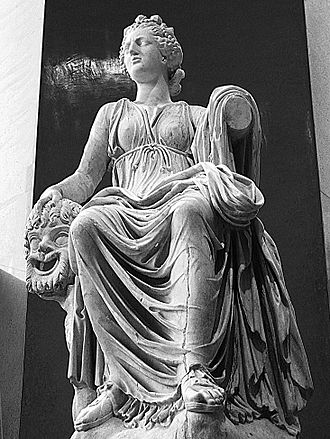
Thalia, one of the Greek Muses and goddess of comedy and idyllic poetry

Thalia was one of the Muses, daughters of Zeus (in Thalia’s case by Mnemosyne, goddess of memory and time).

Clearly a theatrical group that chose one of the Muses to represent them must be at least a touch ahead of the more plebeian groups. Especially as they chose the Muse of comedy and idyllic poetry.

Carlo Goldoni’s The Servant of Two Masters is an Italian classic in the style of the commedia del’arte, a forebear of our Punch and Judy.

On the Tuesday night I went along to watch what I hoped would be a classic piece of theatre. Little did I realise that far from just seeing a group who took one of the Muses as their patron I was to meet my own Muse.

The programme for this production was presented in the style of a mediaeval scroll, which I thought a cunning touch (although it was to come close to causing my downfall) and having studied it I sat back in my seat and prepared for an evening’s entertainment.

The evening was entertaining; the play was as funny as I anticipated it would be; the players, although young, were far better than other amateurs I had seen; but from the moment the curtain went up I was smitten by one character on that stage – the maid Smeraldina.

As a professional I managed to concentrate on the play itself but felt my heart drop every time she left the stage and it rose again each time she entered.

If I joined this group I would get to meet my Muse and if I met her I felt sure that, given time, she would get to know me well.

In a way that is what happened but it was a rocky road with many pitfalls.

I almost fell at the first twist, thanks in part to our somewhat overcocky sub.

As I said the Thalians had produced their programme in the form of a scroll and I made the mistake of mentioning this to our sub who always thought he could go one better.

The review which almost got me into trouble not because of its content but because of its style

He had suggested I write it in the style of “olden days” which would probably have been fine if it had not been for his cocky little sidebar which might just as well have said: “Anything you can do we can do better.”

It is not surprising, therefore, that on the Friday morning the review appeared in the paper I got a somewhat irate call from a member of the Thalians asking why I had virtually accused of them of seeing themselves as better than other groups.

It took me a good ten minutes to make my peace but I finally got my caller to realise that I had praised the production and considered them to be an exceptional amateur drama group and had copied their programme style as the sincerest form of flattery.

My sincerity must have shone through and before I knew it I was being invited to the after show party on Saturday night. I was given the address and told that it wouldn’t get properly underway until after 11pm as they would need to get their makeup off, change, and get round to the house.

I was overjoyed at the idea of meeting my Muse in person.

Of course life was never meant to be easy but I’ll tell you all about that later.

New home in a New Town – and it really is Brutal

I had been working on the Basildon newspaper for six months before I was actually offered a flat by the development corporation. Travelling to and from Burnham-on-Crouch every day did not make it easy to form new friendships outside work.

The keys to the flat, on the fifth floor of Brooke House in the middle of the new town, were handed over on a Friday in mid-March, very close to my 22nd birthday. The flat had a large living/dining room, a main bedroom and a small single bedroom, an ideal study, as well as the usual bathroom and toilet. The floors were parquet with underfloor heating.

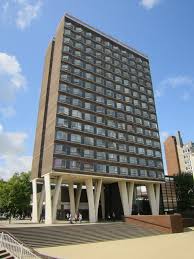
Brooke House, Basildon, on the 27-foot high pillars

The flat was in the middle of the row of flats on the side looking out over the town centre and from my fifth floor in this Brutal tower block it was possible to see the Arts Centre and beyond that the parkland dividing the town from the industrial areas.

Calling it Brutal is not as brutal as it sounds.

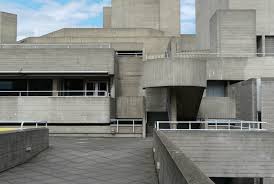
Brutalism, also known as Brutalist architecture, emerged as a style of building in the 1950s but it harked back to the early-20th century Modernist architecture which embraced the new methods of construction, steel, glass and reinforced concrete.

Many of the early Modernist buildings were, in fact, quite beautiful, with clean lines along with the functionality. Unfortunately the change to Brutalism led to buildings characterised by their massive, monolithic and ‘blocky’ look with a strong, rigid style following geometric lines and with an abundant use of poured concrete. Its name actually came from that part of the technique and in France was referred to as Béton brut which translates as raw concrete.

Brutalism at its best(?)0

Although born in the post war era it became even more popular in the 1960s as the austerity of the 1950s gave way to dynamism and self-confidence. It was frequently used for large scale government projects such as universities and car parks and was adopted by big developers for leisure and shopping centres, and, of course, high-rise blocks of flats and offices.

The movement began to decline in the 1970s, having been much criticised for being unwelcoming and inhuman, which, to be honest, was applicable to Brooke House. I didn’t let that put me off, however, as to me it was a place to live, close to my work and all the amenities, and could easily be made to look nice inside with the right decor and furnishings.

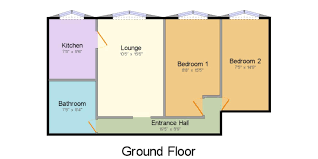
The (very) basic layout of my new flat0

The flat was basically a blank canvas. The kitchen had a fitted oven and the usual cupboards and work surfaces, the main bedroom had a built-in wardrobe including drawer space, the bathroom was what bathrooms are and the living/dining area was just a large square with massive windows on one side, a door to the kitchen and a door facing the windows to the hallway.

On the Friday night I left my car in the secure underground car park at Brooke House and drove a hired Transit van up to North Wales to collect some furniture that my parents had managed to accumulate for me. Mainly a three-piece cottage-style suite, a small dining table with four chairs, a couple of bookcases, an old wooden chest of drawers, and, of course, the stool I had made at Rhyl Grammar School, as well as a couple of rugs which I had made myself when I had a bit of a handicrafts moment.

My mate Roger

My old pal Roger helped me load the van, empty pockets of space amid the sparse furniture were filled with boxes of books and some basics in the way of crockery, pans and cutlery as well as bedclothes, pillows, and curtains which would help brighten the flat until I could get around to making my mark on it.

I drove back down to Basildon, leaving mid-afternoon, and Roger followed in his car to be there to help me unload at the other end and lug everything up to fifth floor. Fortunately I was able to get the van into the underground parking area and get it close to the lift.

We may have made life a little bit difficult for some of the other residents as we did hog the lift for a good couple of hours. There were times when we were heading up with the lift crammed when it stopped in the foyer for people heading up to their own flats. They could see there was no room but we promised to empty the lift quickly and then send it back down for them while we shifted my stuff down the long corridor to my flat.

It took us about three hours to get everything into the flat and spread around the various rooms. A lot of the boxed stuff was left in corners of rooms for me to go through in my own time.

Once the place looked moderately reasonable we headed off to the nearest café for a plate of eggs, sausage, and chips, washed down with a mug of tea, and then we repaired to the Arts Centre bar for a few drinks.

Roger kipped on the settee cushions spread out on the floor with the ones from the chairs as well, the following morning he headed home and I said I would see him next time I was up visiting family. That was the sort of relationship Roger and I had. Always there for one another but without having the need to hang out all the time.

Thus was I left in my Brutal home, my first home of my own.

I was in a position to invite friends round for a coffee, or even a party.

All I had to do now was find some friends.

Next time: Sighting a goddess and treading the boards once more.

We’re baby boomers ‘cos our parents went to war

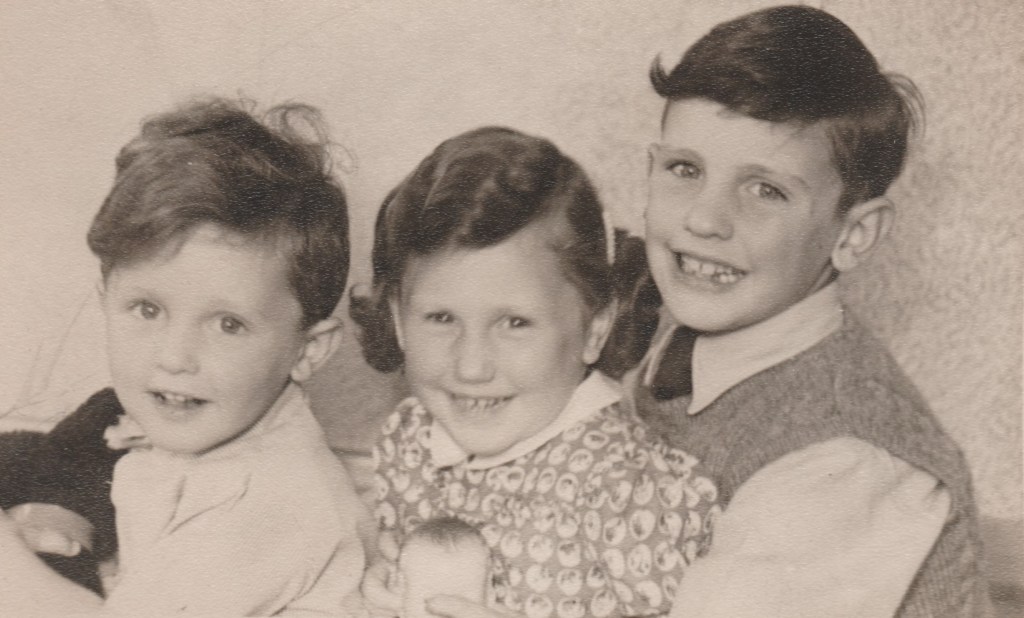
Baby boomers: (from left) Robin, Jacqueline and Nigel

Nowadays they talk about baby booms as occurring nine months after a specific incident – such as a national blackout – but the baby boomer generation refers to those born after the end of the Second World War.

In the US they give it a 20-year span with the first boomers born in 1946, based on the troops heading home in 1945. Statisticians (working out how many of us are left after 76 years) in the UK followed suit, giving the baby boomers generation a span from 1945 to 1965.

Personally I think they’ve got it wrong.

In the UK I see the baby boomers as born between 1946 and 1955. The age group that produced the first teenagers of the late 50s and early 60s and who can remember swing bands and rock’n’roll as well as the advent of the Beatles, Stones, etc.

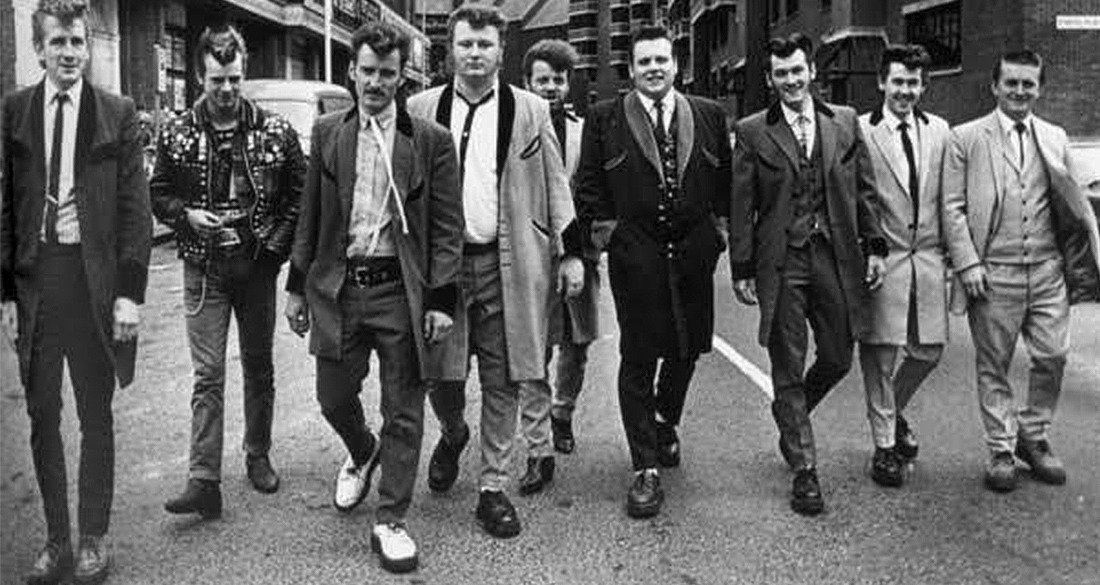
No doubt there will be cries of outrage from those born from 1956 to 1965, who will feel they are children of the 60s, and my seniors born at the beginning of the war who see the mid-50s as their time with Teddy boys, and their girls, along with the DA for the lads and the beehive for the girls, or as part of the Beat Generation who later morphed into hippies and also drew in early baby boomers.

I set the shorter age range based mainly on the culture of the era and the changes that nine-year cohort of babies grew up with.

Many of those born 1950 onwards are likely to have had older siblings in the baby boomer group who would have caught the changes in music and general culture as it happened, passing it on, almost by osmosis to their brothers and sisters.

My brother Nigel was in at the birth of the baby boom, he was born in July 1946, our father, David Pierce, had served with the RAMC in France and then North Africa and arrived home in mid-1945.

David Pierce and Ivy Lloyd on their wedding day in Liverpool , October 1939, three days before he was shipped out to France

He and our mother, Ivy, had got married in October 1939 and after a two-day honeymoon in London he had been shipped out with the BEF to France, was left behind at Dunkirk but got out two or three weeks later after a tortuous journey with a convoy of the sick and the wounded, and after a short leave headed off to Africa and spent the best part of the next five years providing medical attention for troops travelling from Durban to North Africa and then being stationed at a hospital in the north dealing with wounded soldiers from battles such as Tobruk and Alamein.

Ivy, meanwhile, remained in Liverpool but still helped the war effort as an assistant in the chief air warden’s department.

My sister Jacqueline arrived just over two years after Nigel, in September 1948, and I completed the trio with my arrival in March 1950.

In our early years the main influences on us were obviously from our parents and we could not have asked for a better, more loving set of parents than the ones we were lucky enough to have.

One of their major influences came in the form of music.

My early recollections are listening to my father playing Welsh songs on the piano – he had a a volume of Songs of Wales which even in the late 50s appeared well used. I later found out why.

My grandfather Edward had given it to his English wife Kate on her birthday, 16th March (same as mine) 1904. She must have played often and various songs are marked as favourites of her children. My father’s favourite, apparently, was Y Deryn PurThe Dove. I know this because the slightly tattered, but still usable, volume is now in my possession.

But I digress.

As with many baby boomers our early musical introduction would be in the music our parents listened to. We had a large radiogram, a solid piece of furniture which, once the valves warmed up, could be tuned in to the BBC radio programmes, such as the Light Programme and the Medium Wave.

It had a second purpose, however, and that was to play 78rpm records of which my parents had quite a lot. As well as classical music they had a large selection of dance bands and swing, such as Glenn Miller, Tommy Dorsey and Benny Goodman. They also had some fun records including White Christmas by Bing Crosby, The Laughing Policeman by Charles Jolly and Don Charles presents the Singing Dogs with Pat-A-Cake, Pat-A-Cake; Three Blind Mice; Jingle Bells; and Oh! Susanna.

I was still at primary school when my brother introduced me to the sounds of Radio Luxembourg. We shared a bedroom. He was now one of the original baby boomer teenagers – Bill Haley was the first to use the term in the UK in 1957 but any teenagers at that time were the wartime babies who had grown up to be Teddy Boys or beatniks with their girlfriends sporting beehive hairdos and skirts over layers of stiff petticoats or chunky jumpers, black Capri pants and not so stylish hairdos.

Teddy Boys on a London street in the 1950s and members of a beatnik community in Cornwall

The boomer teenagers reached that age in 1959 but it was still two or three years before they became the teenagers we know and love listening to rock, pop and blues.

In 1963, when I became a teenager, my parents bought a Dansette record player which could play the newfangled 45s and LPs and our first LP record came into the house, With the Beatles (November 1963), which is once again one of my prized possessions.

That was when my taste in music really broadened because Nigel would often bring the record player up to our room when Mum and Dad were watching TV, and sometimes I joined him and was introduced to Simon and Garfunkel, the Walker Brothers and Bob Dylan.

At the same time my sister Jacqueline was into more pop in the early 60s and from there I got a taste for the Animals, Alan Price and Georgie Fame.

In time, of course, I developed my own tastes and found myself enjoying a range from Lonnie Donegan and Tommy Steele, via the Troggs and to the Beatles, Cream, The Who, Rolling Stones – well I could go on but is a very broad taste in music.

This is what truly defines baby boomers as far as I am concerned. You had to have been introduced to the music of the 50s and early 60s at the time they were new, not secondhand. Those born in the second half of the 50s would have still been listening to nursery rhymes.

We ARE the baby boomers and later generations cannot take that away.

Love her or hate her you have to recognise Sylvia Plath’s poetry

Sylvia Plath, the tortured poet of the mid 20th century, has been dead for almost twice as long as she lived yet, almost 60 years after her death, the very mention of her name can start a literary war.

Plath is is as close to Marmite woman as you can get. There are very few poetry lovers who do not fall into either the pro-Plath camp or the anti-Plath camp.

Of these two groups one sees poet Ted Hughes, her husband, as anathema and the other as a man much maligned by his wife’s devotees.

Personally I do not take extreme sides such as this. I certainly see Plath as a woman with a great burden on her shoulders, beginning with her father’s death when she was just eight years old (in fact eight years and one and a half weeks old). He suffered from diabetes and died not long after the amputation of one of his feet because the diabetes had not been treated.

It is certainly something that sticks in a child’s mind and may have had a lot to do with her later depression and serious mental problems which came to a head with an attempted suicide (not her last) when she was just 20.

It was not much later than this that she met and fell in love with English poet Ted Hughes and the two wrote more than 80 poetic missives to each other in a very short space of time.

The marriage lasted until her death but by then they had been separated for more than a year.

One of her most controversial poems, Daddy, was written not long before she died, a suicide bid which, unlike so many previous ones, actually succeeded.

Whatever your view of the stormy relationship of two such brilliant poets, one American the other British, this poem may well provide an insight to her mind in the months before she died.

Daddy

by Sylvia Plath

1932-1963
You do not do, you do not do
Any more, black shoe
In which I have lived like a foot
For thirty years, poor and white,
Barely daring to breathe or Achoo.

Daddy, I have had to kill you,
You died before I had time --
Marble-heavy, a bag full of God,
Ghastly statue with one gray toe
Big as a Frisco seal

And a head in the freakish Atlantic
Where it pours green bean over blue
In the waters off beautiful Nauset.
I used to pray to recover you,
Ach, du.

In the German tongue, in the Polish town
Scraped flat by the roller
Of wars, wars, wars.
But the name of the town is common,
My Polack friend

Says there are a dozen or two,
So I could never tell where you
Put your foot, your root,
I never could talk to you,
The tongue stuck in my jaw.

It stuck in a barb wire snare.
Ich, ich, ich, ich,
I could hardly speak.
I thought every German was you,
And the language obscene.

An engine, an engine,
Chuffing me off like a Jew.
A Jew to Dachau, Auschwitz, Belsen.
I begin to talk like a Jew,
I think I may well be a Jew.

The snows of the Tyrol, the clear beer of Vienna
Are not very pure or true.
With my gypsy ancestress and my weird luck
And my Taroc pack and my Taroc pack
I may be a bit of a Jew.

I have always been scared of you,
With your Luftwaffe, your gobbledygoo,
And your neat mustache
And your Aryan eye, bright blue.
Panzer-man, panzer-man, O You--

Not God but a swastika
So black no sky could squeak through.
Every woman adores a Fascist
The boot in the face, the brute
Brute heart of a brute like you.

You stand at the blackboard, daddy.
In the picture I have of you.
A cleft in your chin instead of your foot
But no less a devil for that, no not
Any less the black man who

Bit my pretty red heart in two.
I was ten when they buried you.
At twenty I tried to die
And get back, back, back to you.
I thought even the bones would do.

But they pulled me out of the sack,
And they stuck me together with glue.
And then I knew what to do.
I made a model of you,
A man in black with a Meinkampf look

And a love of the rack and the screw.
And I said I do, I do.
So daddy, I'm finally through.
The black telephone's off at the root
The voices just can't worm through.

If I've killed one man, I've killed two--
The vampire who said he was you
And drank my blood for a year,
Seven years, if you want to know.
Daddy, you can lie back now.

There's a stake in your fat black heart
And the villagers never liked you.
They are dancing and stamping on you.
They always knew it was you.
Daddy, daddy you bastard, I'm through.

Heaney: a taste of nature

Seamus Heaney could turn a moment’s thought into a naturalistic poem of pure joy. He may be an acquired taste but he’s worth it.

Oysters

by Seamus Heaney/
Our shells clacked on the plates,
My tongue was a filling estuary,
My palate hung with starlight:
As I tasted the salty Pleiades
Orion dipped his foot into the water.
Alive and violated,
They lay on their bed of ice:
Bivalves: the split bulb
And philandering sigh of ocean
Millions of them ripped and
Shucked and scattered.

We had driven to that coast
Through flowers and limestone
And there we were, toasting friendship,
Laying down a perfect memory
In the cool of thatch and crockery.
Over the Alps, packed deep in hay and snow,
The Roman's hauled their oysters south to Rome:
I saw damp panniers disgorge
The frond-lipped, brine-stung
Glut of privilege

And was angry that my trust could not repose
In the clear light, like poetry or freedom
Leaning in fom the sea. I ate the day
Deliberately, that its tang
Might quicken me all into verb,
Pure verb.
 

Wonderful to meet you – just sign here please

We meet many people on our journey through life – most are the type we meet every day: neighbours; local business people; fellow shoppers (not so many in the last 18 months); local sports personalities; or national personalities.

As a journalist it is possible I have met more people, no matter how fleetingly or for what reason, than the average person. If I had got the signature of every celebrity I have met so far I would have had a wall full of shelves laden down with volume after volume of autograph books.

Those volumes could have been worth a fortune. When I see tv antiques and collectibles shows, such as Bargain Hunt, Antiques Roadshow, Flog it, etc. I find it amazing how much people are prepared to pay for the signatures of people that others have collected.

In reality I have only ever asked one person for their autograph and there are only two others who I might have considered asking.

Obviously there are people you would never dream of asking for a signature. The Queen, for example, or a notorious criminal who has just been sentenced to life in prison (and I have crossed paths with the odd one or two of those in my lifetime).

On the entertainment celebrity front I’ve mentioned some of those I met in Rhyl, or who came into Dad’s shop and it was in Rhyl that I got the one and only autograph I ever asked for.

King of the pitch – the mighty Barry John

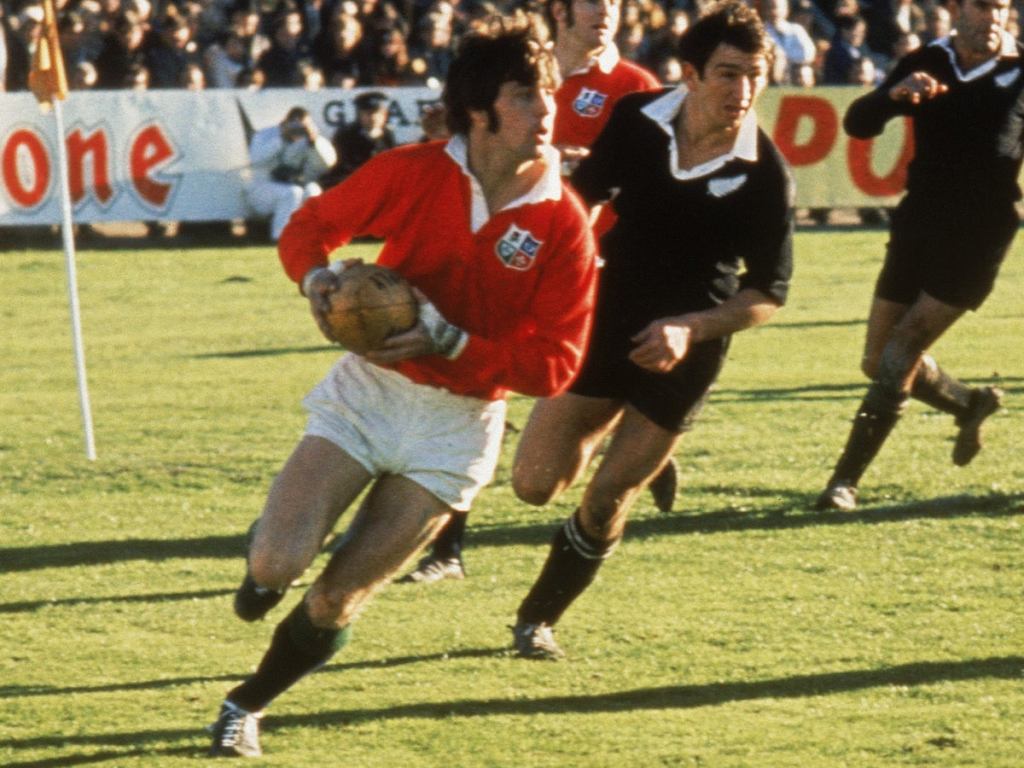
As a junior reporter, I attended the opening of the new Rhyl Rugby Union Club sports pavilion. The ceremony was carried out by the man they call King John, fly-half Barry John who played for Llanelli, Cardiff, the British Lions and, of course, his national side at the beginning of Wales’ new Golden Age in the late 60s and early 70s.

After the opening ceremony I talked with him for quite a while without displaying the fact that I was awestruck at meeting one of the two best rugby players the world had ever seen as a pair – Barry John and Gareth Edwards.

Just before he left, without thinking twice, I said: “Could I have your autograph?” and, again without thinking twice, he obliged, using my notebook to sign his name.

That was the first and last time I ever used my role as a journalist to get an autograph.

When I moved on to Basildon I started to do more and more reviews of events at the the local arts centre. Knowing the manager (a Rhyl lad himself) was useful when it came to meeting the artistes after the show.

I have mentioned the Mersey Poets, Basildon was also my first introduction to an up and coming folk rock group Magna Carta who have been part of my personal music collection for many years now.

Then we came to the longer-established artistes, such as Acker Bilk, the trad jazz maestro who even offered me a glass of scrumpy from his personal supply.

After the concert, when the bar was closed to the public, Malcolm had invited me up to meet Acker and the boys in the Paramount Jazz Band. The lads were supping pints of what looked like bitter, but I noticed Acker’s glass was somewhat cloudier than the others.

When Malcolm asked me what I would like to drink Acker broke in before I could answer. “I’m sure the lad’d like a drop of scrumpy.”

At that he took an empty half-pint glass and poured me a drink from a flagon which had the same cloudy appearance as his own drink.

This wasn’t my first taste of scrumpy. In my teens my father and I had a week’s boating holiday on the Norfolk Broads (there’s a few good stories out of that) and one lunchtime we moored by a pub which had lawn running down to the waterside.

To go with our ploughman’s lunch we decided to taste the local scrumpy. I had two half pint glasses. When we got back to the boat Dad said he’d have a half-hour nap before we set off again. I chose to listen to Radio One which had launched the previous year.

I remember the DJ saying it’s just coming up to 2pm and before the time-check we’ll listen to . . . . The next thing I knew the song was coming to an end, except it was not 2pm it was now 3pm. I must have fallen asleep half-way through the song and woken up when they were playing the same song an hour later.

Anyway, remembering the soporific effect, I treated Acker Bilk’s brew with caution. Just as well because one sip[ made me believe it was ag least twice as strong as the Norfolk brew.

It was only after they had gone that Malcolm told me Acker Bilk always carried his own flagon of scrumpy with him, the genuine product from Somerset, and that he never, never, let anyone else have a drop.

As I said, I met a number of up-and-coming artistes as well as many who had made the big time but still liked to take in small venues when on tour. It appeared that Basildon had become a bit of a hotspot for jazz, because I can also remember Kenny Ball and his group and a few lesser-known jazz combos playing there.

The marvelous Cleo Laine with husband Johnny Dankworth

The peak moment of my career as a reviewer, however, was when I went to the arts centre to see and hear Cleo Laine with Johnny Dankworth’s band.

I had always appreciated this brilliant singer and her musically gifted husband but this was the first time I had heard her live.

After a musical intro by Johnny and the band he welcomed Cleo to the stage and for the first set, right up to the interval (a good hour) she sang her heart out and when she finished the whole audience rose as one to applaud her.

The second set began the same way, an instrumental number followed by Cleo. As she began her second hour she looked as fresh as she had done at the start of the concert and had even changed her dress in the interval.

During this second set her microphone failed. Without missing a note she moved toward the wings, holding her microphone out, as her hand disappeared she continued singing as, out of sight, a stagehand took the dud mike, replaced it with a good one and allowed her to return to centre stage.

When she finished that number she looked off to the wings and very clearly and politely said: “Thanks for that, I don’t think the audience noticed a thing.” The audience just erupted again.

At the end of the concert she curtsied to the ecstatic audience and left the stage, only to return to sing an encore because the applause just went on and on. This happened six times before Johnny took her by the hand and, after saying: “If you don’t stop she’ll still be singing at 3am. Thank you all, but goodnight.” the couple left together and did not return.

As I was leaving Malcolm stopped me and asked if I would like to go backstage and meet Cleo. He didn’t have to ask twice.

When we entered her dressing room she was wearing an elegant robe and was standing behind an ironing board pressing out the creases in the outfit she had just been wearing. The outfit from the first set was hanging up looking as though it had just come back from the cleaner. She took my hand and then said: “If you’re not in a rush why don’t you go out front with Malcolm and Johnny and I will join you for a coffee before we leave.”

It was about 11.30pm by now and within 10 minutes the couple joined us and we sat drinking coffee and talking until 2am. The time had flown and Miss Laine still looked as fresh as a daisy.

It is because of such moments, the scrumpy and the midnight coffee, that I now realise I did not need autographs to remind me of these moments because I would always have the memories.

Those memories I made at the Basildon Arts Centre were really just the beginning of a store of special moments that will be with me for the rest of my life.

If I was to have asked for just two other autographs after that Barry John moment then it would have been Cleo Laines and – Harry Secombe (but he was in my future and halfway across the world).

Poetry Please because poetry always pleases

I have a large collection of books, even some going back to the 1800s. and amid them are many poetry books. Some I inherited from my father, school prizes won by him and by his sister, Dorothy, who died very young.

There is Longfellow, Yeats, Elizabeth Barrett Browning – running on to Rossetti, to which I have added many more of my own poetry books such as Dylan Thomas, McGough, Lawrence, Hughes and Heaney.

Much as I love them all my current favourite is my latest addition – Poetry Please The Nation’s Favourite Poems, an anthology of poems requested on the Radio 4 programme hosted by Liverpudlian Roger McGough, which was given to me on Father’s Day this year by my dear daughter Jacqueline.

Today I decided to pick a poem from the book at random.

Here goes:

Snow in the suburbs

by Thomas Hardy

Every branch big with it,
Bent every twig with it;
Every fork like a white web-foot;
Every street and pavement mute:
Some flakes have lost their way, and grope back upward when
Meeting those meandering down they turn and descend again.
The palings are glued together like a wall,
and there is no waft of wind with the fleecy fall.

A sparrow enters the tree,
Whereon immediately
A snow-lump thrice his own slight size
Descends on him and showers his head and eye
And overturns him
And near inurns him,
And lights on a nether twig, when its brush
Starts off a volley of other lodging lumps with a rush.

The steps are a blanched slope,
Up which, with feeble hope,
A black cat comes, wide-eyed and thin
And we take him in.

We’ve all seen it when our gardens and the road beyond are transformed under a blanket of snow, which hides the defects as it layers them with that glistening white layer.

I remember one house where we lived and it was not just a shallow slope created from the steps, instead the snow was so deep that it came to the top step and actually hid a steeper slope beneath it where the drive ran down to meet the road.

Hardy’s wintry scene came decades before that crisp white snow that hid our garden and covered the branches of our trees with its white magic, yet that poem takes me instantly to that winter when my son was born.

I am sure you all have your favourite poems, well Liverpool poet Roger McGough has collected many of my favourites in this volume: Poetry Please.

Hello, fancy meeting you here after all this time!

Dressed to meet the travails of the North Sea and holding up what was the best part of a meagre catch

On my path through life I have met many people – at school, at work and in my leisure time. Some have entered my life and after a few years exited it again. Some school friendships ended when I left school (although there were a few which lasted longer – my dear departed friend Roger Steele, for instance) and other friends came into my life and out again when I moved to take up a new job.

Some of those friends went on to make their mark on the world while others stayed put and made their mark on their own locality.

Then there were those who I only met because they had made their mark in life. Even in my teens in Rhyl I met a lot of entertainers who came to my father’s shop while they were doing weekend shows at the Pavilion, or other entertainment spots in town, some of them doing a full week.

Surprisingly there are the ones you meet again under completely different circumstances. People like Heinz Burt, or just Heinz as he was known professionally, who made a hit on the pop scene in the 60s beginning with an instrumental hit Telstar as part of the Tornados.

Heinz playing bass guitar with the Tornados on the 1962 hit Telstar

Heinz appeared more than once in Rhyl and was known for his clean-cut Germanic look with his peroxide blonde hair. The peroxide touch came from his manager, Joe Meek, who thought it a class idea. A view not shared by my father who once, when Heinz came in to our chemist shop to get some hydrogen peroxide, told the up and coming pop star: “You shouldn’t use it too often, it’ll ruin your hair eventually.”

Although Meek got him on tours with some of the big names of the time Heinz’s only real touch of fame came with the Tornados and briefly in 1963 as a solo vocalist with Just Like Eddie, an homage to Eddie Cochrane, one of the best-known American rock’n’roll pioneers.

Little did I know that I was going to meet Heinz again under very different circumstances.

As well as news features Tony Blandford, my editor, thought it a good idea to try out different sports on behalf of the readers.

One of these involved members of the editorial team, and a token representative from the advertising department, who at the time was also our “token female” (this was a period when women were only just beginning to be treated as equals by many), taking part in a “Banger racing” event at the nearby track in Rayleigh.

The Basildon Standard Recorder crazy crew taking part in the thrills and spills of banger racing

I wrote the introductory article for the report but then we all wrote about our particular experiences on the race track which were somewhat hairy to say the least.

Tony also knew that having been raised by the sea I had also been on a number of sea-fishing trips in my life. He said there was an advertising rep on one of our sister papers in Essex (we were part of the Westminster Press Group) who also enjoyed sea-fishing and belonged to a small group who made regular trips. The editor suggested I join them on an early-morning trip out from the Essex coast.

The advertising rep proved to be – Heinz Burt.

He was taking a break from the pop world and it appeared to be doing him good, at this stage his hair was more of a light brown than the peroxide blond he had become so well known for.

The original caption r4om almost 50 years ago says it all. Me and my fishing “buddy” Heinz Burt/

The more regular life seemed to suit him, I doubt if you would have seen many pop stars in those days bright and breezy at six am on a Sunday and looking forward to heading out to sea in an old wooden fishing boat.

The trip was entertaining, if not exactly successful, and once I brought up the Rhyl connection Heinz and I got on like two old pals. The fishing was less productive.

The article itself proved very popular.