First and last in new book quiz

Sorry about the absence for a couple of days.

I’m adding something new to the mix. A little literary quiz based on well-known books and their first and last lines. See if you know the book each one is from and the name of the author.

It’s just for fun but if you want to give your answers below I will tell you whether they are right or wrong on Sunday, 5th February.

A

First line: The boy with fair hair lowered himself down the last few feet of rock and began to pick his way towards the lagoon.

Last line: He turned away to give them time to pull themselves together; and waited, allowing his eyes to rest on the trim cruiser in the distance.

B

First line: I looked at my notes and I didn’t like them.

Last line: She died last month at the age of eighty-two.

C

First line: Cedric himself knew nothing whatever about it.

Last line: “There’s not an aunt-sister among ’em -nor a earl!’

D

First line: The schoolmaster was leaving the village, and everybody seemed sorry.

Last line: ‘She’s never found peace since she left his arms, and never will again till she’s as he is now.’

E

First line: Wilson sat on the balcony of the Bedford Hotel with his bald pink knees thrust against the ironwork.

Last line: ‘And you may be the in the right of it there, too,’ Father Rank replied.

Getting off on the wrong foot as my cinematic world turns upside down

The first day at a new job, or even, when I was a lot younger, a new school, never bothered me. Even interviews were not a problem because I always took the attitude that if I didn’t get this job then there’d be another one coming along soon.

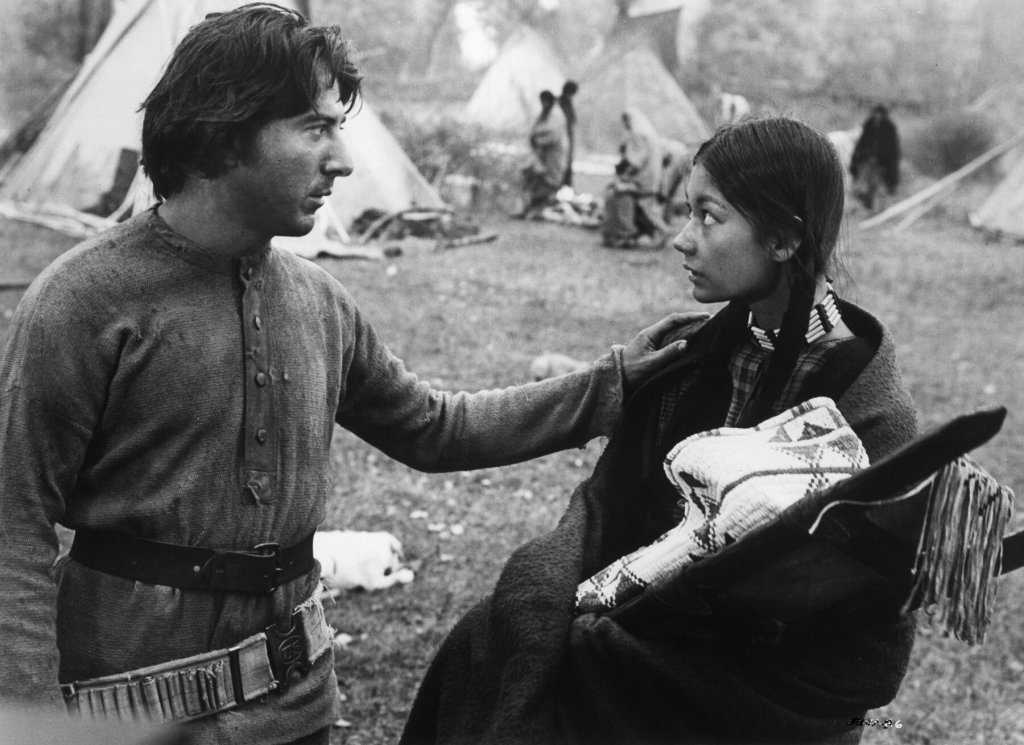
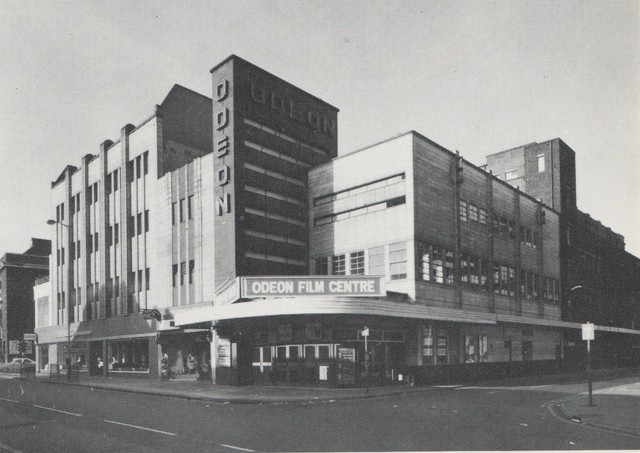
Mind you my first day as an assistant career manager at the Romford Odeon might just as easily have been my last when I looked in on a screening of Little Big Man starring Dustin Hoffman.

The day began well ease when I met my new boss, Tony Portsche, manager of the Odeon cinema in Romford. He was tall, that I do remember almost 50 years later, and smartly dressed in a light grey lounge suit which I felt had cost far more than the one I was wearing.

We began with a chat in his office, accessed through a long narrow office which had two desks and a load of filing cabinets along with a large metal two-door cupboard.

The manager’s inner office was not quite so crammed. It contained a large desk, with a leather-padded swivel chair on one side and two simple chairs opposite, a two-seater settee and a couple of armchairs at the far end and two glass display cabinets with various trophies in them and photographs on top of Tony with various film stars.

After a general ‘getting to know you’ chat Tony took me on a guided tour of the cinema complex, it was a three screen Odeon adapted from the original single auditorium with the former circle being the largest unit, with two smaller areas on the ground floor.

Like all the old 1930s art deco Odeons it still retained that look of grandeur when the normal auditorium lighting was on but in the full glare of the lights used during cleaning the signs of shabbiness were clear.

As well as the three screens he also showed me the ticket desk and confectionery counter, the stock room and the general store room and staff areas for the ushers and usherettes.

When we returned to Tony’s office there was a young woman, about my own age, at one of the desks in the outer office and Tony introduced her as the local assistant manager. Unfortunately I can’t remember her name but I know we got along during my time there.

The difference between a local assistant and a career assistant was that the local would always be an assistant manager whereas I, as a career assistant, would move on to managing my own cinema.

Once the cinema was open for the day Tony suggested I take a walk around by myself and I began in the two smaller screen areas, at Screen Two, which was showing the Western Little Big Man, a film I had not seen previously (as previously mentioned the only film we had a chance to watch on tour was Deadly Weapons).

I opened the outer door and closed it behind me before pushing the curtain to one side. As I looked up at the screen I saw, to my horror, that the image was upside down. I was about to go straight out and go to the projection room to find out what was happening.

Fortunately I waited a moment and before my eyes the image righted itself. The topsy turvey image was done from the perspective of a 19th century photographer focusing an old-fashioned plate camera from underneath a hood. As the image righted itself you could see it was a group of men.

I can only imagine that if I had dashed into the projection room demanding the film be rethreaded (like a junior reporter in a film shouting “Hold the front page” and bringing the presses to a juddering halt) then the story would have followed me round for the rest of my time with Rank, if I had got past day one that is..

I continued my tour and then went back to Tony’s office to report back. I decided NOT to mention the incident in Screen Two.

Nothing like a goode booke as long as it all makes complete sense

By now you must know how much I like (like? LOVE) books and hopefully understand why my Christmas and birthday lists always have at least one (most times many more) request for a book.

It could be a classic, a thriller, poetry, or more.

For Christmas I listed a book I have been meaning to read for decades and I put it on the Christmas list along with a complete works of WB Yeats, a fedora, and various other items.

Yeats will be appearing on my March birthday list.

Meanwhile to the book I did get, courtesy of teacher daughter: The Canterbury Tales by Geoffrey Chaucer.

I am not saying I have never read any of Chaucer’s Tales but only in anthologies and in translation at that.

In this case the translation is not from French to English, or Latin, or Greek.

Instead of a Modern English translation (capitalising the first letter of the descriptive term should give you a clue) I requested the book to be in the original Middle English, as Chaucer wrote it.

Dear daughter duly wrapped up the requested title and added the tag To Dad with love from Jacqueline before putting it under the tree.

My reason for weighing up the original against a modern translation was based on how the story would flow in the original and whether a translation would flow as well. It’s a bit like Shakespeare shorn of the trimmings and presented in modern day language.

Everything I had read up to then about Chaucer and his poetic prose had suggested that trying to read Middle English without a good translation to hand would be very difficult.

Now this is certainly true of Old English, which is what the Anglo Saxon spoke after they, along with the Jutes, invaded Britain driving the Celts into the West.

You try reading Anglo Saxon and you might just as well be looking at Scandiwegian script relating to the Viking raiders or even in Greek, Hebrew or Latin.

Anglo Saxon is as far from Middle English as Russian is from Gaelic.

The point is as soon as I started reading Chaucer’s Tales I was able to follow with just the odd check to the footnotes for words.

Middle English, with the language from Shakespeare’s time being considered Late Middle English before we settled down to what we now call Modern English, or to simplify – English, is far closer to the language we speak now than it is to Anglo Saxon or the hybrid language that developed after the Norman invasion – what Willy and his boys did to the language is another story altogether.

Suffice it to say that although some of Chaucer’s words might need translation it does not really impede the understanding and enjoyment of his poetry.

When he writes ye we know it is the just as we know Ye Olde Shoppe is not Yee Oldee Shoppee it is simply The Old Shop.

Old English drew a lot on Nordic runes which were letters not in the Middle English “dictionary” and the runes became stylised and the rune known as thorn came to look like a lowercase y but still had a th sound.

9

Walking into a lion’s den and out again with a smile on my face

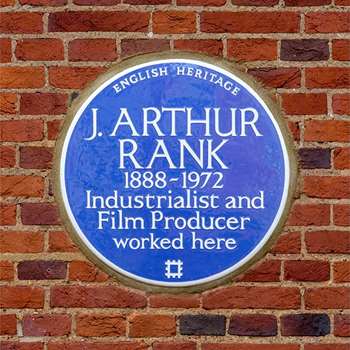
The blue plaque on a building in South Street, Mayfair, which was once the headquarters of the Rank Organisation.

It was a delight to pick my old Morris Minor up and it didn’t take me long to drive from Colchester to Basildon where I was greeted by the three young ladies in my life.

Sarah, who was two and a half years old now, was a little chatterbox while her baby sister Jacqueline, barely a year old, was just starting to toddle.

That weekend we spent time together just getting to know one another again. In the evenings, with the children in bed, Marion and I discussed the future and the most important thing was for me to find a job so that I could help support our little household.

I made it clear that at the moment I did not want to return to journalism.

We talked on and off, in between me playing with the children so that Marion could get on with her household routine, and all of us going out for a walk. Then out of nowhere, literally nowhere, the cinema raised its head.

Despite my casual dress during the tour I had always been proud of myself in a two or three-piece-suit with a smart tie and well-polished shoes or boots. Marion had once been an usherette at a local cinema before working in London. We both had an impression of a cinema manager looking smart in a lounge suit during the day and black tie and dinner suit in the evening.

At that moment I determined that instead of waiting to be told what jobs were available I would head into London the following morning and first of all try my luck with the Rank Organisation who operated the Odeon cinemas.

If that failed I could always go to the local ABC cinema in Basildon.

I had got on well with the manager of the Odeon in Rhyl when I was working there on the Journal and had always been able to get a couple of seats with no charge and invites to midnight presentations of some of the big newly-released films. I remember just such a showing of Doctor Zhivago when the guests as well as the manager were in evening wear.

At that time with no internet and no home phone I had no way of ascertaining where to go but just took the chance that once in London I could easily get an address from the phone book.

Which is precisely what I did.

On arriving at Fenchurch Street station in London I went to a phone box and looked up the Rank Organisation. The address was in South Street in Mayfair, right across London from where I was.

I needed to be careful with the pennies but I wasn’t prepared to walk that distance in a city I did not really know. I decided to take the Underground instead, it involved a bit of walking to get to the right station but overall it took me about 40 minutes.

Just as when I had travelled to Basildon for my interview in 1972 I was smartly dressed, two-piece suit, collar and tie, nothing too flashy but colours that worked together.

Outside the grand offices I took out my comb and ran it through my hair, straightened my cuffs (enough to show off a smart set of gold cufflinks my father had given me) and made my way into the building and presented myself at the reception desk.

I had no appointment and I had no idea who I needed to talk to but I think my confident air when I asked to see whoever was responsible for hiring managerial staff at Odeon cinemas impressed the receptionist.

She asked for my name and then called up a number on her switchboard.

At the best I hoped I might be given an appointment to see someone later in the week. At worst they might just tell me they weren’t holding interviews.

Instead the receptionist said that I should wait and someone would come down to meet me and take me to the appropriate department.

Even then I thought they might just take me to the personnel department where I would be asked to provide my details before being told they would write and let me know if any vacancies arose.

Maybe I should have been as confident in my mind as I was in my outward appearance because the young lady who came down to collect me took my straight to a very impressive office where a very impressive man in a dark blue pinstripe three piece suit, a crisp white shirt and a maroon tie sat behind a very large impressive desk.

He stood up, reached across to shake my hand and gestured me to a wooden chair with a padded seat on my side of the desk.

His opening question was: “Why do you want to join the Odeon management team?”

No problem there.

“I am keen on current films and period films, I am at ease with people and like to see them enjoying themselves, which they would do watching a film in the surroundings of an Odeon cinema, and cinema these days is on an equal footing with a stage show.”

It seemed the last comment was the one that caught his attention and he asked what experience I had regarding the stage as a source of entertainment.

“I have been involved in amateur dramatics for the past 12 years, not just as an actor but also as a stage hand, stage manager, lighting and sound technician and working front of house from ticket office to confectionery and ice cream sales.

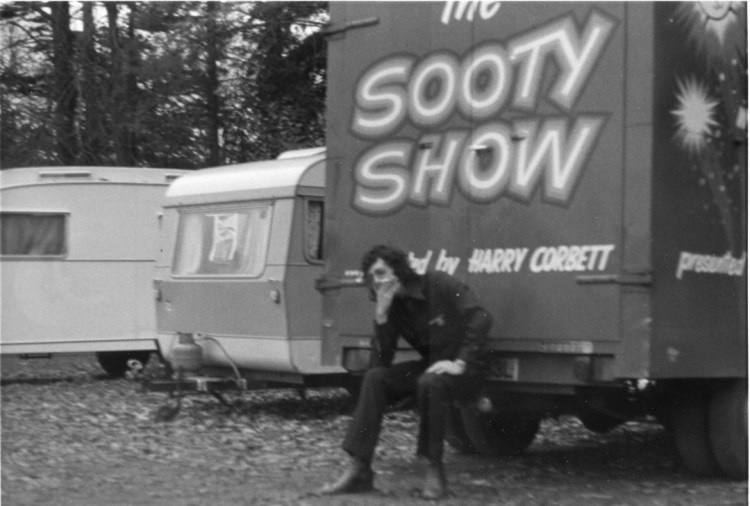
“Oh, and for the last eight months I have been touring as assistant stage manager, sound technician and carrying out general duties for Harry Corbett, Sooty and Sweep.”

That got his attention.

“Sooty? THE Sooty?”

“Yes.”

At first he was like a child again reunited with his favourite TV star.

He was now hooked.

There were a few more questions about my previous work and he found it interesting that I was trained as a journalist and also that I had helped my father, the pharmacist, with stocktaking and general cashing up.

He finally asked me where I was living and how far was I prepared to travel.

The second part was, of course, any distance within reason.

Once I said Essex he immediately said that the Essex area came under a district manager based in Southend and asked if I was prepared to go there immediately to meet him.

Without hesitation I said yes.

What did surprise me was that he then said his secretary would issue me with a travel warrant from London to Southend and from Southend to Basildon as well as reimbursing my fare from Basildon to London.

I could hardly believe that my audacity in just fronting up at the offices had gained me an interview with a senior executive let alone a further interview with the district manager who decided who to take on in a managerial role.

I travelled back across London to Fenchurch Street on a cloud but came down far enough to get myself a cheese and tomato roll and a coffee to provide sustenance in advance of the next interview.

This time I was expected and once again I was presented with a smartly-dressed man behind a large desk.

He had clearly been briefed on my background so, apart from mentioning the touring show (“Did you really work for Sooty?”), he moved straight on to checking on my education before I became a journalist.

This is where I still had a bit of ammunition left in that my college course had been commerce and office practice which included the basics of general book-keeping and how to handle rosters and draw up timetables etc.

Eventually he asked me how soon I could start work if I was offered a managerial position.

“Tomorrow?”

That was a little bit too quick apparently as they had to make certain arrangements and go through certain hoops before I could actually take up my new position which was to be – career assistant manager at the Romford Odeon (told you Romford would feature in my life again) and I should report to the manager, Tony Portsche, at 9am the following Monday.

Romford Odeon in the 1970s

I travelled home on Cloud 9 to tell Marion the good news.

The next day I went to the Basildon Labour Exchange/JobCentre to sign off.

A brief break in my old haunts then home again, home again, jiggity jig

After the tour it was a change to have a good Sunday roast with my parents and a very comfortable bed to sleep in that night, but no rest for the wicked, as they say, not that I consider myself wicked of course.

Bright and early Monday morning, well not long after 9am, I went into Rhyl to find the Labour Exchange or Jobcentre, or whatever they called it in those days. It was the first time in 10 years of working that I had actually been unemployed.

Although I would be going back to Basildon I wasn’t ready to go back to journalism. If I had contacted either of my North Wales editors, Peter Leaney or Brian Barratt, I am sure there would have been a job for me.

The same applied to Tony Blandford, if they were recruiting for the Basildon Standard Recorder I felt sure he would have taken me back.

That was not my plan, however. Maybe I would return to the fold in my own good time but at that moment the world of newspapers was still on the back burner, and the flame was turned to simmer.

When I filled in all the forms they only needed my last job and reason for leaving it. That was no problem because Harry had said if I needed a reference he would give me a glowing one.

Again, when asked for what sort of work I was seeking I simply said theatrical with the stress on technical rather than acting. I still had the possibility of contacting the company which had a number of rep companies out on tour.

Having signed on I had a good look around the town which had been my home for so many years. Although it wasn’t even three years since I left I could see the changes and for the first time I no longer felt that this was my home. That is not to disparage Rhyl, which will always have a place in my heart, but I had spread my wings and felt there were still places to find.

Over the next few days I visited family and friends and took in more of the wider area around my parents new home in Dyserth, as well as heading for some of my old haunts with my good friend Roger and downing a pint or seven.

By the end of the week I had had enough of my old stamping ground and was intent on heading down to Basildon where I knew a warm welcome awaited me, not just with My Muse but from two little girls as well.

Our correspondence had been wonderful, as I have said previously it was like an old-fashioned courtship with a couple of visits along the way.

I had checked with the garage in Colchester and arranged to pick my car up on the Friday afternoon. I would then drive down to Basildon and be able to join my three lovely girls once more.

No more Izzy Wizzy it’s time for me to say ‘bye bye everybody, bye bye’

The time had finally come when The Sooty Show turned its back on the South and East and headed North – which for Harry and Sooty was really going home because Harry was a Yorkshireman to his boots, despite his time down in the West Country.

We had six venues left on the tour but only three really stuck in my mind.

The first of these memorable theatres was in York, the Theatre Royal, a beautiful structure from the 18th century. It was a pleasure to play in such a building with so much history in the dramatic arts.

We shared the venue with a touring production of The Threepenny Opera. The lead role of Mack the Knife had gone to a 50s/60s pop star and actor who had appeared in another, more modern musical in Basildon the previous year – Joseph and the Amazing Technicolor Dreamcoat.

I had heard from stage crew at Basildon that the star was considered to have an air of self-importance and some of the cast thought he needed to be taken down a peg or two. There was a scene where he had to throw himself on a woman lying on a bed. One night, as he threw himself at the bed, the woman raised her knee with somewhat painful consequences.

Whether or not the story was true it certainly seemed the star had changed his attitude as it was clear the stage crew and cast in York considered him a “proper actor” rather than a “jumped-up pop star”.

The theatre manager found a spare seat for me one night and I must admit it was an excellent production of Brecht’s interpretation of the 18th century The Beggar’s Opera by John Gay, a fine example of the satirical works prevalent at the time.

The second theatre was on the seafront at Southport next door to one of the town’s biggest venues which attracted top stars.

At the time we were doing The Sooty Show at the smaller theatre my showbiz idols, Morecambe and Wise, were playing at the larger venue next door.

It was not unknown for stage crew to work at more than one venue if necessary and that was how I came to be standing in the wings watching Eric and Ernie keeping their audience in stitches.

I was wearing my stage blacks except that instead of a plain black T-shirt I was wearing one which read THE SOOTY SHOW in large white letters.

At one point Ernie Wise was holding forth and Eric, who was supposed to be looking at his partner, was looking over his shoulder into the wings and saw my TV shirt.

At that he almost corpsed but his professionalism shone through as he held up the index finger, thumb and middle finger of his right hand and said: “Who’s that?” Ernie fell back to his role as straight man and said: “I don’t know, who is that?”

The response was quick and witty: “Sooty in the nude.”

The audience were in stitches.

The third and final venue on my list, and the last venue of the tour, was at Saint Helen’s, Lancashire, another Theatre Royal. which was the last date on our tour and at the end of the week I would be saying goodbye to my companions of the last seven months.

Once again we were sharing the venue this time with a touring repertory company, and I had met some of the actors previously. Not, as you might think, in Basildon but in a previous life in Rhyl when they had been in a company doing a season at The Little Theatre, when I had helped with the lighting, including doing a full lighting plot for one of the plays.

It was fun spending the week doing our final shows and spending some leisure time with my old friends from the theatre company.

I had no plans as to my future once the week at Saint Helen’s ended but a couple of members of the rep company did suggest that there might be a technical/managerial with one of the companies in their group.

I took the details of the company head office and both my friends said they would put in a word for me.

After our final performance we cleared the stage of all our gear and got it all in the scenery dock before cleaning ourselves up and having our final weekly meal at a restaurant courtesy of Harry.

These meals had become an end-of-the-week ritual over the tour and Harry, despite the reputation people of Yorkshire have, was a generous host, telling us to order whatever we like.

At the end of the meal he would always order coffee and liqueurs all round, my poison of choice in those days was a creme-de-menthe frappe. Harry would always have a brandy with his coffee but this was when his Yorkshire roots came to the fore.

He always told the waiter: “I don’t want a fancy Napoleon or Courvoisier, a cooking brandy is all I need because it’ll be going straight into the coffee.”

That final meal was sad but happy at the same time, especially for myself and Howard because we would be going our separate ways while Lawrence was staying with Harry and Toabs as stage manager when they went to do their TV Sooty shows.

I stayed in the caravan that night and Lawrence and I were up early to complete our final getout before I header for the railway station to make my way to Rhyl where my father would pick me up and take me to their new home in Dyserth where I would be staying for a few days while I decided on my next move.

You can never have enough when it comes to a collection of books

I was checking my collection of books recently and realised the number does not seem to have gone up or down in recent years, and as life goes on I find books I want to read now but know I still have books to be read.

I do make good use of local charity shops to offload excess books, ones I am not likely to read again, even if I did enjoy them. I may take in 20 or so books at a time but I am just as likely to add four or five to my collection when something in the charity shop captures my attention.

It seems strange to think that when I moved into the first home of my own, a corporation flat in Basildon which I think was on the ninth floor, I had a three-shelf bookcase and my book collection did not even fill that.

Within a week I had discovered the weekly outdoor market and there I found an array of second hand books from Lenin’s Little Library to the old orange cover Penguins, fiction and non-fiction, and even hardbacks in good condition but cheap.

The stall – well it was the equivalent of three stalls – had paperbacks and hardbacks, thrillers and romances, politics and historical tomes as well, in fact just about anything you want.

My bookcase was soon full and I put up shelves in the spare room to take the overflow. By the time I left, not much more than 18 months after my arrival, I needed a packing case to take all my books.

I stored it at my parents’ place while I was on tour, along with bits of furniture etc., and a suitcase of clothes. Once life became settled, some time after I said goodbye to Harry, Toabs, Sooty, Sweep, Soo and Lawrence, the books came out of store and gradually increased as My Muse Marion is also a lover of books, just not to the same extent as me. I hate to get rid of books in case I want to read them again.

Some of the books have been to Australia with us and the collection increased during our stay. Most were left in store during the two years in the Middle East but once back in the UK they were out and on the shelves again. Luckily our home in Prestatyn had a spare room I could turn into a library/study.

Nowadays the majority of my books are in the loft but I do know precisely where they are, well as near as damn it.

For instance I recently went up to the loft to put the Camillieri (Montalbano) books into store until I am ready to read them again. In return I brought down some of my family history books to remind me of bits I might have forgotten about during my research break.

I also have a full set of Walter Scott’s Waverley novels, my edition having been published late 19th early 20th century. These will have to wait for a while because I have to tuck into a similar set of Dickens’ works which I intend reading over the next year as soon as I decide which one to start with. I am debating on a choice between A Tale of Two Cities, Hard Times or The Pickwick Papers. I will let you know how it goes.

I have plenty of choice of other authors if I want to take a short break in my Charles Dickens marathon.

A blog is not a one-way street – so why not let me hear your ideas

Hello readers everywhere, and it does appear I have readers not just all over the country, but around the world as well.

I do intend to get at least one post up every day, even though I did fail yesterday but hopefully I can catch up with two today or tomorrow.

As you know I have been covering a variety of subjects ranging from my life, to my work, reviewing books I have read and even family history.

I hope to expand but would really appreciate hearing from you, my readers.

You can make comments on any of the posts but maybe you have questions as well as telling me your opinions.

In particular you might be interested in family history and if I can help or advise you there it would be my pleasure.

Or maybe you have your own family history tales to tell.

I would be delighted to hear from you all.

Best wishes from Robin.

Quick trip to pick up gas lands my faithful Moggie back in the garage

We still had a few dates down South before heading North up the M1.

As I said I had picked up my Moggie Minor from Harry’s place on a trip West and just felt happy to have it with me.

One Thursday Harry asked me to collect some gas canisters which we used in the water sequence. He told me to get some petrol in my car and he would reimburse me.

The depot for the canisters was in Romford, a town I knew about but had never visited. Little did I know that in the future this Essex town would play an important part in the next stage of my life.

I found the depot easily enough and I was soon heading back to the venue – then my car broke down. I can’t remember what it was but it was certainly not a five-minute repair. This was a time when I could have done with my mate Roger to lend me a hand.

I was on the edge of Colchester and I called the AA who turned up very quickly. The AA man said he would have to give me a tow to a nearby garage where I could arrange for repairs.

At the garage I was told the job would take a few days and as we were heading North at the weekend I had to ask them if they would do the work but then garage the car until I could get back to pick it up.

It was a wrench leaving her behind so soon after getting her back.

I called the theatre to tell Harry what had happened and he said I should get a taxi from Colchester to the theatre and he would deal with the payment when we got there.

By good luck the garage also ran a taxi service and as the theatre was about half an hour away I got there just in time to get the canisters backstage and then head out front to man the merchandise stall.

It was fortunate that I was wearing my stage gear, black shirt, trousers, boots etc. as I would have had no time to change.

Normally I would have done a full sound check and also made sure everything was in the right place in the wings to make sure scene changes and the UV sequence ran smoothly and quickly.

Because of the mishap with the car I had not been able to carry out my normal checks but we had everything running so efficiently by this stage of the tour that there were no further problems that day.

NEXT TIME: Heading North for the last days of our tour

Final form in a set which takes you from the cradle to the grave

The third, and final, certificate that applies to all people in the UK is the one issued after their death.

The area above the main part of the certificate indicates the year of death, the registration district in which the death occurred, the sub-district and the county, in this case Norfolk.

The main body of the certificate offers a range of information which can be checked against other sources to ensure you are tracking the right family member.

BOX ONE

This details the full date of death and full address of the deceased.

BOX TWO

The full name of the deceased. This again is information which can be checked off against other information. In this case the first and last names correspond with other information but the middle name has the same initial as a previous certificate but here it is Vyrnwy whereas a previous certificate listed the name as Vernon.

BOX THREE

provides the information regarding sex of the deceased.

BOX FOUR

This reveals the age of the deceased and is something which can be checked off against other information including the known/ date of birth.

BOX FIVE

This is another important piece of information which can be used to check against other sources – occupation of the deceased. In this case it can be compared to the occupation listed form the same name in other sources and in this case confirms we have the right person, a minister of religion in the Presbyterian Church of Wales (retired) which corresponds with the information provided on his son’s marriage certificate.

BOX SIX

The cause of death can reveal a good deal of information. As well as the actual cause of death this may also include the letters P.M. which indicates that a post mortem examination was made. This is not normally the case in death from a long-term illness, especially if the deceased was seen not long before death. It might be carried out if there are indication that death might have been from a different cause. The name and qualification of either the family doctor or the person who carried out the PM will also be included.

BOX SEVEN

Identifies the informant including their address. In many cases this will tend to be a relation and can be very useful again in identifying the correct family. In this case, however, the informant was clearly the senior person at an institution, probably a hospital, in which the death had occurred.

BOX EIGHT

Gives the date on which the death was registered. Normally this occurs on the day of death or within a day or two. If there is a long gap between the date of death and the date of registration it might be worth investigating.

BOX NINE

This is simply the name of the registrar who has noted the details.

The three certificates which track your life and death might appear very basic and lacking in information, but they are important in confirming details of the person whose lineage you are tracing.

An error early in the research could end up with you tracing a family who have no connection with your root person and could be very costly.

Tracing ancestry can be fun but you must remember to check every detail and then check it again.