After the foxes it is time to say hello to Horace.
As far as we know Horace has been bumbling around our garden (front and back) for the last couple of years.
We first put food down for him in 2021 and set a floured patch to check the tracks and it turned up trumps with sets of very clear little hedgehog pawprints where he (not got around to checking the sex for sure) had gone to the food dish and then to the water dish.
Last year we realised we also had a fox and weren’t sure whether it was eating Horace’s food or not so we placed a couple of extra saucers with a bit of food in them at other parts of the garden.
By this year it became clear that Horace had a complete circuit which included our front garden, under the gate (which had a gap just suitable for a hedgehog where one of the uprights had snapped), stopping at the back door for a feed and a drink then continuing his perambulation along the path to the conservatory door – although he sometimes took a detour down the path to the garage – around the low wall along the front of the conservatory, down on to the paved area in front of the shed and then on the border by the fence (sometimes on the path), behind the rose bower to the garage, then to the gravelled area between the greenhouse and the house, back under the side gate and then up to the front path and out (actually under) the front gate.
It was fun knowing that we were on a hedgehog route and we made sure not to put out the wrong food or drink (hedgehogs are lactose intolerant.
Since we got the trail camera, however, it has been enjoyable to check the stills and videos each morning and see who, or what, has been dining at chez Robin.
I will put some more videos up over the next few weeks.
I would also be interested to hear about any visitors to your gardens.
You must remember this
To fall in love in Casablanca
To be the champion of Morocco.

The size of tuppence
Photographs show Uncle Bill holding silver cups
Wearing sepia silks and a George Formby grin.

Dominique
Had silent film star looks. With brown eyes
Black hair and lips full to the brim, she was a race apart.

He brought her over
To meet the family early on. An exotic bloom
In bleak post-war Bootle, Just the once.

Had there been children
There might have been more contact. But letters,
Like silver cups, were few and far between.

At seventy-eight
It's still the same old story. Widowed and lonely
The prodigal sold up and came back home.

I met him that first Christmas
He spoke in broken scouse. Apart from that
He looked like any other bow-legged pensioner.

He had forgotten the jockey part
The fight for love and glory had been a brief episode
In a long, and seemingly, boring life.

It turned out
He had never felt at home there
Not a week went by without him thinking about Liverpool.

Casablanca
The airplane on the runway. She in his arms.
Fog rolling in from the Mersey. As time goes by.
By now I take it you will be aware that I have a great fondness for nature in general and wildlife in particular.
When I was little we had a Welsh collie called Scrap and I thought the world of him. He had been part of the household long before I arrived, in fact before my sister and brother arrived.
Scrap was fun, we used to play together, indoors it would be a sort of wrestling match or a tug of war with his rubber ring. Outside I would play fetch with him and he never seemed to tire.
We also had a cat, called Smokey, but he spent most of the day asleep and most of the night on the prowl.
I even kept mice for a while. Not just white or brown but others with more fascinating furs, a silver fox (very light grey), piebald (brown and white) and even a sable (black). Cross breeding proved interesting and if they bred too fast the local pet shop were always asking for mice (hopefully to sell on but they might have had snake-owning customers in need of live food for all I knew).
Growing older I took an interest in horses and used to enjoy an early Sunday morning gallop on Rhyl beach or a couple of circuits of the showjump course at the stables.
I really did enjoy riding, and took it up again when we lived in Australia, but I was never interested in anything more than healthy exercise on horseback. I would never, ever have gone fox hunting.
Over the years there have been many animals in our life. An Australian galah; a lorakeet which I rescued from local cats in Australia when I found it in our yard; an Australian terrier; a Shih Tzu and a Manchester terrier cross collie; the flying foxes or fruit bats, that favoured our mango tree at night; cane toads; and the birds that have always visited our garden wherever we are, and know they will always find food and water.
There are animals I have never liked – mainly cane toads (the most loathsome-looking creature you have ever seen) and rats. Can’t stand them.
Then there are those I have come to hate over time – CATS.
You have met Francesca the Fearful, now let me introduce you to her male counterpart (I have assigned their sexes based on my observations and could easily be wrong) Ferdinand the Fearless.
As you will see
he is not your typical image of a fox with an elegant bushy tail – which is why he has earned the unfortunate nickname of Bog Brush or BB for short.
His whole attitude is completely different to that of our other foxy visitor.
When Ferdinand comes on the scene he seems to have a swagger which seems to say: “I’m in charge here and if I want to eat then I’ll eat and I don’t care who goes hungry.”
Confident as he appears he does not eat all the food put out and will often return two or three times a night to grab an extra bite.
When he does turn up he will go straight to the table, often putting his front paws on it, and tuck in, not really bothering to check what is on the menu, wolfing down as much as he can.
Surprisingly, when any of our nightly customers turn up at the same time they tend to ignore each other, Both foxes definitely ignore Horace, or any of his prickly friends, maybe they have had a taste of those prickles in the past and are not willing to repeat the experience. Horace still takes no chances and often tries to make himself appear invisible./
As you can see from the video clip, nothing much seems to bother our Ferdinand. I just wonder if the state of his tail is down to an encounter with a larger nocturnal wanderer when Ferdinand had stood his ground.
If you have any idea what might have damaged Ferdinand’s let me know.
Having wildlife in your garden is a delight beyond compare even if some only come out at night, when nobody is around.
A couple of years ago we guessed we had something other than local cats using our garden as a highway. Naturally, our first thought was hedgehog and a dusting of flour soon proved us right when we checked it for paw prints the next day.
This led to us putting out a dish of water and another with suitable hedgehog bought from an accredited supplier.
Each morning most of the food was gone but very soon we discovered all the food went every night and we often had to play hunt the dish as the food and water bowls were often some distance from the feeding site and often in a completely different part of the garden.
We started using broken plant pots to put over the food and water dishes which still allowed the hedgehogs to get in.
A few months ago we set up a trail camera in the garden (a present from our wildlife-loving son David) and lo and behold we discovered that although a number of neighbourhood cats used our garden as a route to and from their usual haunts they did not bother with the hedgehog food and water dishes.
The culprit was – a fox.
The fox had not been just interested in the food but also had been taking the plastic dishes and trotting off to somewhere else in the garden to deposit them.
The camera has proved a real education and over time I will introduce you to some of the escapades going on at night.
Today, however, I want you to meet the delightful Francesca Fox (see above).
In the beginning we didn’t realise we had more than one fox and more than one hedgehog visiting us during the night. Now all we know for certain is there are at least two hedgehogs (both have been caught on the camera at the same time) and two foxes – the foxes being Francesca and Ferdinand.
In later episodes I will identify the differences between them which indicates two (at least) foxes but for now I just want to tell you about Francesca.
She is easily identifiable by her cautious approach to the feeding table provided for our nocturnal visitors. It is high enough for the foxes to eat off but too high for the hedgehogs to get at the food – food for foxes is not always suitable for hedgehogs.
Francesca became identifiable by the way she approaches the food.
Although I have been putting food out for them over the last two or three months Francesca approaches it every time as though it were her first.
She will appear on camera sniffing and looking around, sometimes starting as though she has heard a loud noise. She sniffs around the table (a circular piece of paving on an upturned flowerpot) and then looks around as though fearful there is someone lurking in the shadows.
After a careful sniff at the food she will reach out, take a small piece and then hastily retreat – sometimes just a foot or two away from the table but at other times going completely off-camera.
She will then approach the food again and occasionally move it around with her nose before selecting a couple of tasty morsels and then retreating, often looking over her shoulder as if expecting someone to come and take the food from her.
She is not a fussy eater and will take almost anything presented to her, but she is a hesitant creature and lacks the fearless attitude of our other foxy visitor.
Watch the short clip above and you will see what I mean about Francesca.
A is the Alphabet, A at its head;
A is an Antelope, agile to run.
B is the Baker Boy bringing the bread,
Or black Bear and brown Bear both begging for a bun.

C is a Cornflower come with the corn;
C is Cat with comical look.
D is a Dinner which Dahlias adorn;
D is a Duchess who dines with a Duke.

E is an elegant eloquent Earl;
E is an Egg whence an Eaglet emerges.
F is a Falcon, with feathers to furl;
F is a Fountain of full foaming surges.

G is the Gander, the Gosling, the Goose;
G is a Garnet in girdle of gold.
H is a Heartsease, harmonious of hues;
H is a Hammer, heavy to hold.

I is an Idler who idles on ice;
I am I -- who will say I am not I?
J is a Jacinth, a jewel of price;
J is a Jay, full of joy in July.

K is a King, or a Kaiser still higher;
K is a Kitten or quaint Kangaroo.
L is a Lute or lovely-toned Lyre;
L is a Lily all laden with dew.

M is a Meadow where Meadowsweet blows'
M is a Mountain made dim by a mist,
N is a Nut -- in a nutshell it grows --
Or a Nest full of Nightingales singing -- oh list!

O is an Opal, with only one spark;
O is an Olive with Oil on its skin.
P is a Pony, a pet in a park;
P is the Point of a Pen or a Pin.

Q is a Quail, quick-chirping at morn;
Q is a Quince quite ripe and near dropping.
R is a Rose, rosy red on a thorn;
R is a red-breasted Robin come hopping.

S is a Snow-storm that sweeps o'er the Sea;
S is the Song that the swift Swallows sing.
T is the Tea-table set out for tea;
T is a Tiger with terrible spring.

U, the Umbrella, went up in a shower;
Or Unit is useful with ten to unite.
V is a Violet veined in the flower;
V is a Viper of Venomous bite.

W stands for the water-bred Whale;
Stands for the wonderful Wax-work so gay.
X, or XX, or XXX is ale,
Or Policeman X, exercised day after day.

Y is a yellow Yacht, yellow its boat:
Y is the Yucca, the Yam or the Yew.
Z is a Zebra, zigzagged his coat,
Or Zebu, or Zoophyte, seen at the Zoo.
No, I’m not suggesting we shuck off our threads and get back to the way nature intended us to be. My hippy days are long gone and I wouldn’t want to scare the horses.
I really do mean getting back to nature and helping out the wildlife at the same time.
Marion has always been the real gardener in our house, although I have dabbled at times and am still working on some bonsai creations – long-term plans.
Last year, however, she handed over the front garden to me – although there was a pond already there the areas either side of the front path had been covered in plastic (everything from compost bags split open to extra strong bin bags) with what must have been tons of gravel laid on top.
It is still a work in progress, well the pond side is, I’ve only just stripped the gravel and plastic from the other side to reveal hard impacted earth with roots from the hedges, the acer and even the municipal trees on the roadside, creating a crazy patchwork.
The pond side is getting there but I am still waiting for the wildflower seeds to bloom and grow combining with other cottagey type plants – buddleia, a rose, flowering currant and some others – to provide a kaleidoscope of colour.
At the same time as choosing plants that will hopefully attract birds, bees and butterflies, we already have wildlife in the pond, at least three newts along with tadpoles, in various stages of growth and the larval stage (almost fully developed) of dragonflies.
We also knew we had at least one hedgehog making regular visits and possibly a fox as well.
As it happens we have now started using a trail camera in the garden at night and know we have at least TWO hedgehogs, possibly more but they rarely appear more than one at a time and we have had two in view together, one of them being a bit of a bully.
We also have TWO foxes.
We know there are at least two because there are differences in physical appearance and also behaviour.
I will be telling you more about them all in good time and think you may enjoy hearing of the escapades of Ferdinand and Francesca Fox and Horace the hedgehog (he’s the bully) with his timid friend Henrietta.
Not a pub in a TV soap opera, just the return of a wandering lad who has neglected his readers for a few months.
I will make no excuses, I have had a lot on my mind (you know about my mind, the attic rooms where I keep all my memories from what happened today (I skimmed a load of weed from the pond) to my early memories (my first girlfriend – well she was a girl and a friend, I was about three and she was five or six and I have a penchant for older “women”).
For the past few months I have been moving things around, assessing their importance and deciding what needs to go into deeper storage to make room for all that is happening NOW.
I realised that writing every day would not work as:
a) it took too much time with other things to do; and
b) sometimes the urge to write might not be there when needed.
I have decided, therefore, to let you know about updates once a week -starting today, Saturday, 1st July 2023.
This does not mean there will be no updates from Saturday to Saturday, just that I will only notify you about updates once a week.
I might add one, four or zero updates on a daily basis, which means those who drop in on a whim might find something new or they might not, but you can guarantee that every Saturday there will be new content, and I don’t just mean a single poem.
I hope you will look in, even if it is just once a week, and if anything sparks something in your mind then please let me know in the comments.
A birth certificate has 10 numbered columns for information, the unnumbered column on the left is a filing number.
.
A birth certificate is often the first document to launch you onto that journey into your family’s history.
The document provides a birth date (column 1) and sometimes even a time. The timing on a Scottish certificate is normal but if it is on a certificate issued outside Scotland can indicate a possible multiple birth (twins, triplets etc).
The place of birth is also given, in small communities this might only give the name of the village but normally it will be a home address or a hospital or nursing home.
Next (column 2) will be the given name or names of the child, although this might at times be left blank, especially in the 19th and early 20th century. This often happened if the father was away at the time the birth was registered, possibly a sailor on a long voyage or a soldier posted abroad. In the mid to late 19th century this could have been because of the Crimean War or the Boer War and, of course, in the first half of the 20th century foreign posting during the two world wars.
A birth had to be registered within a statutory period and in many cases the mother would wait for her husband to come home so that they could choose an appropriate name between them.
The sex of the child is also given (column 3). This is not as silly as it might sound because a name might not always be a clue as to sex, The real name of the 20th century wrestler Big Daddy was Shirley Crabtree which might remind you of the Johnny Cash song “A Boy Named Sue” but in the 19th century Shirley was exclusively a boy’s name. In the 17th and 18th centuries Valentine could be a girl’s name or a boy’s name.
Unless there is a doubt about the paternity the names of both parents will be given (columns 4 and 5) and the surname of the mother before marriage. The previous name might be given as nee Xxxxxx, which normally indicates a first marriage, whereas formerly Xxxxxx, indicates a previous marriage while also known as Xxxxxx, indicates doubts as to whether or not the parents were married.
In the 19th century a woman could give the name of the man she claimed to be the father but by the 20th century this section would be left blank unless the father admitted paternity. When the father is named his occupation (column 6) will also be given which is helpful when the name you are looking for is quite common. The occupation could make all the difference.
The name of the person registering a birth (column 7) is quite often the mother as the father would probably be at work and taking time out to register a birth in the 19th and early 20th centuries would be highly unlikely. The date of registration (column 8) is also given.
The final two columns (9 and 10) are for the name and position of the person taking the registration followed by a blank in case a name is given after registration.
The certificate shown above is a typewritten copy of the original and the copyist has actually filled in the error on the certificate and included what would have been a handwritten note.
Actually tracking down births is not as easy as you might think. You cannot just wade through thousands and thousands of birth indexes which means you have to have an approximate year of birth at least.
This could come from baptismal records, a note in a Bible or even a marriage date – just remember that although the parents are probably married the birth of the first child might not be nine months or more later. Mum could easily have been using her bouquet to cover a bump.
Unlike marriages and deaths you will not necessarily find births in newspaper columns.
In the 19th century often only the well-to-do could afford to put an announcement of a family event in the newspaper, and even then information on births was very sparse, offering little more thana date and the name of the proud father (it appears the mother was not worth the cost of the extra words).
The real boom in newspaper birth announcements did not really come until the middle of the last century. Most birth dates from then on are normally known within the family.
Newspapers can be helpful at times, even now, especially if someone had moved away from the area and vanished from other records.
A classic example of such a case appeared in the Eastern Daily Press, on 7 July, 1927:
RIX: July 4, at Englefield, Williamstown, South Australia, to Mr and Mrs Rix (nee ChrystabelNewton) a son.
Someone, somewhere could have been missing Miss Newton and at least this puts them on the right track.
Although family history is based on provable facts it does not mean you should ignore individual memories or family stories which have been handed down orally over generations. A senior member of a family, a grandparent born in the 1930s or 40s could give you a direct link to someone alive during the reign of Queen Victoria.
My father, now long dead, was born in 1915 and his parents were both born in the 19th century, one the son of a Welsh minister who had started life as a weaver in Machynlleth, the other the daughter of a businessman whose father had been a box maker in the mid-19th century who built a business bottling mineral water and other drinks in Worcester.
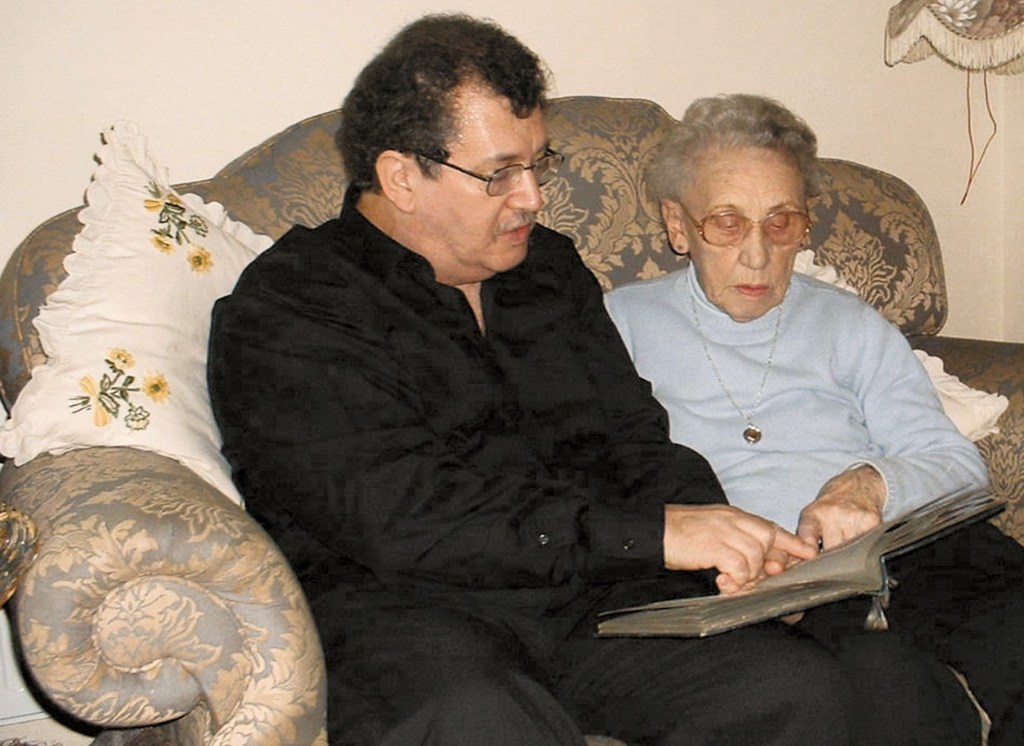
I had long talks with my mother over the years uncovering our family history
My mother was born in 1920 in Liverpool from a family, named Lloyd, which had originated in North Wales. On her mother’s side the family had strong ties to Scotland, her grandfather, surnamed Craig, was born in Ayrshire in the mid-19th century.
Both had many tales to tell, some which had come straight from the horse’s mouth while others had originated further back in the 19th century, or even the 18th century.
Talking to these older family members can provide a grand store of family stories which might appear to have grown over the decades but can provide solid clues of where to look and, surprisingly, some of these old stories have a solid foundation of proof.
An example of this was a story my mother had been told about an ancestor who had been born in a Cornish fishing village and join the Royal Navy only to have been invalided out after an accident on board ship.
I later traced the Climo name from Liverpool back to Devon and then back to Polruan in Cornwall. This is where Thomas Climo was born and raised until he joined the Navy. On one of his voyages the vessel he was on was wrecked on a small reef near Bermuda.
Later censuses listed him as a Greenwich pensioner, although he was now sailing in merchant vessels. The pension, paid as an out pensioner (which meant he did not reside at the Greenwich Royal Naval Hospital but had been injured enough to make him no longer fit for service in the Royal Navy) thus confirmed the main facts of the story and gave me enough clues to fill out his life.
My father told me the family story about his grandfather’s family and the ghost of a soldier who allegedly came back to see his old mother as she lay dying. Years later I found an old notebook written by my great grandfather, the Welsh minister, in which he gave details of an event at which he had been present as a child. According to him the family had been seated around the kitchen fire while his grandmother was in the bedroom above, understood to be at death’s door.
He wrote that they all heard the sound of a soldier’s boots on the cobbles outside and that the sound came through the door, across the stone-flagged kitchen floor and up to the bedroom above.
When they finally recovered from the shock the old woman’s son went upstairs and found his mother to be dead in her bed but with a peaceful smile on her face.
The moral behind this is that you should never dismiss stories from elderly relatives because there might be a sliver of truth even in the most unbelievable family tale.
When you do interview an elderly family member you should let the memories come out naturally. Don’t begin with: “Is it true that great grandfather Thomas was hanged for murder?” Instead start with: “Was your grandfather alive when you were born and did you ever meet him.”
As your relative picks at his or her memories old stories will come to the surface. Elderly people can often have a great recall of facts from their early years even if they have forgotten what they had for teas two days earlier.
If your relative does agree to an interview then you should plan carefully.
Make a list of questions which might nudge the interviewee towards certain family members. As I said let them set the pace. This doesn’t mean you can’t nudge them in the right direction.
For instance they might not have known that her grandfather’s name was Thomas, they might have known him as Pops or Grandpa, or Taid, but you could ask if other family members had called him by a certain name.
Your interviewee might then recall that great-aunt Norah had called her brother by a strange nickname when she was teasing him but called him Thomas when she was being serious.
You need to lead in to the stories you are looking for and should start with the3 basics to set your relative at ease.
Here is a list of possible questions:
1. “When were you born?” You could then ask “where” if the first answer is fairly positive.
2. “What was your father called and did he have a nickname?”
3. “What was your mother’s name and do you know her surname before she was married? Do you know where your parents were married?”
4. “What work did your father do? Did you ever visit him at work?”
5. “Did your mother go out to work and did she ever take you with her?”
6. “Did either of your parents serve in the armed forces, Army, Navy or Air Force, and if so did they have any medals?”
7. “Do you have any old pictures of your family, your parents or grandparents for instance?”
8. “Did your parents ever talk about their childhood. Did they have any brothers or sisters?”
9. “Did you have any brothers or sisters?”
10. “When did your parents die and where are they buried?”
11. “Did they leave a will, if so do you have it, or do you have any other old documents from the family?”
12. “Where was your family home when you were a child?”
13. “Which school did you go to and did the family go toi church, if so, which one?”
14. “Do you remember any relatives visiting when you were a child, or did you visit older relatives when you were young? If so where?”
15. “Do you remember any big family get-togethers, weddings, Christmases or when an elderly relative died?”
You don’t have to stick rigidly to these questions, you might think of others or decide to follow a particular track after an interesting answer.
The important thing to remember is to be gentle with your elderly relative and if a particular question seems to touch a nerve don’t push it. Go in another direction and see if later they are prepared to talk about it.
Don’t make the interview too formal. It might be possible to video it, although older people might not be happy about a camera. Even a tape recorder might be offputting. A pen and paper might be the best answer for making notes. Don’t try to write it all down verbatim, just occasional notes as an aide memoir.

 Robin's Nest