As I mentioned yesterday I was quite prepared to be a peacock preening my gaudy feathers for all to see.
Mayhap it has always been a part of me, that desire to change my outward appearance, possibly because I loved the attention but also because I enjoyed being someone else for a while.
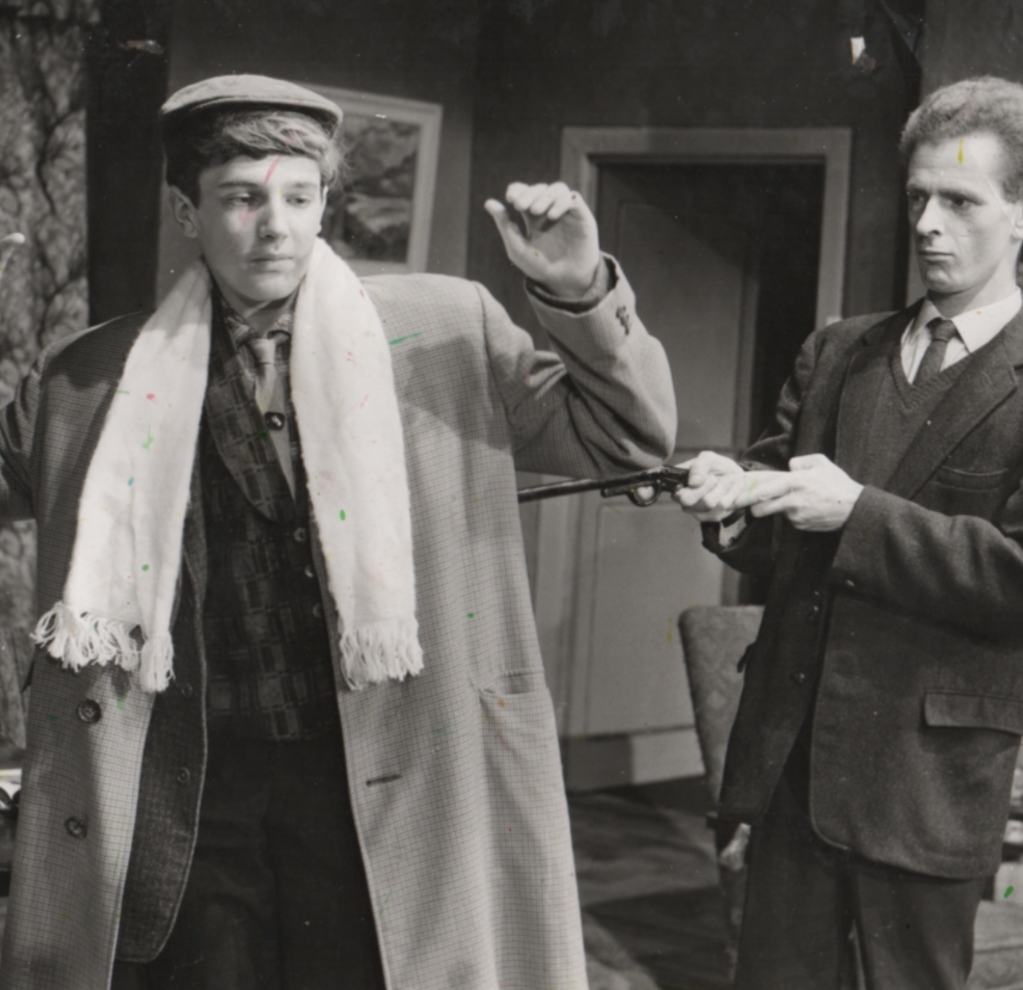
The Little Theatre gave me one outlet. Many of the parts I played were either from another era – Macbeth; The Deserted House; The Rocking Horse Winner; Night Must Fall – or else another world – Alice in Wonderland; The Princess and the Swineherd; or the play wherein we were marionettes come to life; all of which required dressing up in some fashion.
Playing the elderly bookies’ runner in the Rocking Horse Winner
I know my father enjoyed such changes of character as he had done am dram in Much Wenlock in the late 40s and had played a Fu Manchu style character in one production.
This desire to get dressed up was released for him in later years by the annual fancy dress party at Rhyl Yacht Club.
With only a once-a-year chance to let his imagination go wild he didn’t stop at some home-made costume just to give a nod at the subject – he let rip.
I remember one year the theme was pirates. Angela loaned me a pair of pirate-style trousers in black and gold stripes (probably from a production of Robinson Crusoe) and a black buttonless waistcoat with gold trim (which I am sure I later wore as the marionette gypsy) to help me out. A bandana round my head and a sash to stick my wooden cutlass in completed the outfit.
Not so simple when it came to my father. A pair of old white trousers raggedly cut short half-way between knee and ankle; an old shirt with a maroon waistcoat over it, unbuttoned of course; and a scarf tied around his head with the fringed edges at one side running down to his shoulder, provided the costume, but he was not any old pirate – HE was a mulatto pirate (notreally PC these days) with the appropriate greasepaint to provide the colouring and a single large gold hoop earring.
Mum said she was cleaning the greasepaint off his pillow case for weeks.
Another time he chose to dress as an absent-minded professor. A smart suit and tie plus briefcase gave the professorial image but the absent-mindedness was indicated by cobwebs hanging off his hat and his shoulders, and he wore a pyjama jacket in place of his shirt.
Unfortunately another club member, Phil Davis, outdid him with the same theme except his absent-mindedness was portrayed by a lack of trousers.
My early fancy dress was much more simplified. At six or seven I eschewed the cowboy outfits to dress as an Indian chief. My costume was trousers with fringed seams, a tabard top with painted “Indian symbols” and a chieftain’s feathered head-dress with feathers trailing down my back. I think my grandfather bought the outfit for me.
Later the theatre satisfied my needs for dressing up until the time I decided to try and outdo my father for an OTT outfit at the annual RYC fancy dress party.
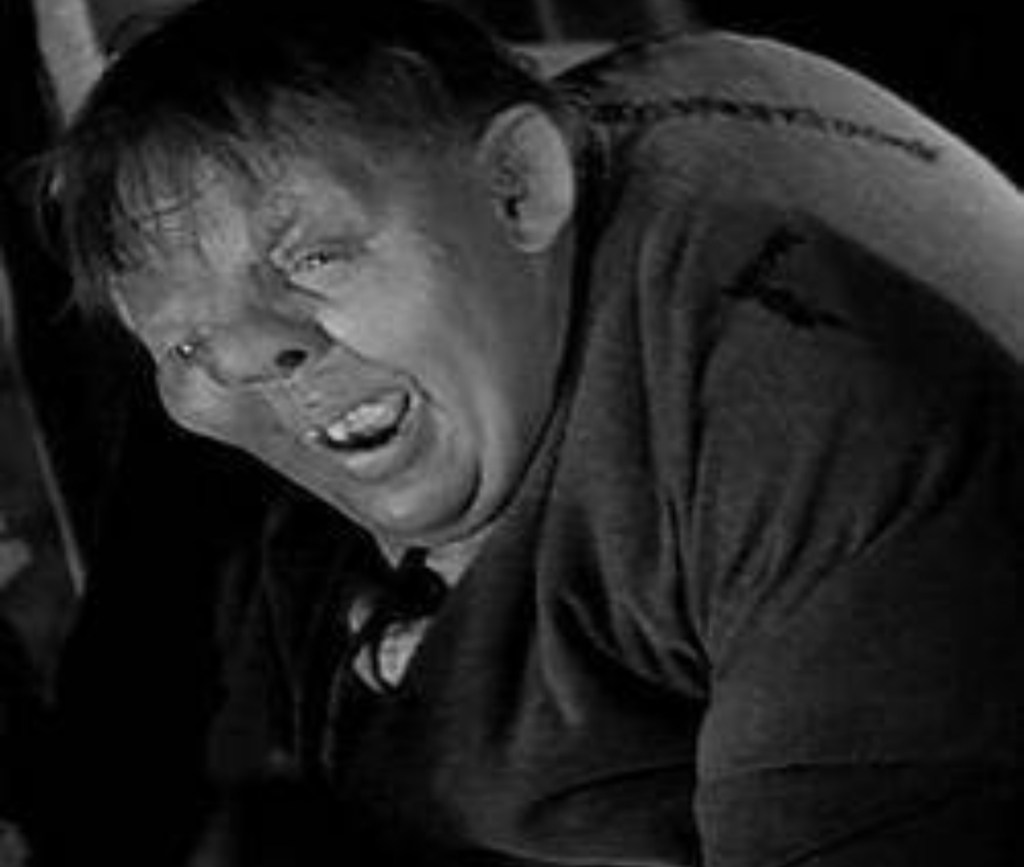
My first effort was Quasimodo, the Hunchback of Notre Dame. My model for this was the Charles Laughton version of the 1930s.
I had made a long sleeveless surcoat out of an old flannel sheet. I buried it in the garden for two weeks and then gave it a light rinse and squeezed it dry so that it had that dirty, mottled grey appearance. An old grey shirt and brown trousers, cut ragged as my father’s pirate outfit had been, provided the clothing. An old Mae West lifejacket strapped to my back, under the shirt, provided the hump.
Then I needed to do the makeup which in my version included the dropping of one bloodshot eye lower down the cheek.
Nose putty and a white marble with a red streak in it achieved the right effect and appropriate greasepaint made my skin more sallow. Acting had taught me how to adjust my mouth to give that drooling look.
It must have been 1967 or 68 because Roger had one of his “old bangers” by this time and drove us down to the club – I would have scared any passersby if I had tried making my way through the backstreets and alleys of Rhyl.
At the club we made sure we arrived after most people had arrived. The reaction to my entrance, shambling along with one arm hanging down and mumbling “The bells – the bells” as I made my entrance was as satisfying as a standing ovation at the theatre.
The following year I chose The Mummy a la Boris Karloff as my theme and the bandages were suitably greyed in the same way as Quasimodo’s jerkin.
After that I thought I had reached the peak at fancy dress parties and put my “Hammer Horror” efforts behind me.
It was fun while it lasted.
I did make an effort many years later when I dressed as Che Guevara, complete with beret, beard and a fine Cuban cigar.
The summer of ’66 was over and I had finished my work experience at the Rhyl and Prestatyn Gazette and was preparing to return to the world of education.
The difference between my time at Rhyl Grammar School and the year I spent at Flintshire College of Technology was that at one I was treated as a child and at the other as an adult.
There was another difference.
At school the class had consisted of about 30 split roughly half and half between male and female.
At college there were 17 people in the group and I was the only one who used the male toilets.
Imagine it – a 16-year-old boy spending most of his time at college with a group of girls aged between 16 and 18.
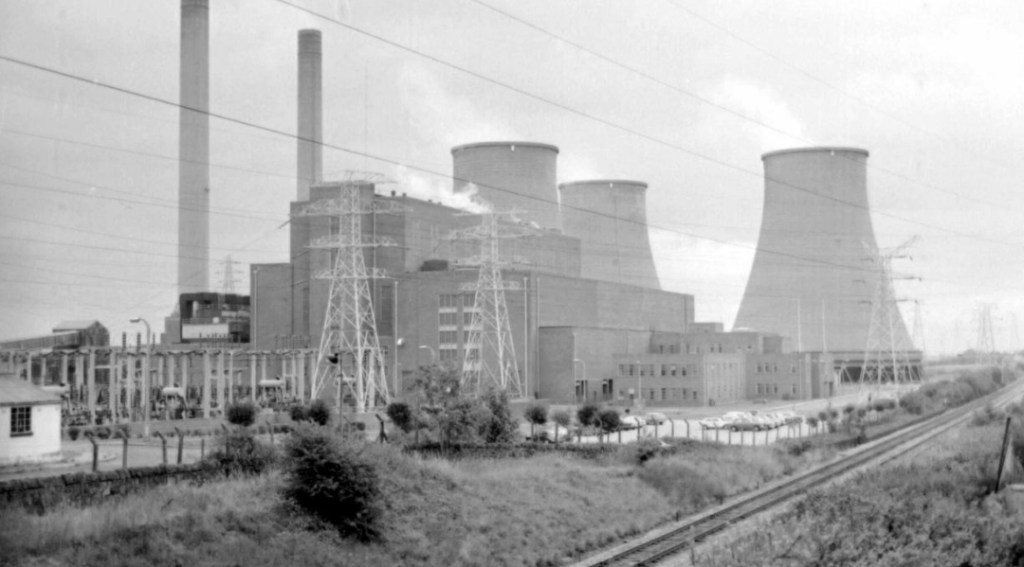
The college was a train ride away from Rhyl, getting off at Flint and then catching the college bus. You knew you were approaching Kelsterton (as the college was always known) when you saw the cooling towers at the Shotton works (since demolished).
The old cooling towers opposite the college.
As I said the course was labelled as a commercial course and it went beyond secretarial subjects, shorthand and typing, to include commerce (invoicing, bills of lading, discounting); office practice (including rotas); general mathematics; and English Speaking.
The idea was not to turn out secretaries but to turn out office staff with the capability of becoming office managers. Although that might sound sexist now at that time it was a massive leap forward in the feminist stakes.
At this time one of my cousins, of the same age group as my classmates, was taking an actual secretarial course at an Essex college which really was churning out secretaries. Clearly we in Wales were more enlightened.
There I was – a lone male in a class with 16 women (I certainly wasn’t going to describe them as schoolgirls), the envy of all my male friends; and I spent the first week thinking about every word before I spoke in case it could be taken the wrong way.
In fact I needn’t have worried. In the main we all became good friends, although I must admit two or three did try to mother me. The real problem was that if I had met any of them at a disco I would have happily danced with them and asked them out on a date.
Not so easy when you meet them all together and don’t know if any are already dating and who might feel offended if I did not ask for a date.
As it happened I doubt if many were bothered. I know a couple were interested in taking things further because they made it abundantly clear. The situation was not that easy for an adolescent boy making his first real forays into the swinging sixties scene.
Meanwhile we all settled in to our classes. The mathematics were tailored to suit the business world and did not involve working out how quickly you could fill a 50-gallon bath if the taps filled it at 10 gallons a minute while the plughole released it at five gallons a minute.
To solve that you buy a plug. That’s business.
This was, of course, a time of new fashion and even in North Wales we had adopted much of the style of Carnaby Street.
Far from having only one tie – a school tie – I already had five, including a yellow floral kipper tie; a slim Jim in black and silver; a Paisley pattern kipper tie and two more simple ones.
The presence of so many young ladies around me tended to bring out the peacock in me and my shirts had floral patterns or collar and cuffs in darker material than the body and sleeves.
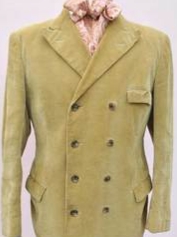
My pride and joy was a double-breasted Regency-style jacket in wide brown stripes – light and not so light. Flared hipster trousers with a wide black belt completed a very elegant ensemble which would have done Beau Brummel proud.
The Regency cut which was all the rage at the time.
Not that my flamboyant style left my classmates in the shade. They seemed to try and outdo each other in their choice of colours, materials, hem length and various patterned tights.
My male friends were surprised that at coffee breaks or lunch breaks I was perfectly happy hanging around with them rather than the ladies. Maybe some of them hoped for an introduction.
The year at college flew by and during that time my friendship with my classmates boosted my confidence when it came to dating. Not with “Robin’s Angels”, as some of the other students had started to call them, but with local girls I met at discos in Rhyl.
More about my boogy disco nights another time.
At the same time my friendship with my classmates made me more aware of the right ways and the wrong ways to treat potential dates.
College gave me an interesting break before I needed to really get down to settling my future. It also gave me a stack of certificates from WJEC, RSA, and Pitman’s many of which were counted as equivalent to GCEs.
That was basically what my parents and I had agreed I needed.
When college ended it was not a summer holiday that loomed – I needed to find a job.
Studying at home and spending more time, whenever possible, at the newspaper office strengthened my interest in becoming a reporter day by day.
More than anything I developed a love for the structure and development of language and the written word.
I know my photographer colleagues believe their pictures are worth a thousand words but a good journalist can tell the story of that picture in 100 words and that would save space.
I followed the timetable of my correspondence course to the letter and the closer it came to the GCE examinations the less concern I felt.
Without the rigid schooling I had been subjected to in my four years at grammar school I had been able to get my studies done and also take them above and beyond what my friends were doing.
My reading took in many writers new to me and often unknown to even my more literary-inclined schoolfriends.
I am not suggesting I was better than them, just that I had greater freedom to explore.
By the time it came to sit the examinations I felt cool, calm and collected. Even more so that I did not have to stifle my body in a school uniform and was free to wear the 60s fashions that had slowly arrived in North Wales.
The greatest pleasure at that time was after each examination I could join my friends and discuss what we had just been through and compare notes.
That was what I had missed most. The companionship of my friends.
By now, of course, I had turned 16 and was legally permitted to smoke, although I had been introduced to cigarettes well before this by my brother.
Strolling down the school drive with friends and casually lighting up while still on school premises foolishly made me feel more grown up.
It would be many years before I realised how foolish I was but at that time smoking and drinking were considered to be perfectly normal. I was 38 when I finally stubbed out my last cigarette. That DID make me feel like a grownup.
There was a long wait for the results but during that time my parents and I discussed the best way forward.
We still worked on the basis that I must have some worthwhile qualifications before taking my first strides into the world of adults.
We finally agreed that I should enrol at Kelsterton College of Technology on a commercial course. This involved maths as it applied to the commercial world as well as shorthand, typing, office practice and English yet again.
Meanwhile I had a summer of freedom ahead of me before I re-entered an educational institution. This time, however, I would be treated as an adult and not as a child.
That summer was one of the best I had ever had.
Along with varied companions Roger and I saw Rhyl as our world and that world as our oyster.
At times we strolled the length of the promenade and back eying up the girls and debating on which ones were worth our attention (teenage boys can be so cocky at times).
Sometimes we did pluck up the courage to approach them and now and again we had the pleasure of their company acting like holidaymakers, eating ice cream, trying the penny arcades and enjoying rides on some of the better fairground attractions.
At other times we would leave Rhyl behind us, get on our bikes with suitable provisions to see us through the day, and head out into the Clwydian countryside.
We were still young enough to enjoy the idea of adventure.
I also had the companionship of my friends at the theatre, a world which Roger did not feel at ease with.
He and I did have the yacht club to fall back on and the joys of sailing beyond the crowded beaches with the full freedom of the sea around us.
There was also the pleasure of a pint at the yacht club bar on Sunday lunchtimes or Friday evenings. It was too soon to try our luck in the pubs.
All in all that summer provided many happy memories. Happy days that were soon to be curtailed as further education loomed.
For me that was going to provide a somewhat pleasant surprise.
We all know Shakespeare described the world as a stage which makes us all actors whether or not we have learned the lines.
How many of us see ourselves in that way and if we do are we a spear bearer, the star or Dandini to someone else’s Prince Charming?
If we merely stick to the Bard’s script will we go through the seven ages from “mewling, puking infant” to the second childhood and oblivion “sans teeth, sans eyes, sans taste, sans everything.”
Professional actors seek to win the starring role and some will even become directors as well as actors to ensure that they choose the path their fellow actors must take.
That does not mean you need to be a professional actor to choose your roles and direct your path through life.
Every town has its amateur dramatic group or amateur operatic society but that does not mean they know how to act or direct.
Those of us who were or are members of the Rhyl Children’s Theatre Club were taught far more about the ways of theatre and how to adapt many of those skills to help them find their way in life.
Joe Holroyd and Angela Day – an inspirational pair.
For me it took many years to realise that the decade I spent learning from Joe Holroyd and Angela Day, which saw me play many parts from a fish to a psychotic killer (not that the actual roles were lessons in life).
The greater lessons were those which taught us when to make an entrance; how to project ourselves to ensure the back row heard us without deafening those in the front seats; how not to upstage your fellow thespians but still prevent others upstaging you.
These were the onstage skills but we learned far more as Joe and Angela demonstrated the offstage workings which were as important as appearing before the audience.
Stage lighting is as nuch an art as acting. A bare stage sans scenery, sans tabs, sans backcloth can be transformed by a skilled lighting expert (John Gilbert was an artist in that field).
There are often more people offstage as on, ensuring everything runs smoothly ranging from director to stage manager; props controller to wardrobe mistress (or just as likely master); box office ticket sellers to ushers and ice-cream sales attendants.
I know that what I learned there was a major help in my life.
The art of projection can be used in real life when you need people to pay attention. This proved invaluable in my future roles in my union and later when addressing political meetings.
At the same time it helped me through two father-of-the-bride speeches when I had to draw attention to myself yet also ensure the bride and groom remained the stars of the show.
It taught me how to control my emotions and make my point without shouting.
That decade taught me that in life, as in a theatrical company, everyone has a role to play and we must consider the value of the walk-on role without a line as highly as we appreciate the star.
I may have gone a little bit off-piste today but there are times when something inside of you must be brought to the surface.
The author as psychotic killer Danny in Emlyn Williams’ Night Must Fall. You will have to imagine the fish.