Alone

by Edgar Allan Poe

From childhood’s hour I have not been

As others were — I have not seen

As others saw — I could not bring

My passions from a common spring —

From the same source I have not taken

My sorrow — I could not awaken

My heart to joy at the same tone —

And all I lov’d — I lov’d alone —

Then — in my childhood — in the dawn

Of a lost stormy life — was drawn

From every depth of good and ill

The mystery which binds me still —

From the torrent, or the fountain —

From the red cliff of the mountain —

From the sun that ’round me roll’d

In its autumn tint of gold —

From the lightning in the sky

As it pass’d me flying by —

From the thunder and the storm —

And the cloud that took the form

(When the rest of Heaven was blue)

Of a demon in my view —

Bright Star

by John Keats

Bright star, were I as stedfast as thou art —

Not in lone splendour hung aloft the night

And watching, with eternal lids apart,

Like nature’s patient, sleepless Eremite,

The moving waters at their priestlike task,

Of pure ablution round earth’s human shores,

Or gazing on the new soft-fallen mask

Of snow upon the mountains and the moors —

No — yet still stedfast, still unchangeable,

Pillow’d upon my fair love’s ripening breast,

To feel forever its soft fall and swell,

Awake for ever in a sweet unrest,

Still, still to hear her tender-taken breath,

And so live ever — or else swoon to death.

If music be the food of love . . .

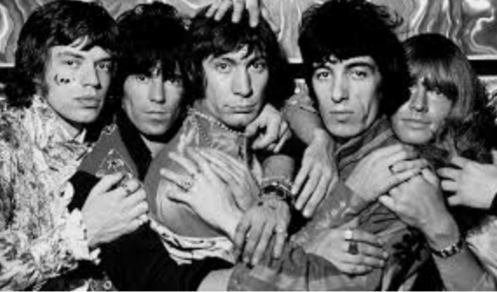
How often do you hear people say: “You either loved the Beatles or you loved the Rolling Stones. It had to be one or the other, you couldn’t like both.”?

I’ve heard it over and over again for over 50 years and these days I hear it from people who weren’t born at the time the Beatles went their separate ways.

It is the biggest load of rubbish I have ever heard. You might just as well say you either like Beethoven or you like Mozart because you can’t like both.

Music is music.

I like the Beatles and the Rolling Stones. I can get down hard and heavy with Iron Maiden and then sit back to enjoy the mellow tones of Joan Baez.

When I was young the big thing was Mods and Rockers.

If you liked the Beatles then you must have liked the Who and driven a scooter.

If you were down with the Stones then you were a Rocker, wore jeans and a leather jacket and rode a motorbike.

Me?

I liked the Beatles (well they’re from Liverpool aren’t they?); the Rolling Stones; I owned a Lambretta for a while; I wore jeans with a T-shirt or sharp two-piece suits.

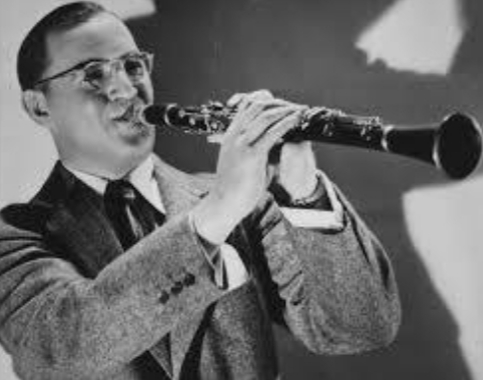
I also liked Benny Goodman, Gracie Fields, George Formby, Mozart, Beethoven, Dvořák, Steeleye Span, Cleo Laine and Miles Davis.

Benny Goodman

As you may gather I have an eclectic taste in music.

It’s the same with reading. If I can’t find a book then I will read anything that comes to hand (well NOT the Sun of course).

Music, like books, seem to have been there all my life.

When I was young, in the 50s, my parents had a radiogram and a collection of 78s as well as a piano.

I can remember evenings when I was little I would come downstairs because I had woken up and my mother would be sitting in an armchair by the fire listening to music on the radiogram.

When I was about eight or nine I used to look through the stack of 78s (some were in a rack in the radiogram and others under the window seat).

The names used to fascinate me.

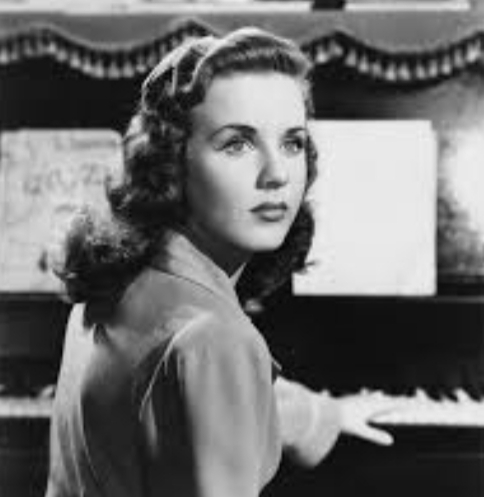
Joe Loss, Deanna Durbin, Enrico Caruso and so many more.

Deanna Durbin

Later they sold the old radiogram and bought a Dansette record player.

This could play 78s, 45s (singles and EPs) and 33⅓ (LPs) so the collection they already had could be played.

It did mean they could also buy new records, the Beatles for instance. Gradually Mum collected a range of singles and EPs including an interesting little four-track by Paddy Roberts called The Ballad of Bethnal Green. I’ve still got it. Look it up on the internet.

My father preferred to make his own music and often of an evening before he went to bed he would sit at the piano and play for a while.

Later I found an old book of Welsh songs with my grandmother’s name inside. Some of the tunes had names written above them such as “Donald’s piece”, “Dorothy’s piece”, “Phyllis’s piece”, and by Dafydd y Garreg Wen “David’s piece”.

Donald, Dorothy and Phyllis were Dad’s brother and sisters and he later told me that his mother had written on the songs which of her children preferred them.

My sister took piano lessons but I showed an interest in the violin and had lessons for about two years.

My grandfather, Harry Lloyd, was a violinist. He took his violin to France with him in 1915 and used to play for the troops as part of a concert ensemble called The Verey Lights.

Before he came to live with us in the mid-60s he had lived in Wrexham and played the violin for the local operatic society.

We used to go over to watch the society perform musicals, Oklahama, South Pacific and more.

It would be late when we drove back and I would lie down on the floor behind the front seats while my brother and sister lay head to toe on the back seat.

I was always asleep in minutes.

As I got older my musical tastes were expanded by people around me.

My brother, four years older than me, took a liking to Bob Dylan and the Walker Brothers; when I was at Roger’s house his older brothers and sisters had a collection 50s and 60s rock ‘n’ roll and country music, hence Johnny Cash and Buddy Holly.

My tastes further expanded in the mid-60s when I used to go to discos such as the one at the Marine Hydro, or The Orbit at the Palace Hotel.

At those times I took a liking to some of the slower numbers when the girls were willing to rest in your arms with their head on your chest.

So much music and so little time to enjoy it all.

I Do Not Speak

by Stevie Smith

I do not ask for mercy, for understanding and peace

And in these heavy days I do not ask for release

I do not ask that suffering shall cease.

I do not pray to God to let me die

To give an ear attentive to my cry

To pause in his marching and not hurry by.

I do not ask for anything I do not speak

I do not question and I do not seek

I used to in the day when I was weak.

Now I am strong and lapped in sorrow

As in a coat of magic mail and borrow

From Time today and care not for tomorrow.

All at sea and having fun

Despite college and work and the theatre I did manage to get some social activities in. The Rhyl Yacht Club was a regular watering hole for Roger and myself.

We had others of course, including the Clwyd opposite the club where we were both members of the darts team for a few years.

But Friday night was usually our night at the club, drinking and playing darts and table tennis.

It reached a stage where Roger and I had our own pewter tankards hanging up behind the bar. If I remember rightly Roger’s had a handle in the shape of a fox.

During the sailing season, of course, we would also be down there, more often than not on the rescue boat although in the late 60s when my brother was away Roger often crewed for me in the family GP14.

Before we had the GP14 the family sailing dinghy was a Jewel class 14-footer and I remember one year when my brother and I entered it in the Menai Straits Regatta.

This was a two-week event based at the Royal Anglesey Yacht Club, Beaumaris, on Anglesey.

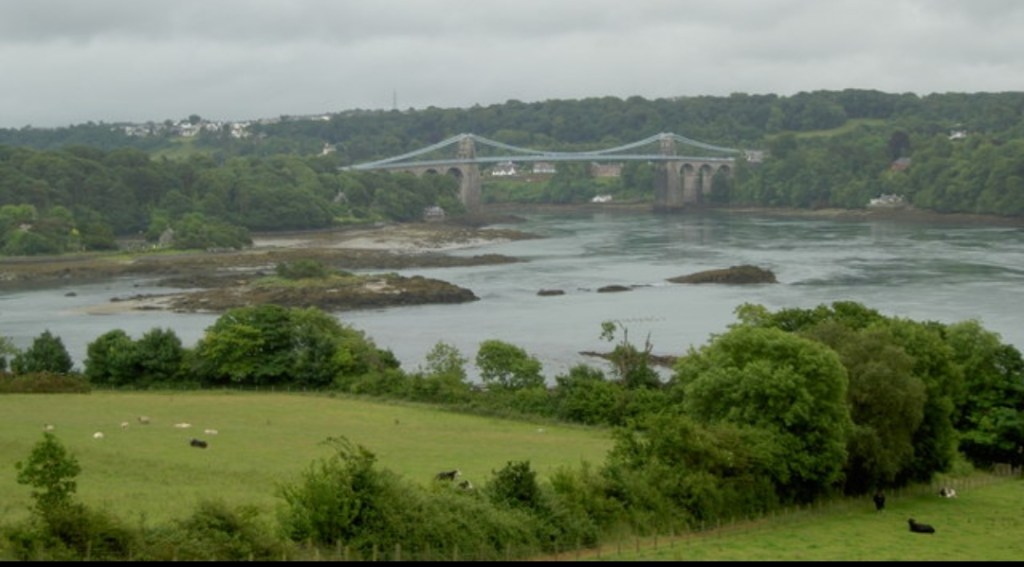
A view of the Menai Strait showing the Suspension Bridge

The Straits is the channel that runs between the Welsh mainland and Anglesey.

Races would involve different classes of sailing boats on courses mainly set at the eastern part of the Straits although there was one round the island race which started off going through the Swellies before sailing round Anglesey and Puffin Island.

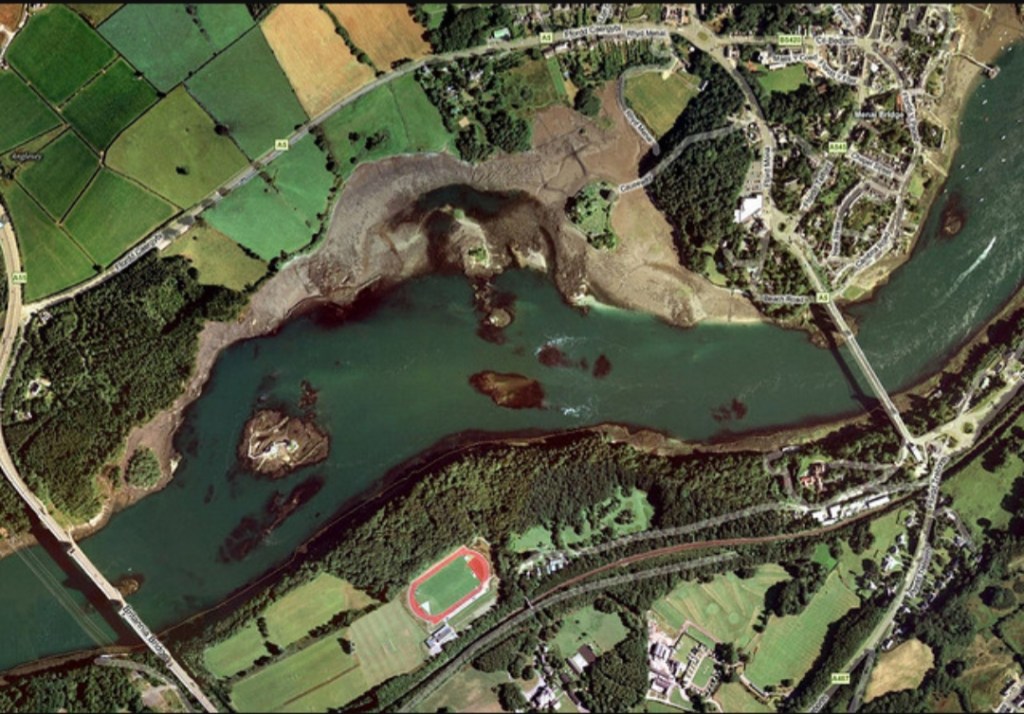
An aerial view of the Swellies in the Menai Strait.

The Swellies is the stretch of water running between the Telford Suspension Bridge and the Britannia Bridge which includes a number of small islands and rocky shoals which, during the ebb and flow of the tides, cause dangerous currents and even whirlpools.

Not a race for the inexperienced.

In the year I crewed for my brother Nigel we camped with other friends in a field on the mainland and used to crowd into a couple of cars to get over to Beaumaris.

Although the regatta was at the end of July and beginning of August it didn’t always mean there was good weather.

On one day they decided the dinghy racing, which included the Jewel Class, was safe to go ahead but the wind got wilder and a number of boats capsized including ours and a couple of other Rhyl boats.

The Jewel is not a lightweight boat. It is carvel built which means the planks overlap and the joints are sealed.

Upright they are easy enough to handle but once they capsize they can be difficult to right without pulling the mainsail down before putting weight on the centreboard.

While we were deciding whether to right our boat or get it to shore as it lay we noticed one of the safety boats get too close to another capsized boat and rip the sails with the outboard.

At that point we decided to wave away any safety boat that came close to us.

The water was so choppy that it was impossible to work our way round to lower the mainsail so we ended up with Nigel up front with the painter (a rope) tied round him and me at the stern helping to propel the boat as I swam.

We had capsized, along with about a dozen other assorted dinghies, in mid-channel and it took quite a while to reach the shallows. At that point we could stand upright and loose the mainsail, raise the centre-plate and get the boat upright and over to the slipway.

Once we had her strapped to the trolley we managed, with help, to pull her almost out of the water at which point we could take out the drainage plugs to let all the water out as we took her to the top of the slipway to the dinghy park.

Because it was a cold day I had put on a warm, roll neck sweater and as we trudged up to the Royal A clubhouse it was sodden and starting to hang down to my knees.

Under normal circumstances most of the visiting sailors would not have been allowed close to the clubhouse in our sailing gear let alone inside. Once we had used the changing rooms and put on some dry gear, in my case a pair of cut-off denims, an open neck short-sleeved shirt and a pair of canvas deck shoes, we headed straight for the bar.

That fortnight at the Strait regatta did get better, almost, but the bad bits included: a wasp getting into my ear and stinging me; and pigs getting into the camping field and ripping my tent apart in their search for food.

I found out later the farmer’s nephews, who were city born and bred and having a holiday on the farm, had not learned the first rule of being in the country: CLOSE THE GATES!

Not all sailing events had such disastrous moments. One of the annual events at Rhyl Yacht Club was a day sail round to Llandudno Sailing Club in the Bay of Colwyn.

The usual practice was to take some drink and food, normally sandwiches, and the Llandudno club laid on a light buffet.

Two or three times Roger and I went on this trip in the GP. Along with a bottle of squash or lemonade, we would also pack a few cans of lager. A very pleasant Sunday outing for all.

Another good club weekend was the annual visit of the West Kirby Sailing Club. They would race from the Wirral to Rhyl on the Saturday and moor in the harbour for the night (they were mainly cruising boats, such as Hilbres, with up to four crew on each).

Once they were anchored a few of us used to take the punts around the harbour ferrying them back to the clubhouse.

Then the evening fun began. A buffet was laid on and then the Kirby crews tried to drink us dry. We always got in extra for Kirby night.

At times I would help behind the bar and those I had rowed ashore would offer me a drink. Once I had finished behind the bar I had enough marked up to see me through to midnight.

Quite often the youngsters from both clubs would pop over to the fairground for an hour.

The Kirby crew would bunk down in the clubhouse for the night and the following day we would all use a common start line as they raced back to the Wirral and our boats raced to the Earwig Buoy and back.

Happy days all at sea.

Greater Love

by Wilfred Owen

Red lips are not so red

As the stained stones kissed by the English dead.

Kindness of wooed and wooer

Seems shame to their love pure.

O love, your eyes lose lure

When I behold eyes blinded in my stead!

Your slender attitude

Trembles not exquisite like limbs knife-skewed,

Rolling and rolling there

Where God seems not to care.

Till the fierce love they bear

Cramps them in death’s decrepitude.

Your voice sings not so soft, —

Though even as wind murmuring through raftered loft, —

Your dear voice is not dear,

Gentle, and evening clear,

As theirs whom none now hear,

Now earth has stopped their piteous mouths that coughed.

Heart you were never hot

Nor large, nor full like hearts made great with shot;

And though your hand be pale,

Paler are all which trail

Your cross through flame and hail:

Weep, you may weep, for you may touch them not.

Newspaper bosses kept it in the family

After my first trip to the print works Peter began to take me there on a regular basis and I got to know not just the printers and journalists but also the directors.

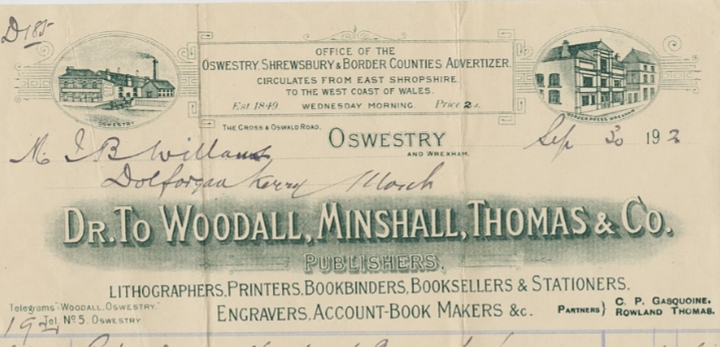
What had begun in the 19th century, as a publishing company, Woodall, Minshall and Thomas, at Caxton Press in Oswestry, and later became North Wales Newspapers, was by now basically owned by the Thomas family with Eric Thomas as chairman and Robbie Thomas, his cousin if I remember rightly, as vice-chairman and editorial director.

In fact the Woodall and Minshall families had not been involved in the company, which continued to bear their name, since 1905.

This notice appeared in the London Gazette in April 1906

William Thomas’s son Rowland later took on the business and Eric Thomas was his son.

The original printing firm was also the 1840s publisher of the Oswestry and Border Counties Advertizer, which at that time was basically just a railway timetable. Oddly the only other reference I can find to Charles Penrhyn Gasquoine is as the author of a book about the history of the Cambrian Railway.

The BCA later became a proper newspaper and in 1920 the company launched the Wrexham Leader, the weekly paper my father remembers from his home town, he was five when it was launched.

The reason I mention all this is because from 1967 until 1972 this was the firm I relied on for my weekly wage and it is always good to know who your bosses are. It isn’t, after all, just us and them as employers and workers rely on each other for their 9.

They may not have realised it at the time but it was the way they dealt directly with their employees that put me on the path to socialism. They treated the whole set-up as a type of family. Not that such a relationship is always good for everyone.

Maybe if they had known at the time the direction I was taking they might not have welcomed me back with open arms five years later. Then again that’s a story for the future.

One thing that did draw my attention at the time was the relationship between journalists and printers on a personal level and the difference when it came down to union matters between the print unions and the NUJ.

I have always got on with my print colleagues wherever I worked in the UK, Australia and Oman. At the same time it was my belief that when it came to the crunch the unions should unite if necessary to ensure employers did not take advantage.

I won’t talk any more about relations between the company and employees at this stage of the narrative because I only saw it first hand occasionally as I did not visit the works more than once a week and sometimes less.

I was taking a deeper interest in politics, not so much between the current political parties as the ideals behind the people involved.

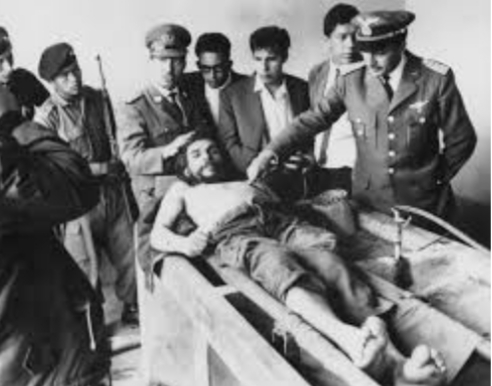
This was the time when Dr Ernesto Rafael ‘Che’ Guevara de la Serna (sometimes Lynch after hisfather) had recently made the news again having dropped out of sight in 1965 when he cut all ties with the Castro government and left Cuba.

The reason he was in the news again was because he had been captured and executed in Bolivia where he had been leading a movement to oust the government.

Bolivian Army officers and possible CIA personnel displaying the body of Che Guevara.

Rather than indulge in the new 60s wave of turning him into an icon I was more interested in finding out what had driven him to leave the safety of a cushy government job in Cuba with his compadre Fidel Castro to face death in Bolivia as a move towards world socialism.

This is why I took up a study of 19th century workers movements against different forms of government “repression”.

This included Marx and Engels’ studies of the working class in the first half of the 1800s; the Chartist Movement of the mid-19th century; the Rebecca Riots in Wales; and the Swing Riots mainly based in the agricultural belt reaching from Devon to East Anglia.

Unlike most people who claim to have read all of Marx and Lenin in their 20s I am still studying these works and the writings of the Webbs, Trotsky, Keir Hardie and others.

Never had time for Uncle Jo.

The point is the more I study the past the angrier I get with the way we have all been treated by our “betters”.

Many people are ultra-left in their teens and 20s and gradually drift towards the centre and across to the varying levels of the right wing.

Me, I started off left of centre and have drifted back and forth between there and left of left.

It’s good to let go at times.

Next time: All at sea.

A Thousand Martyrs Have I Made

by Aphrah Behn

A thousand Martyrs have I made,

All sacrific’d to my desire;

A thousand Beauties have betray’d,

That language in resistless Fire.

The untarri’d Heart to hand I brought,

And fixt the wild and wandring Thought.

I never vow’d nor sigh’d in vain

But both, thô false, were well receiv’d.

The Fair are pleas’d to give us Pain,

And what they wish is soon believ’d.

And thô I talked of Wounds and Smart,

Loves Pleasures only toucht my Heart.

Alone the Glory and the Spoil

I always Laughing bore away;

The Triumphs, without Pain or Toil,

Without the Hell, the Heav’n of Joy.

And while I thus at random rove

Despise the Fools that whine for Love.

Stereotype – it’s such a cliché

Printing presses were not foremost in my mind when I decided on my future as a reporter.

I knew about the principles of printing having once had a John Bull printing outfit.

Not, of course, that this childish toy was ever designed to introduce people to the real joys of printing.

To learn more than that, when I was about 14 or 15, I bought a secondhand Adana printing press from a school friend for a fiver.

Mine wasn’t as bright and shiny as the one above but it was similar and came with a composing stick, lead type, and a frame in which to place the rows of type.

In fact it had everything a budding printer might want – if he or she wasn’t looking to go beyond a five inch by four inch format, handy for visiting cards and headed notepaper.

Mind you, I did end up with some smart visiting cards (with no-one to hand them out to) and a charming selection of stationery with my name and address set neatly in the top right corner.

I was more interested in Caxton and Guthenberg than I was in 20th century printing.

When I did become a journalist my interest remained in finding stories and writing them up.

Then came the time that Peter told me he wanted me to accompany him to the head office at Oswestry and see what happened on the day the paper was put to bed.

I drove to his home just outside Wrexham that day and we then travelled together. On the way he told me he needed me to be on hand to take down last minute copy over the telephone.

The head office and printing works were based in a large Victorian building opposite the old railway station (which was also now part of the North Wales News group offices).

When I first walked through the front door I little realised how it was to be a second home for me in the near future, and that the board room to the right would become very familiar. That, however, is another story.

On that day I felt and smelt an atmosphere that became to be very special.

Initially Peter took me up to the first floor and left me in a room clearly set aside for visiting editors, equipped with two desks, one with a typewriter. Both had telephones and the typewriter desk also had a set of headphones attached to the phone.

“I’ve got to go and see some people. Wait here and if anyone rings from Mold be prepared to take some copy.”

He showed me how to use the headphones so that I could type while listening.

While I waited I could feel a thrumming in the air as though the whole building was vibrating.

It wasn’t long before he was back and said he would take me on a tour which began on the top floor where the sub-editors for the weekly newspapers were located. They appeared to be a mixed bunch yet chatty too as they got on with marking up copy.

From there we followed the marked copy to where the Linotype operators were busy typing on a complicated looking keyboard on a massive machine.

The noise in that room, with its rows of machines, was like being in a 19th century cotton mill with the looms working constantly.

As the operators input copy the machine mechanically turned the typewritten copy, with all the subbing instructions, into slugs of lead, each one revealing all the characters turned into one line of the right typeface, typesize and length.

Each machine had its pot of molten metal which was constantly fed with sticks of type metal (an alloy of lead, antimony and tin).

In time I would become familiar with every stage of newspaper production but my introduction to the Linotype room left me amazed at the “magic” which turned my copy into gleaming silvery lines of type.

The next stop was “the stone”, long tables on which were large frames in which men (it was mostly men in those days) were assembling the slugs into blocks of copy as they would appear on the final page as stories.

Before going down to the stone Peter warned me not to touch anything. Even if I saw something on the floor I was NOT TO TOUCH!

This was the power of the printing union. If a non-print union person – even a company director – touched anything in the realm of the printers it could bring on a stoppage.

We had to stand on the opposite side of the stone so to us the pages appeared not only back to front but also upside down. In time I became adept at reading things upside down as well as I could a normal page of print.

The assembled pages were proofed, at which point the journalist on duty could check for errors, although the print union proofreaders also did this and could often notice errors missed by the journalist.

Once approved the page frame, or form, would be covered in papier maché to create a positive mould, a flong, which would then be used to create a curved stereotype or cliché in metal which would be attached to the print press ready to print.

Yes – it was printing that gave us the words stereotype and cliché. Since when we have turned both words into clichés.

The final move was for the stereotypes to be attached to the presses and they were ready to roll.

That first time, that magic moment when the button was pressed and the press slowly began to come to life, will stay with me forever.

Standing on a platform above the presses and seeing the white reels of paper being covered in print, folded, cut and dropping out finished newspapers at the far end will never leave me.

The roar of the presses and the vibration through my body at that moment has remained with me ever since.

I knew then that as long as those presses rolled and roared I would forever be a journalist.

The day they no longer thrilled me I would walk away.

The Field Mouse

by Gillian Clarke

Summer, and the long grass is a snare drum.

The air hums with jets.

Down at the end of the meadow,

far from the radio’s terrible news,

we cut the hay. All afternoon

its wave breaks before the tractor blade.

Over the hedge our neighbour travels his field,

in a cloud of lime, drifting our land

with a chance gift of sweetness.

The child come running through the killed flowers,

his hands a nest of quivering mouse,

its black eyes two sparks burning.

We know it will die and ought to finish it off.

It curls in agony as big as itself

and the star goes out in its eye.

Summer in Europe, the fields hurt,

and the children kneel in long grass,

staring at what we have crushed.

Before day’s done the field lies bleeding,

the dusk garden inhabited by the saved, voles,

frogs, a nest of mice. The wrong that woke

from a rumour of pain won’t heal,

and we can’t face the newspapers.

All night I dream the children dance in grass,

their bones brittle as mouse ribs, the air

stammering with gunfire, my neighbour turned

stranger, wounding my land with stones.