Time to make my final stand as the hedge wars reach their Waterloo

It is time for the war to end.

It has gone on too long with casualties on both sides.

Now, however, we have reached the point where one side must achieve victory – that will be MY victory.

Yes, this year, 11 years after the struggle began, I am determined to have my Waterloo and, without the need for allies or any form of outside support, that damn hedge will finally be defeated.

It has taunted me, wounded me numerous times, pretended to surrender only to attack me when I was not looking and acted in the completely underhanded way you would never expect from what should simply be a delightful area of growth, a larder for birds and backdrop to our garden.

When we arrived down South, in February 2011, a year after the death of my dear mother, we were met by a neatly trimmed, normal privet-style hedge at the front of the property which then turned unto a prickly barrier as it turned the corner and headed down to the garage.

The front garden was fairly bland, with both sides covered in shingle with a tall acer to one side and a smaller, umbrella-type acer and a garden pond on the other. There were also a few plants in large decorative pots.

The back garden was much larger, with a greenhouse, garden shed, a plum tree, a cherry tree and a magnolia and flower borders and it was here the head gardener, Marion, decided to concentrate her activities and spent the next few years creating a beautiful floral garden combined with a fruit and vegetable area.

My job as under-gardener was to dig holes, cut off big branches and deal with the giant prickly hedge.

Clearly the previous owners of the house must have had a problem with it because they had erected a six-foot fence in between the hedge and the garden itself.

The hedge now looked onto a parking bay, with about an 18 inch strip of tarmaced footpath for people to get to their boots, if reversed in, or their engine compartments. They still tended to put their posteriors in jeopardy if they backed onto the thorns.

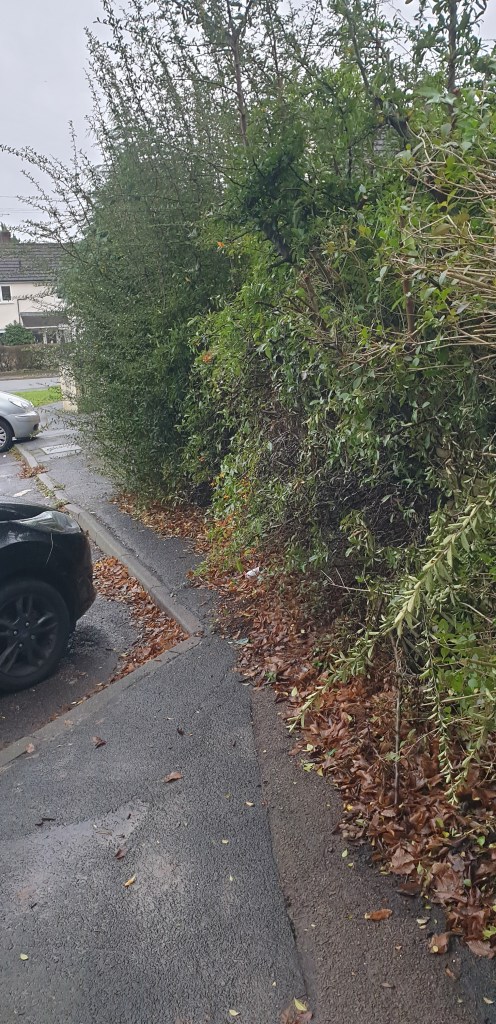
The first time I approached the hedge, with an intent to show it who was master, it stood about 10 to 12 feet high and was probably about three feet deep from outer edge to where it was pushing the fence.

Aided by a pair of secateurs and a pair of branch loppers, with extending handles, I got it down to about eight to nine feet high, still at three feet deep but I had got rid of the most vicious of the thorny twigs that had been poking out at every level from ankle, to arm, to well over my head.

I had worn jeans, thick socks, a thick cotton shirt, my father’s old Canadian heavy woollen jacket and a pair of leather-palmed gardening gloves before taking on my prickly opponent.

When I undressed that night my arms and legs had scratches all over them, as did areas of my torso, and I probably had about 30 thorns snapped off on my fingers and the back of my hands.

It took a week for the scratches to heal and another week or two for the thorns to work their way out.

Within a few weeks it had sections going back up to 10 feet and the front, in parts, was a good four feet deep and threatening to attack any cars that came near it.

That summer I made a frontal assault on my enemy at least three more times and concentrated on the upward thrust just the once.

I swear it still kept growing throughout the winter and the thorns grew longer and stronger. There are probably tribes in the depths of some jungle who would have snapped up those thorns to use in their blowpipes when they went hunting.

As the war spread into its second year and beyond I had to keep the front hedge in trim as well and eventually a small electric hand trimmer was added to the armoury which worked fine on this softer, gentler hedgerow, although I still had to take the secateurs to the odd thicker branch shooting up from the middle.

My thorny foe was more than a match for a set of cordless hand strimmers, leaving me to plough on year after year with the branch loppers and increasingly stronger pairs of secateurs. In more recent years I have even had to use a small hand saw and last year even had to use a single-handed bow saw.

Last year it definitely got the best of me and entered 2023 with some parts reaching up 12 feet and a depth of over four feet, not all pushing outwards as it also pushed hard on the fence behind it.

This year it has to be do or die because if I don’t defeat it then in 2024 it will be the equivalent of Russia advancing into the Ukraine and will require high-powered ground level missiles to wipe it out of existence.

Yes, this year it’s me or the hedge.

At long last I found ‘Uncle Howard’

Have you ever had that niggling little memory which has lost a piece of itself in that labyrinth we call the mind? It’s only a tiny bit missing but it makes all the difference to what you are trying to remember.

I retrieved one of those bits tyesterday and I had been hunting for it for years.

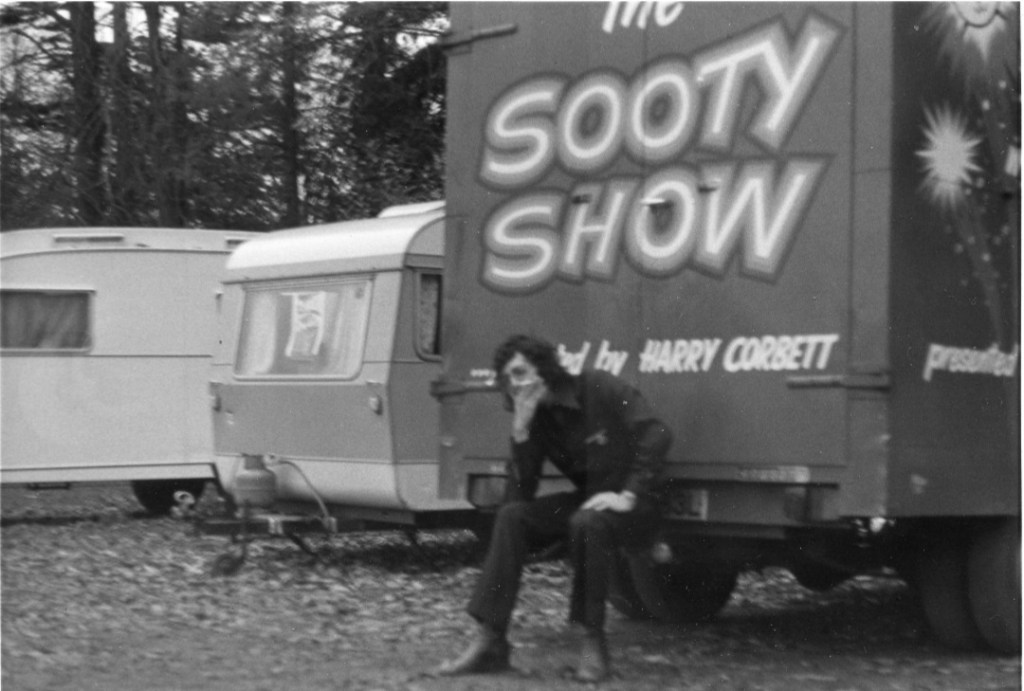
It belongs to the story of my tour round England with Sooty, Sweep, Harry Corbett and various other people and puppets.

Considering the tour was just over seven months, less than one per cent of my life, I do seem to have lingered rather a long time over it and in the next few days I will have to draw that part of my story to a close, but not today.

My last mention of the tour described how we had become like a family in the fortnight at Harry’s place in Dorset. We all had our parts to play and our backstage roles as well as front of house.

The only member of the group not initially forming part of the family was the guest artist, Howard the escapologist. He did not join us until the day we booked in at the first theatre (and no, I still can’t remember where it was).

Other than his act, which he had obviously rehearsed (as he was an escapologist one would hope he had rehearsed everything), he was required for the UV sequence to ensure the appearance of the genie – a football painted in UV paint with a menacing stare, set on a cane frame draped in fluorescent material.

Fortunately he was quick on the uptake and after an hour before lunch he had the routine off to a T and at the first performance that day he managed to move the genie around the stage without bumping into Lawrence and myself who were each operating two giant butterflies.

As I have mentioned previously I remembered his name was Howard, which as it happens is also the name of one of my nephews but he appeared on the scene later, and that he was an escapologist. In my mind I could picture him but for the life of me I could not remember his name – until today.

So, ladies and gentlemen and all my other readers, let me introduce you to:

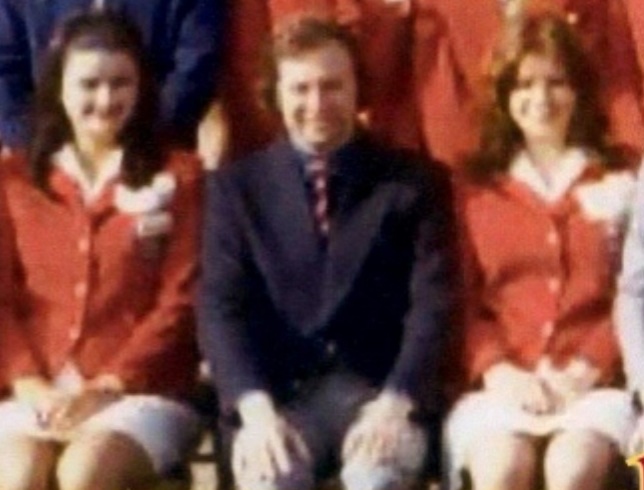
HOWARD PETERS ESCAPOLOGIST!

Howard is the gentlemen seated between two Butlins Redcoats at the Bognor holiday camp early in 1974. He was the resident compere known as Uncle Howard.

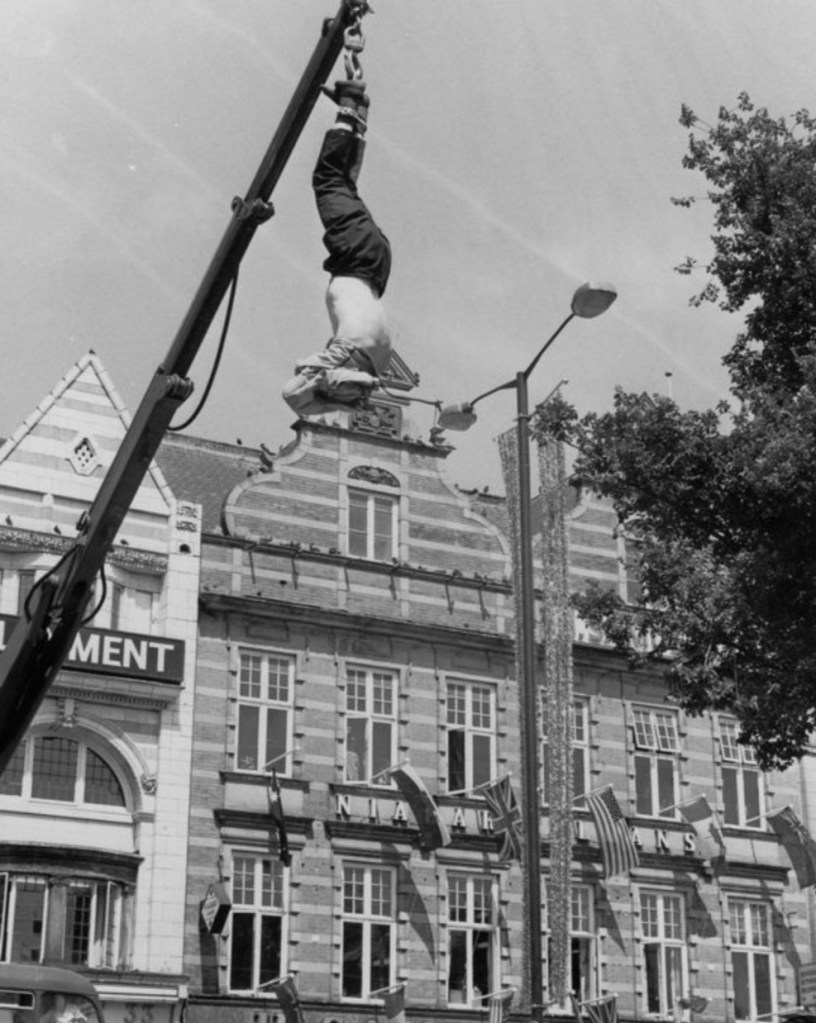
He is also the man seen hanging upside down from a crane in the middle of Nottingham, could be in the 60s or 70s.

There we go, I finally found that missing piece which helped me find Uncle Howard.

We’ll round off the tour soon and look at my next steps outside the cosy world of journalism.

How strong are your resolutions as we face a Brave New Year?

A New Year lies before us and this is normally a time to make resolutions, hollow promises of what we will do in the year ahead.

We announce our intention to lose weight; to stop smoking; to drink less; to be kind to others; to refrain from licentious behaviour; not to abuse others on Facebook, Twitter, Instagram or whatever floats your social media boat.

I make no rash claims to be and do better in 2023 than I did in 2022.

Come to think of it I couldn’t do much worse on this blog than I did last year as things got on top of me and I have not blogged for the past six months. I apologise to readers and can only say I will try to do better, the operative word being try, after all I am heading rapidly to my 74th year.

I intend to return to the tale of my sabbatical from journalism, we were still in the early days of my tour with that well-known magician Sooty, and his sidekick, Sweep.

I will also hopefully entertain you with some of my favourite poems.

Books I have read will almost certainly be on the agenda, whether they are brand-new, something I read in my childhood or anything in between.

The spotlight will also fall on my love of theatre, amateur and professional, classical and modern, music and dance and even down to my grandchildren appearing in a school play (with my daughter Sarah’s permission of course).

Politics and my own personal view of what is going on in the world in general and the UK in particular will also feature. Reading is not compulsory but you never know you might find it amusing.

Finally I will be writing about family history, starting at the very beginning and offering hints and tips as well as information on records which could prove useful.

I am not claiming to be an expert genealogist but Marion an I have been carrying out our own research into the Duke and Pierce families and their branches for the last 45 years. I also created and edited a family history magazine for people with origins in Norfolk which had subscribers worldwide, so do have some knowledge of the subject.

Let me just say, welcome to 2023.

Poetry or song? It’s just words

The other day I gave you the lyrics of a Bob Dylan song from 57 years ago and suggested that lyrics are basically poetry without words.

Then again some of the finest lyricists in the world are really poets first who then have their poetry put to music.

This does not mean all poems could be put to music.

The best poets create their works to be listened to and the poem and its rhythm are music in their own way.

In the same way there are songs which thousands, even millions, love – but if you took away the music what remains is an alphabetti spaghetti thrown at the wall to see if it is cooked.

What I do find interesting is that the wonderful poet (and Covid survivor) Michael Rosen has presented his own version of Desolation Row with a weekend blog piece called:

Dissolution Street

by Michael Rosen

b. 1946
The King is in the counting house, eating bread and money, 
He thinks if he talks like Julius Caesar, we'll think he is funny. Plato has found a way to play chess, using tanks and guns 
'Who cares?' says Henry Ford, 'we'll make ten thousand suns.' 
John and Yoko close the curtains and get beneath the sheets 
They can hear the bombs outside, falling on Dissolution Street.
 
The banker says to the poor man, 'You're helping keep things great.' Louis Braille's lost his sight and says people keep giving him bad looks. 
They say they know how to handle him. They take away his books. 
King Midas tells the multitude there's always plenty to eat 
The queue at the food bank stretches down Dissolution Street 

They found that the judge was lying, so the judge changed all the rules 
They found gold beneath the playgrounds, so they sold off all the schools 
Doctor Death went to hospital, where he met up with Dr Who 
Doctor Death said he was out of cash, so he sold the hospital too. 
The Sheriff of Nottingham was saying that it was honest to cheat 
As he strung up Robin Hood on Dissolution Street. 

The doctor's telling me the good news, my foot won't be falling off
The nurse is telling me I've got no lungs so I don't need to cough.
Another nurse is telling me, 'Move!', cos I often fall out of bed. 
The doctor's telling me more good news, he says I'm not brain dead.
The diary's open on yesterday but I don't know who I'll meet 
They say I'm deconditioned, now I'm on Dissolution Street. 

The Queen says how it's awful people resent her fur coats. 
The real problem she says is people arriving in small boats 
They will eat every one of you, she says to you and me 
The safest thing for all of us, is if we push 'em into the sea 
One or two can come ashore and as some kind of treat 
They can become nurses or clean the floors on Dissolution Street 

From the other end of the corridor, I hear a woman scream 
I lean out of bed and ask the nurse, 'Can I stay in my dream?' 
He says, 'You're dead anyway, so you're missing the bad weather. 
This is the last place on the earth where we're all working together.'
They bring in the last machine they have, I could see my heart beat 
I might be dead now, I think, but we can leave Dissolution Street.   

NB: on reading it again (and again) I realise that Michael Rosen makes sense of the current position, far more than Bob Dylan did in 1965.

Desolation Row

by Bob Dylan

b. 1941
They're selling postcards of the hanging, they're painting passports brown
The beauty parlor is filled with sailors, the circus is in town
Here comes the blind commissioner, they've got him in a trance
One hand is tied to the tightrope walker, the other is in his pants
And the riot squad they're restless, they need somewhere to go
As Lady and I look out tonight, from Desolation Row

Cinderella, she seems so easy,  "It takes one to know one," she smiles
And puts her hands in her back pockets Bette Davis style
And in comes Romeo, he's moaning. "You Belong to Me I Believe"
And someone says, "You're in the wrong place, my friend, you'd better leave"
And the only sound that's left after the ambulances go
Is Cinderella sweeping up on Desolation Row

Now the moon is almost hidden, the stars are beginning to hide
The fortune telling lady has even taken all her things inside
All except for Cain and Abel and the hunchback from Notre Dame

Everybody is making love or else expecting rain
And the Good Samaritan, he is dressing, he's getting ready for the show
He's going to the carnival tonight on Desolation Row

Ophelia, she's 'neath the window for her I feel so afraid
On her twenty-second birthday she already is an old maid
To her, death is quite romantic she wears an iron vest
Her profession's her religion, her sin is her lifelessness
And though her eyes are fixed upon Noah's great rainbow
She spends her time peeking into Desolation Row

Einstein, disguised as Robin Hood with his memories in a trunk
Passed this way an hour ago with his friend, a jealous monk
Now he looked so immaculately frightful as he bummed a cigarette
And he went off sniffing drainpipes and reciting the alphabet
You would not think to look at him, but he was famous long ago
For playing the electric violin on Desolation Row

Dr Filth, he keeps his world inside of a leather cup
But all his sexless patients, they're trying to blow it up
Now his nurse, some local loser, she's in charge of the cyanide hole
And she also keeps the cards that read, "Have Mercy on His Soul"
They all play on the penny whistles, you can hear them blow
If you lean your head out far enough from Desolation Row

Across the street they've nailed the curtains, they're getting ready for the feast
The Phantom of the Opera in a perfect image of a priest
They are spoon feeding Casanova to get him to feel more assured
Then they'll kill him with self-confidence after poisoning him with words
And the Phantom's shouting to skinny girls, "Get outta here if you don't know
Casanova is just being punished for going to Desolation Row"

At midnight all the agents and the superhuman crew
Come out and round up everyone that knows more than they do
Then they bring them to the factory where the heart-attack machine
Is strapped across their shoulders and then the kerosene
Is brought down from the castles by insurance men who go
Check to see that nobody is escaping to Desolation Row

Praise be to Nero's Neptune, the Titanic sails at dawn
Everybody's shouting, "Which side are you on?!"
And Ezra Pound and T.S. Eliot fighting in the captain's tower
While calypso singers laugh at them and and fishermen hold flowers
Between the windows of the sea where lovely mermaids flow
And nobody has to think too much about Desolation Row

Yes, I received your letter yesterday, about the time the doorknob broke
When you asked me how I was doing, was that some kind of joke
All these people that you mention, yes, I know them, they're quite lame
I had to rearrange their faces and give them all another name
Right now, I can't read too good, don't send me no more letters no
Not unless you mail them from Desolation Row

The prodigal’s return after playing ‘poo sticks’ with a new prickly pal

Gone (for a while) but hopefully not forgotten.

Unlike the Prodigal Son I have not frittered away my time or money, I have just been taking a break from cerebral activity and spending more time on manual work in the garden.

I’ve also been making friends with a rather prickly chap who began to make his presence known in the garden in April.

To begin at the beginning.

Despite two years of the Covid crisis, and the total mismanagement of the whole thing by an incompetent government, our little household had come out the other side in reasonably good nick.

The problem is whether we HAD really come out the other side or was Covid just lurking in the background waiting to strike again when we (or rather the government) let our defences down.

Luckily for Johnson the Tsarist Putin decided to invade Ukraine.

That certainly took our mind off Covid and Partygate and Durhamgate and all the other gates opening and closing around the Palace of Westminster.

My Muse has listened to me vehemently spouting my feelings at the TV news, or news feeds on my phone or just at the world in general and expressed surprise that I hadn’t written to the Guardian or the Telegraph or Mirror expressing my anger and signing off as Frustrated of Farnborough.

As it happens I have vented my frustrations in the direction of newspaper editors but nowadays you don’t really know which newspaper belongs to which group and if the letter comes in from a Mirror website it could easily get diverted to another website of Reach plc, which owns not only the Mirror, but also North Wales Live, which includes many of the newspapers I have worked for in the last 50+ years.

Nowadays a complaint just goes round and round in ever decreasing circles until it disappears up the fundamental orifice of the daemon who has a red hot finger on the button.

That is why, rather than blow my top, I turned my attention to the wildlife in our garden.

Along with all the other residents and visitors, ranging from sparrows, robins, tits, pigeons, finches, frogs, newts and the occasional fox passing through looking for a friendly vixen, or one of the latter sitting in our front garden letting the world know she was looking for Fabulous Mr Fox, we encountered a new member of the menagerie leaving his calling card.

The calling card in question was left near the back door and was black, about an inch and a half to two inches long and the thickness of a pencil. I have no idea if it had any particular smell as, unlike many of the wildlife experts, I wasn’t going to let my nose get that close.

We ruled out fox, because we know the size of their output.

At the end of the day it could really only be one thing – hedgehog.

We had no problems with a hedgehog either living in the garden or passing through on his way to a nice nocturnal nosh – not even if he was looking for a Miss Tiggywinkle with plans for a bit of moonlight mischief.

In fact we would be quite happy if he made his home in our patch.

Last year we thought there was a hedgehog around and we even bought some proper hedgehog nibbles to feed it along with a dish of water.

Unfortunately, although we left the food and drink out each night for over a week, there was no return.

It did mean, however, that we had appropriate food in case this time our visitor decided to use our garde as a regular trail.

I put the dishes of nibbles and water out at dusk and next morning they were empty.

This went on for a few nights and, despite the emptying of the dishes, there were no more bits of poo left around the back door (more about that later).

I still couldn’t be absolutely certain it was a hedgehog eating the delightful delicacies I left out – it could have been a large family of field mice, or even their bigger ‘bad’ cousins who tend to enjoy a jolly tune from a pied piper.

Determined to satisfy my curiosity, and not wanting to go to the expense of an outdoor camera, I put a fine dusting of flour around the feed dishes to see if I could recognise the footprints.

The following morning there were very clear prints in the flour by the dishes which were quite clearly those of a hedgehog, you could even see the tiny pads and the pinprick claw marks.

In the flour further away from the dishes there were signs of disturbance but no clear prints to show where he had come from or where he had gone.

Since then we have found our nocturnal friend likes the hedgehog nibbles, suet pellets I use for feeding the birds, and even a bit of banana now and again.

There are mornings when the food remains in the bowl, sometimes even two or three nights in a row, but our prickly pal always comes back.

I have continued to lay the odd flour ‘trap’ close to the feeding station to get an idea of direction of travel and have discovered Harry (as we have named him) sometimes goes from back garden to front via a gap under the gate, and at others does a turn around the garden either before or after partaking of his supper.

We have also found another indication of his nightly trail and this is where ‘poo sticks’ comes into it. Note that is ‘poo’ with a lower case p and no h.

Yes, I am talking about his excrement.

First we noticed it on a paved area alongside a gravel path near the greenhouse. Just a couple of droppings and not every night. It did seem that he wandered away from his dining area before disposing of any waste. A very hygienic hedgehog.

A few weeks later My Muse was heading for the greenhouse when she spotted a black splat of something on the step. If it was Harry’s it did look as though his digestion had been upset. Whatever it was it certainly had not upset his appetite as the next few nights he tucked in as usual.

The odd bits of hedgehog poo turn up every now and again and, despite the odd nights he does not turn up, even though his table is always reserved, he always turns up again.

Although hedgehogs are supposed to roam across a wide area they have to make a home somewhere and come the autumn we will be making sure there are places, and material for bedding, where he can tuck himself away out of the cold if he wants to.

I must admit, concentrating on the garden and its wild occupants seems to have busted that block which seemed to be inhibiting my writing.

After my very long break I had intended to put up a new post at the beginning of the second half of the year, which initially I believed, as so many probably do, would be July the first.

Then I did my maths and realised that the year is 365 days long but July the first is the 182nd day and half way would be 182 and a half days. This would takes us to mid-day on July the third, which is today.

I may be an hour or so out but this is close enough.0%
A Poison Tree

by William Blake

1757-1827
I was angry with my friend:
I told my wrath, my wrath did end.
I was angry with my foe:
I told it not, my wrath did grow.

And I watered it in fears,
Night and morning with my tears;
And I sunned it with smiles,
And with soft, deceitful wiles.

And it grew both day and night,
Til it bore an apple bright.
And my foe beheld it shine,
And he knew that it was mine.

And into my garden stole
When the night had veiled the pole;
In the morning glad I see
My foe outstretched beneath the tree.

Absolution

by Siegfried Sassoon

b. 1886
The anguish of the earth absolves our eyes
Till beauty shines in all that we can see.
War is our scourge, yet war has made us wise.
And, fighting for our freedom, we are free. 

Horror of wounds and anger at the foe,
And loss of things desired; all these must pass.
We are the happy legion, for we know
Time's but a golden wind that shakes the grass.

There was an hour when we were loth to part
From life we longed to share no less than others.
Now, having claimed this heritage of heart,
What need we more, my comrades and my brothers? 

Harold goes for the double but falls foul of a right royal bastard

I rather cruelly left Harold Godwinson, aka King Harold of England, on the top of a hill near Hastings on a cold, dark October night as he prepared to clinch the crown with a double victory.

He had already seen off an attack by King Harald of Norway, aided by Harold’s own brother Tostig Godwinson, up North at Stamford Bridge, only to learn, as he celebrated victory, that Duke William of Normandy had landed down South and was laying his own claim to the English crown.

The surprise was that William, not finding any opposition when he landed on the beach at Pevensey, East Sussex, late in September 1066, did not make a sudden dash for London and instead took his time to land all his men, horses and equipment, and then gave them a break after the channel crossing.

Harold had made a forced march back South but stopped off in London to give his men a chance to take breath after all the excitement of the Northern leg of the crown championship.

With no sign of the Normans making a move Harold and his army headed to Caldbeck Hill, not far from Hastings, and on the night of 13 October set themselves up in what they believed was an impregnable position.

On either flank they had steep inclines which were also heavily wooded and ran onto marshy ground. The rear was also almost completely inaccessible for cavalry or infantry.

When the sun rose at about 6.30 that Saturday morning, Harold’s army was not the only one at the site. William’s army had arrived at the foot of the hill during the night and presented a formidable array of armoured knights, archers and infantrymen.

Despite this formidable array the Saxon army considered themselves safe behind their shield wall. An uphill charge by mail-clad men on foot or horseback would be a struggle and uphill shooting for archers was doomed to failure.*

Initially there was a stand off. The Saxons were safe behind their shield wall, a method of defence going back to Roman times, and the Normans were not keen on an uphill run with an axe or spearpoint waiting for them.

You can imagine the shouts going back and forth.

“Stop skulking up there and come down and fight like men.”

“Get on your ships and go back home.”

“This IS our home now.”

“Fat chance, take your bastard leader and sod off back where you came from.”

The match kicked off at about 9am when William’s archers fired a few volleys of arrows uphill at Harold’s men. All that happened was the arrows either rattled off the shields, having lost all momentum, or, overshot and struck the ground behind the Saxon army.

The other problem was that the archers soon ran out of arrows.

Considering a top archer can shoot off 10 to 12 arrows in a minute they will soon run short. Normally they could then use the arrows fired at them by the enemy.

Unfortunately the Saxons did not make much use of archers (the Celts, now called Welsh by the Saxons, have always been the best archers in these islands) which means for every 1,000 arrows the Normans fired off there might be less than 100 fired back. I am sure you can all do the mathematics.

Eventually the Normans plucked up the courage to carry out a full frontal assault with cavalry and infantry. They were met with a hail of axes, spears and even rocks and those that made it as far as the shield wall found it impenetrable from their side but discovered swords could spring out at groin level from the other side.

After a short period of shoving against what seemed to be a thick stone wall the Normans fell back to regather their forces and make a further attempt.

At one point, two or three hours into the battle (if you could call it that), when the Normans turned tail a section of the Saxons on the flank broke the shield wall and chased after them.

Luckily they responded to a command to return before the Normans could take advantage and the shield wall was reformed.

Unfortunately this incident gave William the idea for what Baldrick would have called a cunning plan.

Infantry and cavalry were ordered to turn tail again except that the cavalry were ordered to make a fast turn if the Saxons came after them and to ride down the enemy chasing them while the infantry were to attack the end of the line were the shield wall had fallen.

The first time they tried it they had reasonable success before the Saxons reformed and plugged the gaps in the shield wall.

The only problems was that the Saxons did not learn from experience and when the Normans did it again the home team broke ranks again, and again until by late afternoon it had turned into a melee and the superiority of the Norman cavalry took its toll on the Saxons.

By the time dusk fell the home side had paid the price for their lack of discipline when they thought they had the Normans on the run.

The remnants of the Saxon army, mostly the fyrd who were really just farmers and labourers, left the field of battle as darkness descended. The members of Harold’s personal guard and most of the nobles lay dead on the field. In fact many of them lay around the bodies of two of Harold’s brothers and it was believed Harold lay within that pile of the slain.

The way was now open for William to head for London and to get himself crowned.

The rule of the Anglo=Saxons had lasted barely 500 years and William the Bastard had become King William.

Oddly enough while still claiming to be of Anglo-Saxon heritage the modern English celebrate the Battle of Hastings as a success.

In fact it was the last invasion of this country and the rest of us in Britain have had to put up with it.

The Mother

by Pádraig Pearse

b 10 November 1879 executed 3 May 1916
I do not grudge them: Lord, I do not grudge
My two strong sons that I have seen go out
To break their strength and die, they and a few,
In bloody protest for a glorious thing,
They shall be spoken of among their people,
The generations shall remember them,
And call them blessed;
But I will speak their names to my own heart
In the long nights;
The little names that were familiar once
Round my dead hearth.
Lord, thou art hard on mothers:
We suffer in their coming and their going;
And tho' I grudge them not, I weary, weary
Of the long sorrow - And yet I have my joy:
My sons were faithful, and they fought.

Pearse wrote this poem after the Easter Rising, before his execution on 3 May 1916. His brother Willie was executed the following day.