Fear no more the heat of the sun;
Nor the furious winter's rages,
Thou thy worldly task has done,
Home art gone, and ta'en thy wages;
Golden lads and girls all must,
As chimney sweepers come to dust.

Fear no more the frown of the great,
Thou art past the tyrant's stroke;
Care no more to clothe and eat;
To thee the reed is as the oak:
The sceptre, learning, physic, must
All follow this, and come to dust.

Fear no more the lightning flash,
Nor the all-dread thunder-stone;
Fear not slander, censure-rash;
Thou hast finished joy and moan;
All lovers young, all lovers must
Consign to thee, and come to dust.

No exorciser harm thee!
Nor no witchcraft charm thee!
Ghost unlaid forbear thee!
Nothing ill come near thee!
Quiet consummation have;
And renowned be thy grave!
Life, believe, is not a dream
So dark as sages say;
Oft a little morning rain
Foretells a pleasant day.
Sometimes there are clouds of gloom,
But these are transient all;
If the shower will make the roses bloom,
O why lament its fall?

Rapidly, merrily,
Life's sunny hours flit by,
Gratefully, cheerily,
Enjoy them as they fly!

What though Death at times steps in
And calls our Best away?
What though sorrow seems to win,
O'er hope, a heavy sway?
Yet hope again elastic springs,
Unconquered, though she fell;
Still buoyant are her golden wings,
Still strong to bear us well.
Manfully, fearlessly,
The day of trial bear,
For gloriously, victoriously,
Can courage quell despair!
Of old sat Freedom on the heights,
The thunders breaking at her feet:
Above her shook the starry lights:
She heard the torrents meet.
There in her place she did rejoice,
Self-gather'd in her prophet-mind,
But fragments of her mighty voice
Came rolling on the wind.
Then stept she down thro' town and field
To mingle with the human race,
And part by part to men reveal'd
The fulness of her face -

Grave mother of majestic works,
From her isle-altar gazing down,
Who, God-like, grasps the triple forks,
And, King-like, wears the crown:

Her open eyes desire the truth.
The wisdom of a thousand years
Is in them. May perpetual youth
Keep dry their light from tears;

That her fair form may stand shine,
Make bright our days and light our dreams,
Turning to scorn with lips divine
The falsehood of extremes!
When you are old and grey and full of sleep
And nodding by the fire, take down the book,
And slowly read, and dream of the soft look
Your eyes had once, and of their shadows deep;
How many loved your moments of glad grace,
And loved your beauty with love false or true,
But one man loved the pilgrim Soul in you,
And loved the sorrows of your changing face;
And bending down beside the glowing bars,
Murmur, a little sadly, how Love fled
And paced upon the mountains overhead
And hid his face amid a crowd of stars.
Nowadays you have to be sensitive to others when telling jokes or making lighthearted conversation. Especially in the light of social media.
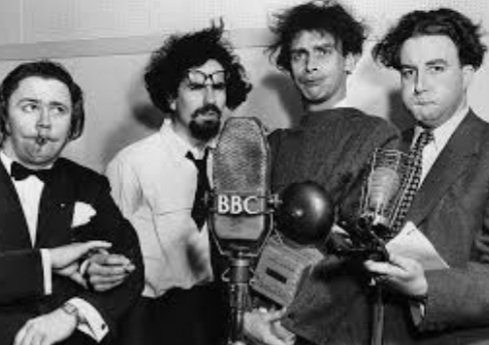
I grew up enjoying the Goons; radio shows such as Round the Horne and The Navy Lark; and Hancock’s Half Hour; Harry Worth, and Michael Bentine’s Potty Time on television.
The Goons – 1950s humour that you loved or hated.
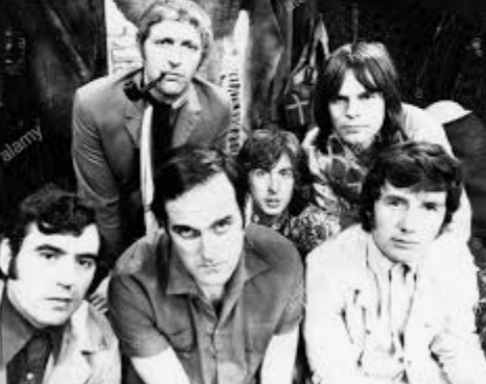
It is no surprise then that while I was on my NCTJ course in Cardiff in 1969 I discovered, along with a handful of other “student journalists”, the “madcap comedy” of Monty Python’s Flying Circus.
Three of my fellow students worked for the same newspaper company and had rented a flat in Cardiff while attending the course.
Early in October they invited myself and a couple of others back to the flat to watch the first of a new comedy series on the BBC called Monty Python’s Flying Circus.
Monty Python – 1960s/70s humour you loved or hated
I soon realised I was among friends who had a similar sense of humour to mine.
Monty Python was considered “brilliant”, “madcap”, “crazy”, “insane” in a time when sanity or insanity were still talked about in a way nobody would dare to do now.
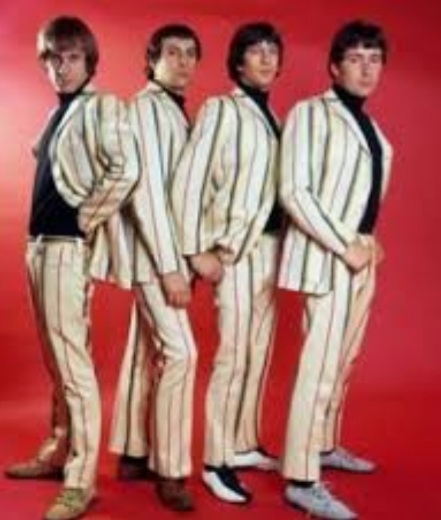
Even the world of pop music was getting in on the act in the 1960s with “The Crazy World of Arthur Brown”, Napoleon XIV (Jerry Samuels) with his 1966 hit “They’re Coming to Take Me Away Ha-haaa” and his somewhat lesser known “Photogenic, Schizophrenic You” and “Marching off to Bedlam”, even the Troggs were in on the “insanity bandwagon” with their 1968 song “Maybe the Madman” (although their song, similar to Dylan Thomas’s poem “Love in the Asylum”, was more a questioning of sanity and insanity).
The Troggs at the height of their 1960s/1970s popularity.
Was this any different to the 18th/19th centuries when lunacy was treated almost as a sideshow?
The Royal Bethlehem Hospital in London (which was sometimes called Bedlam) initially allowed only family or friends to visit the inmates and even then the visitors had to pay a fee which often lined the pockets of the attendants rather than aiding the patients.
In time, and definitely during the Victorian era which saw a rise in the building of what were called mental asylums, these attendants realised there was money to be made from the inmates and they began charging the public a penny a time to see the inside of the asylum.
By the 20th century this practice had come to a stop but it did not make life much better for the inmates. Some would not even be classified as suffering any form of mental illness these days yet errant daughters could be committed just for defying their fathers over who they should marry (you had to be insane to go against the will of your father after all).
Nowadays we know that “care in the community” is considered the done thing but even at the end of the 20th century some asylums (psychiatric hospitals) existed.
In the second half of the 20th century the “hospitals” were providing better conditions but treatment was still mixed (although ECT was out of the window along with the prolonged bath treatment).
By now paid tours of asylums were a dim and distant memory.
One day on the course we were told we were going on a day out.
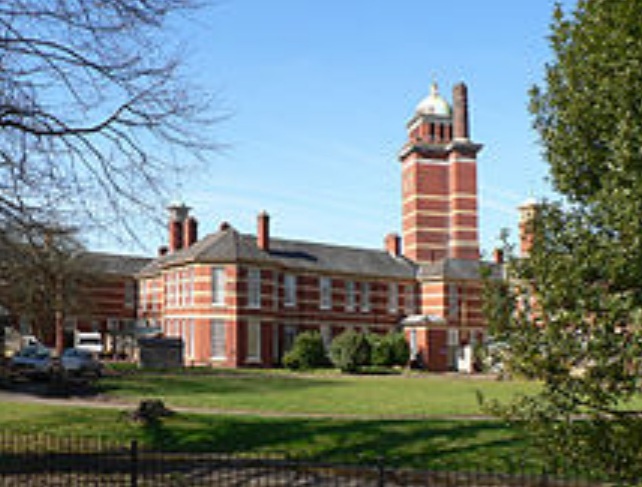
To this day I still do not understand why the people who ran the course chose the venue they did for our “Grand Day Out” – it was the Whitchurch Psychiatric Hospital just outside Cardiff.
We had a bit of a laugh on the way out – but not on the way back.
One of the trio from the flat had a sports car, can’t remember the type but it was a bit more angular than an MG, more like a Morgan. The college had a mini-bus but it didn’t have enough seats for everyone.
The sports car was technically a two-seater but it had a rumble seat (really just a space for luggage) at the back that could take someone sitting sideways with their knees up and, with me sitting in the front with our lightweight female colleague on my lap, we managed to make it a four-seater.
The Whitchurch Hosputal, built in the early 1900s and closed down in 2016. It now lies derelict.
We still weren’t sure what went on, just that it was a hospital. I think it was a way of showing how journalists could interact with public services such as the NHS.
Initially it was interesting as our guides explained how far treatment had come in the matter of treating patients with mental health problems.
This included showing us material from the pre- and post-WWI treatments. The old sepia photos showing people in wooden baths, with covers over them that only allowed their heads to show, seemed like images from a distant age – they were only 50 years previously.
We were shown the Electrical Convulsive Treatment equipment, which we were told was something left behind decades before.
All this was fine – then we began the tour.
The people in the art therapy class seemed reasonable. A bit slow in their movements but clearly enjoying their painting – not that there were any signs of a modern Van Gogh, a Monet or a Manet. Picasso might have come closer.
There were other rooms were patients sat looking out of the window or doing handicrafts.
For a group of mainly teenagers it was interesting but nothing that made the trip noteworthy.
Not, that is, until we were shown into one room which was locked.
It was a large room, big as an average school hall. There were no tables or chairs although oversize bean bags were scattered around and one or two of the people in there were flopped down on them.
The rest were just wandering around and after a while we noticed that their clothing was all similar, not a uniform but all generally loose-fitting with baggy trousers of the type we would now call jogging pants, and loose tops, cardigans and jumpers.
Nearly all of them had gloves on and when a couple wandered past it was clear the gloves were really thumbless mittens.
After a while we also realised that “wandering” was the best description. When any of them came close I could tell that they did not see us. Their eyes were blank.
I began to feel that I was no better than a visitor to a zoo watching the “inmates” in the only habitat they knew.
I could see some of the younger people were clearly upset and suggested to our tutor, who was with us, that it might be better for all concerned if we left the room.
Our guide took us to what appeared to be a music room. There were various instruments, such as drum sets, violins, a cello, trumpets etc. but pride of place went to a grand piano.
There were chairs set around as though for an audience and we were joined by a woman who seemed to be the head of the hospital staff.
She asked us to sit down and then apologised for any upset that might have been caused.
She went on to tell us that the patients (they didn’t call them inmates but hadn’t gone as far as modern times in calling them clients) were a mixed group, ranging from those in need of a few weeks in hospital to help them with minor psychiatric problems to those confined long-term because they would never improve from their current state.
The people in the locked room fell into the last category.
She then suggested a musical interlude before we headed home.
A white-coated member of staff came in with a little old lady who looked as though she was someone’s granny. She wore a simple skirt and blouse with an unbuttoned cardigan, along with rainbow-coloured ankle socks and plimsolls.
As soon as she came in she hurried straight to the piano and sat down. Without a moment’s hesitation she started to play. Not a simple plink-plonk on the keys but some of the finest classical music I had heard in a long time.
She played for half an hour and then her white-coated companion took her away.
She had not looked at us for the whole time. There was no music on the stand and we were left wondering if it had really happened.
The hospital chief then told us that this woman was one of twins born in the late 1890s. They were born at home with only their mother’s mother there to help.
The first one came with no trouble but granny hadn’t realised there was a second child. Number two came out with the umbilical cord around her neck.
The granny did her best and got the child breathing and all seemed fine.
Unfortunately as the children grew up only one developed properly. Her twin had clearly been deprived of oxygen during and just after the birth.
Eventually her parents had to have her committed to the hospital.
She never seemed to grow up and did not speak but seemed to like the sound of piano music.
One day a professional musician played a brief concert at the hospital. When he finished and the staff and visitors were having tea and cake the twin, now a young woman in her teens who had been allowed to sit in on the concert, sat at the piano and started to play.
At first she just seemed to tap random keys but then she began to play the music from the concert.
She had played the piano every day since. She did not read music but could play a piece having heard it once.
We asked what happened to her twin sister and were told that she had become a top surgeon and had worked with the NHS from the day it was formed.
She visited her sister every week even though her twin had no idea who she was.
We left the hospital in a somewhat more sombre mood than when we had arrived.
Our little group of four stopped off at an off-licence and a chippie and then we went back to their flat.
We ate, drank and talked about everything under the sun except what had happened that day.
I kipped on the sofa that night and went back to my digs next morning to freshen up and have breakfast before heading for college.
None of us ever spoke about that visit for the rest of the course.
I have never made a joke about anyone’s mental health since that day.
A stranger has come
To share my room in the house not quite right in the head,
A girl mad as birds.

Bolting the night of the door her arm her plume.
Strait in the mazed bed
She deludes the heaven-proof house with entering clouds

Yet she deludes with walking the nightmarish room,
At large as the dead,
Or rides the imagined oceans of the male wards.

She has come possessed
Who admits the delusion light through the bouncing wall,
Possessed by the skies

She sleeps in the narrow trough yet she walks the dust
Yet raves at her will
On the madhouse boards worn thin by my walking tears.

And taken by light in her arms at long and dear last
I may without fail
Suffer the first vision that set fire to the stars.
Brother, I've seen some
Astonishing sights:
A lion keeping watch
Over pasturing cows;
A mother delivered
After her son was;
A guru prostrated
Before his disciple;
Fish spawning
On tree-tops;
A cat carrying away
A dog;
A gunny-sack
Driving a bullock-cart;
A buffalo going out to graze,
Sitting on a horse;
A tree with its branches in the earth,
Its roots in the sky;
A tree with flowering roots.

This verse, says Kabir,
Is your key to the universe.
If you can figure it out.
My best friend had lots of curls
but wasn't like the other girls
who stayed dressed up and always clean
My best friend wore old blue jeans.

She loved to do things just like me,
like building forts and climbing trees.
She stubbed her toe, and to stop the blood,
we both walked barefoot through the mud.

She could pitch a baseball, make it fly
much faster than most any guy.
And when she ran, her feet had wings!
My best friend could do anything.

All summer long we stayed outside
pretending things and riding bikes
or sometimes wading in the creek
where I fell down and skinned my knee.

One autumn day, I saw her cry.
I felt so sad when she told me why.
The doctors told her she was sick
And she needed treatment, really quick.

Her parents drove her, I watched her grow,
and doctors still don't really know
Just how to cure the thing she had
that made her sick and feel so bad.

One rainy night she went away
up to heaven where she will stay
but her memory will never end
'cause I'll always remember my best friend.
O sweet To-morrow! -
After to-day
There will away
This sense of sorrow.
Then let us borrow
Hope, for a gleaming
Soon will be streaming,
Dimmed by no gray -
No gray!

While the winds wing us
Sighs from The Gone,
Nearer to dawn
Minute-beats bring us;
When there will sing us
Larks of a glory
Waiting our story
Further anon -
Anon!

Doff the black token,
Don the red shoon
Right and returned
Viol strings broken;
Null the words spoken
In speeches of rueing,
The night cloud is hueing,
Tomorrow shines soon -
Shines soon!
When I wrote about my great grandfather’s notebooks and said they cleared up the mystery of the family ghost story I didn’t mention that it possibly cleared up another family legend as well.
The three things I had been brought up with were:
a) my grandfather was almost born on the banks of the River Vyrnwy;
b) my great, great uncle William returned as a ghost to say farewell to his mother as she lay dying;
c) a Pierce ancestor was a murder victim or possibly a murderer and the incident took place at a crossroads.
From the notebooks of the Rev David Pierce, a Welsh Presbyterian minister, formerly a schoolteacher and at one time listed on a census as a pauper, I know the first was true as his manse at Salem, Meifod was near the banks of the River Vyrnwy, and his wife Margaret was by the river when she realised the baby was coming.
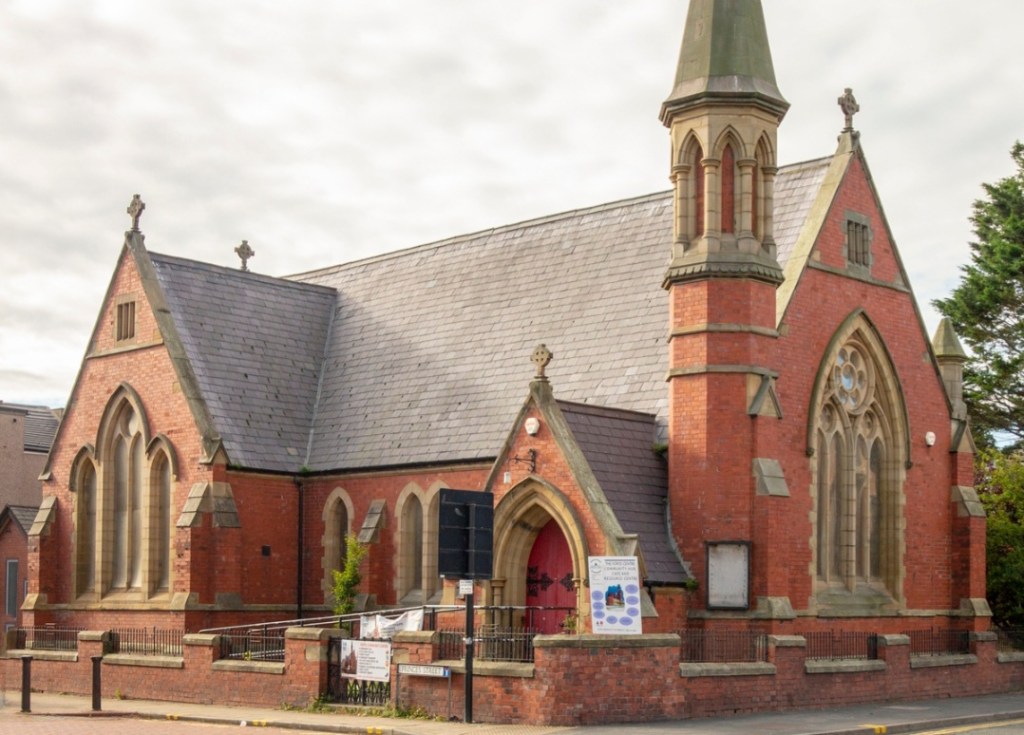
They called him Edward Vyrnwy Pierce and he was my grandfather, an English Presbyterian minister whose circuit in the early 20th century included the Princes Street Presbyterian Church in Rhyl.
English Presbyterian Church, Princess Street, Rhyl, where my grandfather preached.
The notebooks also included the story of David and his family seated around the kitchen fire in their Machynlleth home at the time his grandmother, Elizabeth, was dying upstairs.
He wrote about the sound of a soldier’s boots tramping down the main street in Machynlleth, passing through the kitchen and up the stairs to were the old woman lay dying.
More than this, however, David spoke of his great grandfather (although he mistook the generation and described him as his father Elias’s father) John who was a labourer living in Machynlleth in the 18th century.
He was born in 1727 and by the 1750s he was heavily involved in the Welsh Methodist Revival in Wales.
David revealed that John Pierce used to hold meetings of Methodists in his house because it was a bit further out of Machynlleth than others.
Eventually the Anglican vicar warned him off from holding these meetings and threatened to have him thrown out of town unless he produced documents to prove his right to be there.
At that time you could be moved on from a parish if you had not been born there. You did, however, have a right of residence if you were indentured to work for a parish resident.
We have never found John’s birth record and we do not know if he had indentures.
John must have realised that it was not a good idea to defy the Anglican vicar openly so he stopped holding the meetings in his house.
Instead he and his fellow Methodists went into the nearby Llynlloedd woods and held their meetings in a clearing in secret.
The vicar must have realised John was defying him but apparently could not prove it, or John had proved his right of residence.
Suffice it to say John remained a resident of Machynlleth and continued to hold regular meetings in the woods.
David reveals in his family history that John was returning from the woods one night, alone, and was set upon by a group of men (possibly at a crossroads) and was given a severe beating.
The attackers were never identified but in Machynlleth it was always believed the vicar had ordered the beating.
Instead of winning back the Methodists he hardened their resolve and their belief in a simpler form of worship.
In Wales the Methodists broke away completely from the Church of England and formed their own church. Unlike the Wesleyans, however, they followed the Calvinistic tradition which began in the 16th century in Europe.
John Pierce was a leading light in the Calvinistic Methodist Movement in Machynlleth and helped raise the funds for the group to build their own chapel in the town.
Capel Norton was built in 1784, just six years before John died. It remained in use as a chapel into the 20th century (even though the Calvinists moved to a bigger Chapel in Maengwyn Street in the 1850s and an English Presbyterian group took it over) but in the 20th century it fell into disuse and later became a warehouse. It was demolished in 1998.
 Robin's Nest